Thursday, March 21, 2019

february-march 2019 books

Drive Your Plow Over The Bones Of The Dead (Olga Tokarczuk): Man Booker International Prize-winner Olga Tokarezuk is a remarkable writer. This beautifully-written (and beautifully-translated by Antonia Lloyd-Jones) noir novel is set in a remote Polish village and is an account given by an eccentric, reclusive woman in her sixties (who believes in the stars, prefers animals to people… and is fond of the poetry of William Blake) following the disappearance of her two dogs. I found its calm-but-quirky, narrative voice strangely compelling. It’s essentially a thought-provoking, humorous crime story… and yet, it’s much more than that: it’s also about animal rights, about injustice against marginalised people and about what many would see as the hypocrisy of traditional religion. I really really enjoyed it.
The Book Of Books (Melvyn Bragg): This is a rather magnificent book. I’m rather late in reading it (it was first published in 2011 to coincide with the 400th anniversary of the King James Bible), despite the fact that Bragg is one of my true heroes (I’ve always found the Radio4 “In Our Time” discussion programmes absolutely fascinating and found his book “Credo” – an epic novel about Christian faith set in 7th century Britain – quite brilliant). Significantly, the Kings James version of the Bible was the first English translation and Bragg provides convincing argument the book has driven the making of the English-speaking world over the past 400 years. Bragg (fortunately from my perspective!) isn’t one of those ‘the Bible is the word of God’ people, but he writes about the effects that the book has offered to ‘ordinary’ people: its role in the movement to abolish slavery; its place in the charitable endeavours of the Victorian social reformers such as Octavia Hill; its worth as literature; and its capacity for invigorating writers as different as John Milton and DH Lawrence. Bragg’s analysis also takes into account the atheist views of Richard Dawkins – who Bragg accuses of being someone who “preys on anecdotal evidence", "worships statistics" and "swoops into neuroscience" (amongst other things)(which both amused and encouraged me). Despite the fact that every page is crammed full of facts and references, Bragg’s writing style and his story-telling abilities make it all effortless, compelling reading.
White Nights (Ann Cleeves): As I think I’ve previously mentioned, I absolutely love the ‘Shetland’ TV series, but this is only the second of the Shetland books I’ve read. A body hanging from a thick noose… it looked like a straightforward case of suicide… but no! Another wonderfully-crafted crime mystery coupled with the appealing calmness of Inspector Jimmy Perez… and set against the gentle(?) rhythm of island life. This ticked all the boxes for me… utterly pleasurable, escapist, hunkering-down reading!   
Bobby Denise Is Reigning Rampant (Daniel Ross): This book was written by our good friend Dan, who co-owns our wonderful local bookshop (StorySmith Books).  The novel tells the story of an acclaimed stage magician in Las Vegas, back in 1985, whose prized white tiger mauled and killed an audience member during a sell-out show. As if that wasn’t bad enough, this nightmare gets worse… (but, hey, no spoilers!). The magician ends up being sent to gaol… for a long time. 31 years later, out of gaol, he just wants to live out his days in peace. But, as you might guess, it doesn’t quite work out like that. Initially, I didn’t think this would be ‘my kind of novel’, but how wrong I was! It took me a little time to get into it, but I soon became engrossed by story. The book is very well conceived and hugely entertaining (with surprisingly believable Vegas characters)… and I really enjoyed it! Highly-recommended.
Scar (Alice Broadway): The final book in our daughter Alice’s ‘Ink’ trilogy. How exciting!! After reading the first two novels, I’ve found the last 12 months an agonising wait for the concluding story. I know an awful lot of people who are reading (or are about to read) this book at the moment, so I’m going to keep this very brief (I’ll blog about it elsewhere in due course) and I promise there won’t be any spoilers in this short review! It might be labelled as a ‘Young Adult’ (YA) novel, but it has a message for young and old alike. Even if she is our daughter, I think she’s an absolutely natural writer and an utterly brilliant storyteller! The wait was SO worth it… Thought-provoking, powerful and wise. I LOVED it.

Monday, March 11, 2019

bristol metropolitan orchestra at st george’s…

Last night, thanks to the suggestion and generosity of my very good friend Edward Kay, I went along to St George’s to hear/see the Bristol Metropolitan Orchestra perform.
Ed plays the French Horn in the orchestra (but he’s also a highly-acclaimed conductor, composer, teacher and accompanist). Of course, St George’s is a brilliant concert venue – superb acoustics and general ambiance – and it was quite intoxicating to hear a large orchestra in full voice, as it were.
Last night’s programme included Aaron Copland’s ‘Fanfare for the Common Man’; Joan Tower’s ‘Fanfare for the Uncommon Woman’; Benjamin Britten’s Violin Concerto (featuring the excellent Ben Baker as soloist) and finishing with Sibelius’s Symphony no.2 – which I thought was superb.
It was the first time I’d heard the BMO perform (conductor: Michael Cobb) and, I can assure you, they are a bit special! I’ve certainly made a note of their next concert (Saturday 13 July, Clifton Cathedral when they play Ethyl Smyth’s ‘The Wreckers’ and, wonderfully as far as I’m concerned, Mahler’s 5th Symphony).
A really lovely, enjoyable and stimulating evening.

Thursday, March 07, 2019

hitting seventy... reflections

Apologies for this, but over the past few weeks (since reaching the three-score-years-and-ten milestone), I’ve been reflecting on various aspects of my life… counting my blessings (literally) and laughing(?) at all my mistakes/naïve decisions made throughout my life (I say “my life” when actually I mean “our lives”!).

Thinking back to perhaps my late 20s, I probably envisaged our retirement as consisting of trips far-flung countries around the world (India, Japan and China come to mind). Well, strangely, 40 years or so later, such ambitions no longer seem to matter or feature in our ‘wish-lists’… I think, by the way we’ve lived our lives and perhaps our changed attitude towards the environment(?), our expectations and desires have altered and we find ourselves very content to embrace much simpler opportunities and ambitions.
The family has always been the most important thing in our lives (although, perhaps, I was at times too focussed on trying to ‘earn a living’/maintain/develop my architectural practice – which clearly had knock-on effects on family life?). My architectural career was both hugely rewarding (but not necessarily financially!) and somewhat frustrating. Sustaining a medium-sized architectural practice can be difficult at times, but I really enjoyed developing what I felt was the right ‘ethos’ for the firm and working with really lovely, inspiring colleagues. My frustrations probably lie in the fact that I didn’t devote more time in trying to become a better all-round architect (I never really enjoyed the ‘practical’ side and was always happy to delegate much of the technical aspects of the job to others). I think I was a pretty talented designer and was good at working with clients, other building team members and staff… but there’s probably a part of me that regrets not being a little more selfish in pushing my own design concepts and ideas (I remember working for John Madin at The John Madin Design Group in Birmingham in my ‘year-out’ in 1970 – and him ‘touring’ the office with his 6B pencil and scribbling all over everyone’s drawings and telling people to follow his various ‘commands’!). I can’t really see me ever working in such a way, but…

I certainly enjoyed helping to establish and promote what I felt to be an architectural practice that had style, treated people well, recognised each other’s talents and acknowledged other people’s views and opinions. I’ve often heard some architects being described as arrogant and egotistic. I don’t think such labels applied to me but, perhaps, if I had been more ‘arrogant and egotistic’, I might have had a more impressive/fulfilling(?) personal architectural portfolio. As it was, I feel very privileged to have worked on some excellent projects for some wonderful clients, especially earlier in my career, such as: Student Housing for Lincoln College and St Hilda’s College, Oxford; National Westminster Bank, High Wycombe; Old Bank House, High Wycombe; British Aluminium Limited, Chalfont St Peter and then in later years, for example, four large projects at Wittington House near Marlow for Crest Estates/SAS Institute (two Design Awards); Bush Walk, Wokingham (another Design Award)… and much, much more.

It’s strange reflecting back on our somewhat chaotic, but very enjoyable, family life as our three daughters grew up. It now all seems a bit of a blur… Moira is constantly reminding me of stuff that happened when we were living in Oxford and Thame (and, frequently, I find that I have only vague memories… or, worse, none at all!). I used to get to the office at stupid o’clock (in later years, frequently by 6am) but always tried to ensure I was home by 6.30pm. Moira and I always shared the domestic routines (at the start of our marriage, we would take it in turns to alternate the cooking/washing up duties on a weekly basis) and children’s bedtimes/nappies etc were always shared duties. I suspect I’m a much better grandfather than I was a father (but, again, that might just be down to the vagueness of my memory!).

In 2003, after nearly 30 years of running an architectural practice (where one of my principal tasks was to try to ensure we had sufficient work – and for staff to be able to pay their mortages/rents etc)(a huge sense of responsibility), our children had all more or less left home and Moira and I started to imagine the ‘rest of our lives’. We decided that I would retire early from Brocklehurst Architects and that we would move to Bristol (where Ruth+Stuart were living)… initially with the intention of perhaps opening an art studio/gallery or something along those lines. In the event, we came to the conclusion that this would be a really good way to lose a lot of money and so, instead, bought our current house and converted the basement into studio space… and this has worked very well (Ruth and Moira use the two studio spaces and each year we’ve opened up the basement for the annual local Arts Trail and get 700+ visitors over a typical Trail weekend).
Taking early retirement from architecture (albeit that I then worked in a comprehensive school for 6 years as a mentor/Assistant House Head – which was very enjoyable, but poorly paid), was probably ‘financially stupid’ – in that I could have earned reasonable money for much longer, so that we might afford to have more holidays and/or nicer things. But, looking back, would I change things? Probably not.
Since I retired from Brocklehurst Architects (I stayed on a couple of years until 2005), we’ve ‘gained’ six grandchildren and it’s been an absolute blessing to have had the opportunity to be with them and see them growing up/blossom (and what lovely, funny, talented, inspiring individuals they are too!).
What value can put on such things? What a privilege!
We live pretty simply and that ‘suits us fine’ (particularly in today’s materialist/must-have world and against a backdrop of Climate Change and environmental concerns).

Moira and I have been very fortunate to have enjoyed good health thus far (apart the usual ageing process and, in my case, the odd health scare and a new hip). I recall talking to my brother Alan some 10-15 years ago and agreeing that, if we could sign a contract which guaranteed us good health until we were 72 (why 72?) and then ‘pass on’, then we’d both happily do so. Well, with only two years to go in my case, perhaps it’s time to try to extend the warranty!!
For my part, as people so often say once they’ve retired, “I can’t imagine how I fitted in work with all the other stuff I do”. I walk an awful lot (we got rid of our car getting on for three ago and now rely on ‘public’ transport and our local CarClub when required), draw virtually every day, take lots of photographs, read endlessly, inhabit cafés, visit the cinema/theatre on a regular basis, watch cricket and rugby, get involved in various groups (including church), drink red wine… and enjoy my lovely family and friends.
Life is (very) good.
Photo: Family pic, taken in 1982?

Thursday, February 28, 2019

a private war...

I went along to the Watershed this afternoon to see Matthew Heineman’s film ‘A Private War’, chronicling the life and career of war correspondent Marie Colvin (superbly played by Rosamund Pike)(I think I’m quietly in love with her!). You will no doubt be aware of some of Colvin’s work for The Sunday Times over a period of some 17 years, until her death in Syria at the Siege of Homs in 2012 (and her eyepatch, after losing the sight of her left eye in a bomb blast in Sri Lanka in 2001).  
It’s a film that pulls no punches about the horrors of war.
It’s chaotic, stark, frightening and tense film which makes you wonder how on earth people are prepared to put their lives on the line in order to report the truth. War journalists and photographers are clearly a very special breed. The film captures a palpable sense of danger and fear.
Colvin herself was clearly damaged both mentally and physically by her war experiences… but she was also a courageous, driven journalist who wanted the world to know how ordinary people are affected by decisions made by people in power (and Assad is still in power today).
The film is structured around a ‘countdown clock’ to her death – starting some eleven years before Homs – and it’s strange that, even know the entire audience knows she dies ‘in the end’, it acts as an important reminder that ‘she might have got away with it this time, but eventually the odds will catch up with her’.
I’ve just read Peter Bradshaw’s review in The Guardian and he regrets that the film “stopped short of revealing the woman behind the myth”. Frankly, I’m not sure I agree with him. For me, I wanted to learn about the Colvin the war correspondent (and her relationship with the newspaper/editor) and not her upbringing or private life. But, hey, it’s a film, not a documentary and, no doubt, there are lots of details that have been papered over or ignored in order to tell the story.
The film is a remarkable homage to Colvin, but also to journalists everywhere… and I was utterly captivated by it.

Friday, February 22, 2019

february 2019 books…

Crazy Rich Asians (Kevin Kwan): Well, ‘crazy’ is an apt description! The story focuses on the relationship between a New York woman who agrees to spend the summer in Singapore with her boyfriend of two years’ standing. What she hasn’t previously been told is that instead of the imagined ‘humble family home’, she finds herself in a world of opulent lifestyles of the ultra-rich elite ‘whose lives revolve around making money, spending money, flaunting money, comparing money, hiding money, controlling others with money, and ruining their lives over money’. It’s funny, ridiculously absurd and reads like some sort of TV soap/Dynasty series (which I really can’t abide on principle). For all that, I almost feel embarrassed to admit that I found it extremely readable and entertaining!
Slouching Towards Bethlehem (Joan Didion): This is a book of articles written by Didion in the 1960s for various magazines and newspapers. She’s a compelling writer and reading her observations and insights, from the perspective of someone in their late 20s/early 30s and at a time well before the internet (not to mention Kennedy and Vietnam and the like), makes for absolutely fascinating reading. The topics are wide-ranging – from lifestyles in the ‘golden land’ (she hails from California); morality; keeping a notebook; and Alcatraz – but I found her essays(?) about remembering her arriving in New York as a 21 year-old ('Goodbye To All That', written in 1967) and one entitled ‘Slouching Towards Bethlehem’ (again written in 1967, after a poem by WB Yeats) particularly entertaining/poignant/revealing. The latter tells of her time spent in San Francisco, living amongst friends and strangers who were pursuing/seeking an alternative lifestyle in which drugs (of all kinds) featured prominently (eg. “The next day I drop by Max and Sharon’s, and find them in bed smoking a little morning hash. Sharon once advised me that half a joint even of grass would make getting up in the morning a beautiful thing”). At times, it almost felt like reading Hemingway (pretentious? moi?!), but there’s only one Joan Didion. 
Weird Bristol (Charlie Revelle-Smith): Apparently, this book first started life as a Twitter feed sharing lesser-known facts about the city and gradually developed into the ‘Weird Bristol’ project. The book’s cover describes it as ‘the ultimate guide to a city’s secrets’. Frankly, although it DOES contain some fascinating references to various locations and stories within the city (who could forget the story of the fully-grown lion kept in a cage beside the bar of the Bull pub in Bedminster in 1827, for instance?), much of the book seems to regurgitate stuff that’s already well known… and, to my mind, certainly not everything could be classified under the heading of ‘Weird Bristol’. Interesting, nevertheless.
Wrestliana (Toby Litt): Ruth+Stu gave me this book on the recommendation of Emily+Dan at our brilliant local bookshop, StorySmith Books (how many bookshops do YOU know that would say “your Dad will love this book”?!). Litt’s great-great-great-great grandfather, William Litt (1785-1850), was a champion Cumberland wrestler – a huge man who reigned undefeated in one of the 19th century’s most popular sports, taking home over 200 prize belts. He was also a published poet, a novelist, a gambler and, almost certainly, a smuggler. He ended his life in poverty and exile (in Canada). Toby Litt (who has written twelve novels and short-story collections) eventually decided to write about William Litt after repeated ‘suggestions’ from his father. The resulting book, however, is much more than a biography - it’s also a personal memoir of family and fatherhood and a fascinatingly honest self-analysis of his work as a writer and the role of masculinity in the ‘modern world’ - coloured by his own disappointments as a writer and his experiences of bullying and competitive sport at school. A beautifully-written, compelling book.
Pops: Fatherhood In Pieces (Michael Chabon): Another gift book on personal recommendation from StorySmith Books(!). As you probably know, Chabon is a bestselling/Pulitzer Prize-winning author (to my shame, I’d never previously read anything by him). It’s a series of essays about the joys and struggles of being a father (he has four children): “You are born into a family and those are your people, and they know you and they love you, and if you are lucky, they even on occasion manage to understand you. And that ought to be enough. But it is never enough”. What are you allowed to talk about with your children? When to step in with advice, when to let them make their own mistakes? I found the essays to be beautiful, gentle, wise, respectful and funny. It’s a very special book and I absolutely LOVED it.

Friday, February 15, 2019

wise children...

Wow! I think I might have just seen the best piece of theatre I’m likely to see in the entire year!
Moira and I went along to the Bristol Old Vic last night (another packed audience) to see Emma Rice’s adaptation of Angela Carter’s novel “Wise Children” (published in 1991). This is the first show by the newly created Wise Children Theatre Company… and it received rave reviews when it first appeared at the Old Vic, London before Christmas.
I can absolutely see why!
The play follows the fortunes of twin chorus girls, Dora and Nora Chance, and their bizarre theatrical family (they’re the illegitimate twins of a preposterous old thespian Sir Melchior Hazard, who has never acknowledged his daughters).  The twins are in their dotage (it’s their 75th birthday that day) and live in somewhat seedy surroundings south of the Thames in a rather ancient caravan (wonderfully devised by Vicki Mortimer) and they receive a surprise invitation to Melchior Hazard’s Sloane Square party. Before making the journey, the twins tell their life story, starting right back at the conception of their parents.
It’s a bizarre, riotous journey and there’s an almost Shakespearean ‘feel’ to it all – including characters changing sex, colour and age with daring rapidity. It’s a story of rivalry, love and life (and show business) in which acting is a way of survival. It’s about vanishing youth, but also about a determination to live life to the full.  

The twelve actors are all absolutely magnificent (I particularly loved Melissa James’ and Omari Douglas’ portrayals as the Dora and Nora showgirls and Katy Owen as the hilarious Grandma – but, really, everyone was stunning). The dancing, the movement, the singing, the humour, the acting, the colour, the band, the set, the lighting… the overall design.
Simply wonderful.
It was a really glorious, joyous evening. At the end, the packed audience IMMEDIATELY gave them all a hugely-deserved standing ovation… which went on for some time.
Tomorrow is the last night at the Old Vic, but ‘Wise Children’ will also be performed in Manchester, York, Chester, London and Coventry over the coming weeks/months. Check out the website.
PS: I think the ‘Wise Children Theatre Company’ (based in Bristol) is going to become a very special, exciting organisation within our lovely city. They’re committed to the following:
1. “Producing landmark work with exceptional artists and touring it across the country.
2. Creating The School for Wise Children where 50% of places will be available free.
3.Discovering the creative spaces of the future.”
PPS: You might recall that, in January 2016, Emma Rice was appointed artistic director of Shakespeare's Globe in London. Just a few months into the role, in October 2016, it was announced that Rice would be leaving it in April 2018; the announcement followed a decision by the theatre's board, which cited concerns over authenticity and her use of lighting technology. I think the Globe might end up regretted their decision! The Globe’s loss is definitely Bristol’s gain!!

Wednesday, February 13, 2019

if beale street could talk…

I went to the Watershed this afternoon to see Barry Jenkins’ film “If Beale Street Could Talk”, based on the James Baldwin novel of the same name. It’s set in Harlem in the 1970s and tells the story of a young black couple (newly pregnant Tish, played by KiKi Layne, and her lover Fonny, played by Stephan James). Fonny is falsely accused of rape. Like so many young African American men, he has been arrested and jailed on the trumped-up charge, following a run-in with a grudge-bearing, young white policeman.
The film opens with a bold quotation from Baldwin’s book: “Every black person born in America was born on Beale Street” and goes on to cite “the impossibility and the possibility, the absolute necessity, to give expression to this legacy”.

The last two films I’ve seen (‘Vice’ and ‘The Green Book’) both featured the scary, prejudiced, racist world of 1970s America and this one merely underlined this. It’s all very shameful and depressing (I just hope American audiences are equally sickened by what’s happened in the not-so-distant past).
It’s a beautifully produced film (graceful cinematography, evocative score) and Layne and James are both excellent in their respective roles (KiKi’s mother, played by Regina King, was also very impressive). It’s a hugely powerful and important tale… but my one slight reservation was that it was just that – a story. To my mind, any invented story can’t be as powerful as the real thing. No doubt, such events DID actually happen in New York City at that time, but I frequently found myself thinking: “this has been made for the entertainment of cinema-goers”.

After writing the above, I’ve read a gushing, 5-star review of the film by Mark Kermode (“heart-stopping cinematic love story, told with a tough but tender truthfulness that left me weeping and swooning”)… so maybe I’ve been a little harsh?
Well, I thought it was a really good film, but I certainly wouldn’t have given it 5 stars.

Wednesday, February 06, 2019

vice…

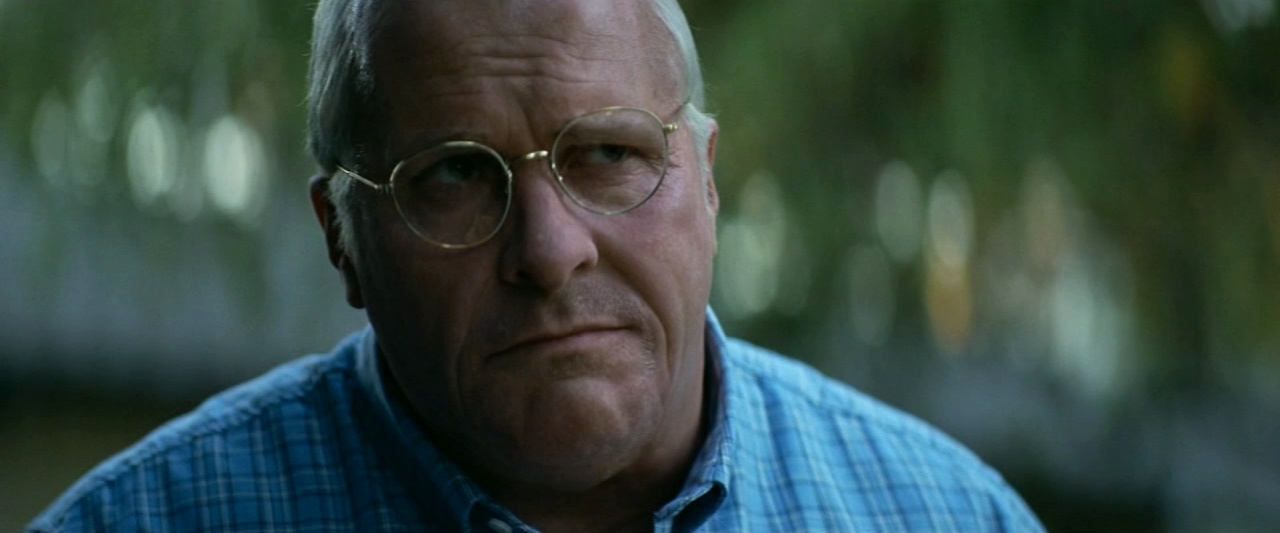
I went along to the Watershed this afternoon to see Adam McKay’s film ‘Vice’ which, according to Watershed’s blurb, is the “untold story that changed the course of history forever”. Well, I’m not sure that that’s strictly accurate but it’s certainly a fascinating and powerful story (‘biopic’?) about Dick Cheney, one of the world’s most powerful political men, who was Vice President to George W Bush… often cited as the most powerful Vice President in American history.
Christian Bale plays Cheney and he’s stunningly good… and VERY convincing (yet another Oscar contender). Actually, all the main characters were excellent (Amy Adams as Lynne Cheney; Steve Carell as Rumsfeld; Sam Rockwell as Bush).
It purports to be fact rather than fiction. Indeed, at the very start of the film, we’re told:
“The following is a true story. Or as true as it can be given that Dick Cheney is known as one of the most secretive leaders in recent history. But we did our f**king best”!
Cheney went from being Secretary of Defence, to White House Chief of Staff, to a CEO of energy giant Halliburton, and finally to George W Bush’s second in command – although, in the film at least, Cheney seems to pull ALL the strings.

I really didn’t know what to expect from the film… knowing the political history, I was pretty sure it would make me angry (which it did)… but I hadn’t realised that it would also be quite hilarious at times (I know!). There’s almost an element of a Michael Moore film (with its various voice-overs) in the way it’s presented. I found it incredibly scary to realise (if the film is anywhere near accurate) just how much power Cheney had and how he was able to wield it in the White House, the Senate, the House of Representatives and how corporations were mobilised through influential thinktanks such as the Heritage Foundation and the Cato Institute. I’ve read an interview with the director, Adam McKay, in which he describes Cheney, alongside Donald Rumsfeld, as having orchestrated a “rightwing stealth-revolution that ushered in a sustained era of Republican power and idealism” in the late 1970s… with President Reagan claiming that “true individuals don’t need government” and proposing tax breaks for billionaires(?). For me, it was a reminder of the depressing Thatcher Days in the UK in the early 1980s.
Cheney clearly had enormous political power… quiet, focused, deliberate, secretive and, to my mind, incredibly sinister. After all the controversy three years ago about Hillary Clinton using her family's private email server for official communications rather than using official State Department email accounts, I thought it was telling that McKay’s film ended with a list of frightening ‘facts’ that had emerged about Cheney’s Vice President office – including the THOUSANDS of emails that were destroyed in violation of the requirements of the federal records act!

In some ways, I felt that the film was made for the likes of me… someone with ‘liberal principles’(?) who had lived through the Reagan days – as well, obviously, the Twin Towers and the Iraq War – confirming my prejudices perhaps? American Republicans will no doubt dislike McKay’s interpretation of events – even they love Bale’s performance. For me, depressingly, the way matters were hidden or manipulated by Cheney and his entourage echoed much of what I suspect is still happening in the world of politics today – both in the USA and in the UK.
Did I enjoy the film? Well yes I did. I found it both captivating and entertaining (and somewhat frightening) – although, at times, I found the biopic style and voice-overs a little off-putting.
But definitely worthwhile seeing, especially for Christian Bale's performance.

Saturday, February 02, 2019

january-february 2019 books…

The Leavers (Lisa Ko): A brilliant novel telling the story of an American boy and his Chinese birth mother and the spirit-breaking difficulties of belonging and the plight of illegal immigrants. At a time when terms such as ‘immigrants’ and ‘refugees’ are constantly in the news, this book comes as a welcome reminder of the brave, heartrending, brutal stories that lie behind the headlines. It’s a courageous, sensitive book about families, relationships and human dignity. I loved it.
Raven Black (Ann Cleeves): I absolutely loved the ‘Shetland’ TV series and thought it was about time I read the books. Well, I absolutely loved this too! I found the Jimmy Perez character (quiet calmness etc) really believable and there was something about the gentle rhythm of island life (despite the murders) quite compelling. Perceptive and convincing. Cleeves is a really excellent writer… and I have two more books lined up on my bedside table (and there will be more in due course)! Brilliant.  
Remembering Richie (Richie Benaud+friends): Benaud has always been a bit of hero of mine – both as a cricketer (he was a leg-spin bowler/batsman just like me!) and as a journalist/broadcaster. As an architect, I recall working on a project for a London client who lived next door to the Benauds… and me needing to make a ‘schedule of condition’ inspection of their apartment and feeling that I was somewhere akin to being on ‘hallowed ground’! I think I met Benaud’s wife, Daphne, in the course of my visit. This book, published after his death in 2015, is a compilation of extracts from his various books and articles and a host of tributes from colleagues and friends from the world of cricket and beyond. Benaud always seemed to have all the gifts – intelligence, knowledge, discernment, humour, articulation and being the ‘master of the measured word’ (as journalist Ian Wooldridge once described him). A lovely book.
Ghost Wall (Sarah Moss): This is a short novel, set in rural Northumberland at the end of the 20th century, that sees a 17 year-old girl and her parents joining a university professor and a group of students for a few days to live as the ancient Britons did: foraging for food, dressing in tunics and observing iron age rituals. The father – a bus driver by day and obsessed amateur historian by night – has armed himself with all the necessary skills for survival and is there to pass on some of his knowledge to the students. He’s not a pleasant character. He thinks women should ‘know their place’ and he doesn’t tolerate those who fail to share his values or who disobey his pronouncements. The book starts with a short prologue, in which an iron age girl is marched out and murdered before an audience of neighbours and family… and this sets the tone for the unfolding story. I’ll say no more… It’s a tense, haunting, gripping and unsettling story by an excellent writer.
Reaching For Mercy (ed. Chris Goan+others): This poetry anthology is unapologetically ‘spiritual’, sometimes angry, sometimes expressing disappointment and regret, frequently raw and honest… but also saturated with hope. Edited by eight individuals including my friends Chris Goan (from previous Proost collaborations/Leeds exhibitions) and Emily Magrath (from Saint Stephen’s church, Bristol) – with contributions from nearly one hundred poets (including our vicar Lee Barnes) from around the world. I first came across the book at one of the twice-monthly ‘Resonate’ gatherings at Saint Stephen’s. Organised under the following headings: ‘hope’, ‘post truth’, ‘lament’, ‘ordinary-sacred’, ‘wild’, ‘everyone is welcome’, ‘whole’ and ‘resisting’… I’ve gently working through the book over the past three months or so and found it both challenging and inspiring. A lot of very talented people!

Friday, February 01, 2019

green book…

Moira and I battled against the elements this afternoon to see Peter Farrelly’s “Green Book” at the Watershed. The film is based on a true story (and I think the word “based” is important to note as I suspect that it’s been a little ‘hollywood-ised’ to give us all a rosy, feel-good glow!) about a successful, world-class, black jazz pianist, Don Shirley (played by Mahershala Ali), in 1962, who hires Italian-American white man from the Bronx, Tony Lip (played by Viggo Mortensen) to chauffeur him around America’s Deep South.
Shirley is well aware of the troubles he might face in different locations due to his skin colour and, in appointing Lip as chauffeur-cum-protector, he relies of his muscular presence to confront/repel potential trouble-makers.  
The two principal actors are outstanding and the film is both funny and poignant – underlining, as it does, the awfulness of the USA’s attitude towards race and colour (although, as I’d implied earlier, it sometimes came over as trying to reassure a ‘liberal white audience’ who want to feel good about not being racist!).
Strangely, I’d previously seen the trailer and, as a result, had had fairly limited expectations for the film… but I was very wrong.
I’d read an article in The Guardian which claimed that Shirley’s real-life family had reacted “with hurt and anger” and had asserted that there had been no close friendship between the pair (and they also criticised the film-makers for not consulting them).
Anyway, whatever happened or didn’t happen, I REALLY enjoyed the film… and I really enjoyed the relationship between the central characters (which quite surprised me, as I’d rather been ‘put off’ in seeing the brief trailer extracts).
No doubt Oscar awards are entirely possible!
I thoroughly recommend it.

Saturday, January 26, 2019

“a nation’s self-respect hangs by a thread as high noon looms”…

It’s just 62 days until 29 March (Brexit leave date).
Just to give you an idea of how time flies (really?), it’s now 53 days since Mrs May opened the debate of her Brexit ‘deal’ on 4 December. It seems to me that not much, if any, ‘progress’ has been made over the past 7 weeks or so and, I don’t know about you, but it seems that anything to do with Brexit has been happening ‘under the radar’ over the past week or so.
It’s almost as though the powers-that-be are running down the clock to ensure that we end up with an ‘acceptable deal’ that is only marginally less disastrous than a ‘no-deal’.
But what do I know? I’m no politician… and there are frequently times, these days, when I feel completely perplexed, lost and hopeless.
But don’t worry, rest assured that some of our politicians are well and truly focused. For example, we hear that Mr Johnson was given a £10,000 ‘donation’ by JCB this week before his Brexit speech in front of a digger (and just happened to mention the company several times)… and ‘poor’ old Mr Davis (former Brexit secretary) has secured a £60,000 20-hour-a-YEAR gig (that’s an HOURLY rate of just £3,000!) to ‘advise’ that very same JCB organisation.

Meanwhile, MPs continue to squabble about the important things in life… I refer you to this from journalist Marina Hyde in today’s Guardian:   
"Quote of the Week must still go to Nadine Dorries, who went on telly to express contempt for Brexit-cautious MPs ‘who really don’t care about their careers going up in flames’. Did the erstwhile gobbler of kangaroo testicles just say that out loud? To hear Nadine speak at the best of times feels like intruding on private stupidity, but even by her standards, this is eye-catching from the member for Mid-Bedfordshire. It can’t really be that Nadine should have been in parliament for almost 14 years without anyone informing her that politicians are in fact SUPPOSED to act out of a higher sense of duty than personal career advancement”.
Obviously, I’ll look back at this post in a couple of month’s time and think: “What on earth was I worried about?”… then again.
PS: Will there be an Article 50 extension? Will a decision be taken to allow a “People’s Vote”? Will the Villa be relegated?

Thursday, January 24, 2019

free solo…

Blimey!
I went along to the Watershed this afternoon to see Jimmy Chin+Elizabeth Chai Vasarhelyi’s “Free Solo” documentary about free soloist climber Alex Honnoid as he prepared to achieve his lifelong dream of climbing the face of 3,200ft El Capitan in Yosemite National Park, USA in 2017… without a rope.
I have to tell you that, for me, watching this film was a very brave thing to do(!) because I’m absolutely petrified of heights. And yet, despite this fear, I have to admit a deep fascination for mountains and for mountaineering books.
It’s an utterly compelling film – beautiful scenery, stunning views and wonderful photography (undertaken by a remarkable group mountaineer/cameramen and the odd drone), but coupled with the drama of the preparation, Honnoid himself and the other characters involved (including his girlfriend, mother and other mountaineering friends).
Rest assured that the knowledge that one single mistake would cost Honnoid his life – not to mention the memory of three of his free soloist friends who had previously lost their lives on various similar expeditions – was never far from the audience’s minds (a pretty full cinema watched in utter silence!).

I had assumed that the entire documentary would be step-by-step footage of Honnoid’s breathtaking ordeal but, in fact, much of the film was taken up with preparation, rehearsal (with ropes) and making copious notes – literally writing out and learning his own script of the precise movements, specific hand and foothold shifts/balance. Seeing him making numerous attempts (whilst roped) of several impossible-looking manoeuvres… and frequently failing/falling.  
Watching Honnoid climb a sheer mountain face that seemed to lack ANY hand/footholds was absolutely spellbinding... obviously, you KNEW he was going to succeed (but actually he had apparently agreed for the film to be completed even if he’d perished) and, in some ways, that removed some of the tension. But you were just left watching in awe… seeing someone achieve the ‘impossible’ (well, that’s how it was for me).
A remarkable athletic feat and a remarkable film.
It gave a completely new meaning to ‘hanging on by your fingernails’.

Monday, January 14, 2019

january 2019 books…

The Living Mountain (Nan Shepherd): I love coincidences. I first came across this exquisite, short book at Hannah+Fee’s and then, within a couple of days, watched Robert Macfarlane’s ‘Secret Knowledge’ documentary on TV. Nan Shepherd (1893-1981) was a rather special woman. She was born and lived almost all her adult life in the village of West Cults, three miles from Aberdeen and worked for 41 years as a lecturer in English at what is now Aberdeen College of Education. She was a keen hill walker and lover of nature. She wrote ‘The Living Mountain’ (the Cairngorm mountains of Scotland) during the years of WW2, but the manuscript lay untouched for more than 30 years before it was finally published (in 1977). I found it breathtakingly beautiful in its quiet simplicity; it’s not a mountaineering book or a travel guide (and doesn’t contain a single photograph or illustration), it’s a book that reflects a life lived within these mountains – the sounds, the senses, the air, the light, the colours, the plants, the climate… and much much more. It’s a very gentle book that one needs to take time reading… digesting her words and realising (yet again) the importance of looking+seeing, listening+hearing, stopping+digesting… just as Shepherd took her time to fully appreciate the environment in which she lived. I couldn’t have asked to start the New Year with a better, more rewarding book!
The One Who Wrote Destiny (Nikesh Shukla): I met Shukla at the launch of our local bookshop (StorySmith Books) in November and this is the second of his books I’ve read. This novel focuses on a Gujarati family settled in Bradford with roots in Kenya. It seems that the family is inter-generationally doomed by fate… with huge consequences for those left behind when young lives are tragically cut short. Covering three generations within a time-frame of 1966 to the present day, this is a funny, poignant, powerful story of family relationships, of things passed on between grandparents, parents and siblings, of frightening racist confrontations, of integration, of health and ageing, and ultimately of determination, defiance and hope. Growing up in Birmingham in the 1950s, I was well aware of colour prejudices and resentment issues (from my parents’ and grandparents’ generations – mine included)(although I never personally witnessed any racist violence). Sadly, today in the UK, some 70 years on, we’re experiencing similar despicable (but different) ‘hate crimes’ against refugees and immigrants. The book also dealt with the life of a particular individual being cut short by pulmonary fibrosis. Having myself being diagnosed (incorrectly, as it turned out) with the same terminal illness 18 months ago, it brought back all the same emotions and memories. I thought it was a quite brilliant book… and it’s given me much food for thought.
Ravilious and Co (Andy Friend): Everyone’s heard of Charleston and the Bloomsbury Group of artists, writers and thinkers, but far fewer will be familiar with the work of their contemporaries such as Eric Ravilious and his network of influential artists, including Paul and John Nash, Edward Bawden, Barnett Freedman, Enid Marx, Douglas Bliss, Percy Horton, Peggy Angus, Thomas Hennell, Helen Binyon and Tirzah Garwood (a somewhat less privileged group!). I’d previously read a fair amount about Ravilious (a memoir by artist Helen Binyon, a book of his High Street illustrations and his artist/wife’s wonderful autobiography ‘Long Live Great Bardfield’) and Friend’s book adds further superb detail to these (using access to diaries and letters from the time). The book also contained fascinating connections for me personally – reference to Ravilious and John Nash painting pleasure-steamers in Bristol in 1938 (Nash described Bristol as “the best port in England”!); Hennell’s time in a ‘mental’ hospital (St John’s Hospital, Aylesbury: the location of my first ever architectural project… long since demolished!); mention of the Kynoch Press (where my father worked for some years in the 1960-70s); and references to visits to John Nash’s home in the village of Meadle in Buckinghamshire (where one of my architectural partners also lived). This is a brilliant, extensively-researched and lavishly illustrated book and I absolutely loved it.
The Pebbles On The Beach (Clarence Ellis): I am a great lover of beach pebbles and this rather lovely book, first published in 1954 (re-published in 2018), provides an excellent source of information and advice. I think, however, I’d prove to be a huge disappointment to Ellis! I love the pebbles as objects in themselves – I have no real desire to cut, scratch or polish them… whereas Ellis would be urging me to hack and scrape them and take my ‘prizes’ off to the local lapidary for cutting and polishing before, of course, displaying my finest specimens! The book is very much of its time (and, in many ways, delightful) and appears to have been written for 12 year-old boys (in the mid-50s)(one gets the very clear impression that pebble-collectors and lapidaries are all male in Ellis’s view!). The language is both dated and rather patronising… some examples: “Thenceforward your progress will be rapid and joyous…”; “You must not expect to find good specimens of it without prolonged search…”; “If you crash one stone against another you risk the loss of an eye. That would not only bring your seaside holiday abruptly to an end but rob you of your zest for pebble-hunting once and for all…”! The book also contains a well-illustrated ‘Spotter’s Guide’ within the book jacket. I think the book only helped to underline the fact that I’m not very good at identifying things from book descriptions/illustrations and, although I might have learnt to apply a couple recognition hints, I’m never going to become a pebble expert!
A Year Of Magical Thinking (Joan Didion): I’d only previously read one Didion book (‘Blue Nights’, 4 years ago) and vowed then that I looked forward to reading ‘Magical Thinking’ (published in 2005) in due course. It’s taken me some time! Her husband John Gregory Dunne died, aged 71, of a heart attack… quite suddenly on 30 December 2003 in an armchair while Didion was cooking supper at home. Just days before, the couple had seen their daughter fall seriously ill (and much of the first half of the book juggles the loss of Didion’s husband with her daughter’s grave illness – her daughter died in 2009, aged 39). This beautiful, desperately honest book about loss and grief was written in the 12 months immediately following her husband’s death… replaying their last conversations in her head; coming across things he had written; dealing with her own self-pity; asking if there had been something she could have done to prevent his death; remembering things about their time together that she had long since forgotten; ridiculously refusing to throw away his shoes ‘in case he returned’… This a story of a year spent wishing – a year of ‘magical thinking’. Several times, I found myself reflecting on Didion’s words. Here’s just one example: “We are imperfect mortal beings, aware of that mortality even as we push it away, failed by our very complication, so wired that when we mourn our losses we also mourn, for better or for worse, ourselves. As we were. As we are no longer. As we will one day not be at all”. Another passage that really struck me was after a cancelled restaurant birthday meal (due to heavy snowfall) when her husband sat by the fire and read out a passage from one of Didion’s own books. At the end, he closed the book and said: “Goddamn. Don’t ever tell me again you can’t write. That’s my birthday present to you”… as she recalls the occasion, Didion’s concludes the chapter thus: ‘I remember tears coming to my eyes. I feel them now. In retrospect this had been my omen, my message, the early snowfall, the birthday present no one else could give me. He had twenty-five nights to live’. It’s a remarkable book. It’s not sloppy or sentimental (far from it), but it addresses emotions and fears that we’ve all experienced and pondered – about our own mortality and that of family members and friends. “Life changes fast. Life changes in the instant. You sit down to dinner and life as you know it ends”.

Wednesday, January 09, 2019

the passenger…

I went along to the Watershed again this morning(!) to see Michelangelo Antonioni’s classic 1975 film ‘The Passenger’, starring Jack Nicholson and Maria Schneider. I’d not seen the film before and, apart from knowing that it was an Antonioni (1912-2007) film about an arms dealer and featuring Jack Nicholson, that was the sum total of my knowledge (sorry!).
It’s an engrossing, somewhat haunting, ‘thriller’. Nicholson plays a disillusioned American reporter (covering the Chad civil war) who stumbles across a man’s corpse in an adjacent hotel room in the wilds of North Africa. He takes the opportunity to change identities with the dead man (as you do) in a quest to ‘start life over again’ (he hates his work, his wife is cheating on him etc etc).
Sadly, for him, passing himself off as someone else doesn’t mean he can escape his past… the man he’s impersonating turns out to be an arms dealer with connections to the rebels in the civil war.
Oh dear.
He ends up meeting up with a mysterious, young architectural student (played by Maria Schneider) – someone who seems almost as ‘lost’ as him. He persuades her (improbably in my view) to retrieve his luggage from his hotel room in Barcelona, they become lovers (of course) and he ends up explaining that he’d swapped identities with a dead man.
I suppose that when one is discussing a 44 year-old film, there is no need for ‘spoiler alerts’, but Schneider’s character and actions raised no end of questions in my mind (ok, you could just say that this was all part of the film’s psychological backdrop): Would she really have responded to Nicholson’s initial approach so willingly? Why was she sitting on a bench in a scene apparently filmed in Camden (was Antonioni simply just playing with us to see if we were concentrating?)? Accepting, without question, Nicholson’s instruction/suggestion after their car needed repair and jumping on a bus… but then immediately signing herself in to a hotel room (somehow knowing that Nicholson would end up there himself)… Really?
But, hey, maybe it’s just me…
Clearly, having been made in 1975, the film is somewhat dated… with a thin, young Nicholson - complete with Cuban heels, flared trousers and hair!
I found it a fascinating, engrossing film (Antonioni was clearly a brilliant director). It’s beautifully shot by Luciano Tovoli in France, Spain and North Africa and I particularly loved the final sequence (*spoiler alert*!): filmed, without dialogue, through the narrow bars of a hotel window to frame Nicholson… moving into a courtyard then moving back to look through the bars again. The first time we see Nicholson, he is alive. The second time he is dead! Oooh err! Quite brilliant!
Moral: arms dealing is bad for your health.
PS: There were a total of six of us in the audience – accommodated in the Watershed’s biggest cinema! One woman disappeared to the loo at a crucial point in the film and then disappeared again, never to return, just before the film’s final, brilliant conclusion. Hey ho!

Friday, January 04, 2019

the favourite...

Moira and I went along to the Watershed this afternoon to see our first film of the New Year, Yorgos Lanthimos’s “The Favourite”. At the end of it, Moira – not a person noted for her over-the-top reaction to cinematic entertainment – summed up her reaction to the film in just one word: “extraordinary”!
And it WAS… simply extraordinary!
The film is set in England in the early 18th century. Queen Anne is on the throne. The country is at war with France. Land taxes will either need to be doubled to fund the war or else perhaps a peace treaty will have to be signed to ‘save money and lives’? Decisions made on a whim or based on the latest piece of speculation or perceived personal advantage for the political figures (a bit like Brexit perhaps?!). I’d be the first to admit that my knowledge of Queen Anne’s reign is somewhat sketchy(!) but, in the film, Anne (brilliantly played by Olivia Colman) is portrayed as an unconfident, overweight, gout-riddled ruler who ultimately relies on the advice of her friend (and lover) Lady Sarah Churchill (wonderfully played by Rachel Weiz) – who effectively runs EVERYTHING (including serving as the Queen’s proxy in parliament). Into this rather ridiculous enclave comes Abigail Masham (superbly played by Emma Stone), Lady Sarah’s cousin who has ‘fallen far’ and now seeks employment in the royal household.
The film is dark, bawdy, outrageous, extravagant, strange… and, frequently, very funny. The sets, the make-up, the over-the-top costumes, the soundtrack are all remarkable and slightly weird. There is duck and lobster racing, pet bunnies and lots of silly dancing!! There is also, as the film title suggests, a question of favouritism… with Lady Sarah and Abigail competing for the Queen’s affections (literally) and influence.
The three female actors are all simply brilliant – with Olivia Colman utterly outstanding (Best Actor Oscar?)… and you get the feeling that all the principal actors had an absolutely hilarious time playing their respective characters.
It’s an unsettling and hugely entertaining film… and you definitely need to see it. Extraordinary indeed!