Wednesday, July 27, 2016

within the wall exhibition…

If you live in or around Bristol, then I strongly recommend that you check out this exhibition at the historic St John on the Wall church (in the crypt) in Broad Street. It runs from 27 July until 11 August 11am-2pm daily (why not come along to the preview at 6pm this Friday 29 July?).
It’s an exhibition with a difference…
Over the past 12 months, a group of people have met in the church and/or the crypt at 11.30am-1.30pm every Tuesday… to draw or write poetry or take photographs. It’s a very lovely, welcoming and diverse collection of individuals with a wide range of artistic abilities, experience and backgrounds… led by the brilliant Charlotte Pain, a wonderful artist in her own right (she would laugh at the description of her “leading” the group!).
The exhibition consists of sketches that group members have undertaken over the past year. Some people have some drawing or photographic experience behind them (but, perhaps, have let the habit lapse?). Others have hardly previously drawn at all. For some, it’s an opportunity to experiment. For some, the group’s principal benefit is the group’s sociability.
I joined this lovely group a couple of months ago – anyone/everyone is welcome to join – and have been incredibly impressed by the warmth of the welcome and its non-judgemental approach to art and creativity.
This is what Charlotte wrote about the project and the group:
“This project is about helping the public connect to buildings and locations. It is about breathing a new breath of life into churches, bringing community back within them and exploring their uses. It’s about getting people drawing and making. It’s about a belief that creativity can help us to strengthen our voices, nurture our mental health and help us connect to each other.
From a core group of people who rarely miss a session to random visitors to the city who have long left Bristol behind them, each drawing is a moment in the life of St John’s and of the people who have walked through the doors. With the support and open-mindedness of The Churches Conservation Trust the project has flourished.
We are a diverse group of people who have developed a passion for St John’s and have spent many hours drawing, photographing and admiring this special building. This is not only a celebration, but an invitation to the rest of Bristol to join us”.
As you might realise, Charlotte is a bit special!
I don’t want to embarrass people by highlighting their individual talents or what they bring to the group but, hopefully, this will provide a flavour: Mike has produced over 60 sketches over the past 12 months and his friendliness encapsulates all that group stands for; Brian is another of those gentle, generous, welcoming people and his photographs of the church are an inspiration; David is a brilliant artist (especially his watercolours!) who can draw beautifully and chat amusingly at the same time(!); Betty has been something of a revelation for me – every week, she produces her simple, intricate, pencil sketches (which remind me in some ways of Alfred Wallis’s naïve artwork from St Ives)(I suspect this is the first time she’s drawn since leaving school?); Jonathan loves coming to the group – he’s industrious, friendly and enthusiastic; Chris is always smiling, chatty and an inveterate photographer and drawer; Aran is one of the lovely church volunteers who has been “drawn” into the group… and then there’s also Christine, Anne-Marie and Dave etc etc.     
Membership of the group is completely free so, if you fancy having an excuse to do some drawing, then why not give it a try?
Please take an opportunity to pop into the exhibition (and also to see the fascinating, 14th century church itself).
Photo: some of the group working on the exhibition installation.

Sunday, July 24, 2016

two days in luton…

Moira and I have just returned home after spending a couple of very enjoyable days staying with our lovely Christine and Nick in Luton. We’ve been friends for nearly forty years (blimey!)(ironically, that’s about the time of Lorraine Chase’s Luton Airport/Campari advert… and, if you don’t know what I’m on about, then you’re too young!) – since our days when we lived just down the road from each other in Percy Street, Oxford.
They’ve fairly recently moved to Luton (where Nick is vicar in a parish which includes Luton Airport, a Vauxhall  Motors’ plant, thousands of houses - built mainly in the 1960s, two villages and large expanses of rather lovely open countryside – where there are plans to build hundreds, perhaps thousands, of new homes!).
Well, we had a lovely time catching up on our respective family news, future plans and reminiscing about our time living in East Oxford. We also enjoyed some beautiful countryside (within walking distance of the vicarage) and a village pub lunch… and we even found time for some culture (and more countryside and more food!) when we went to see Bernard Shaw’s play “You Never Can Tell” (first performed in 1899) in the grounds of “Shaw’s Corner” (his home for some 44 years and now a National Trust property). We took chairs, blankets and a picnic (and managed to arrive in time to grab a place in the front row!) and enjoyed a very pleasant, warm, theatrical evening* – with only occasional dialogue drowned out by passing aircraft! 
A lovely couple of days with very lovely friends.
Photos: picnicking in the front row; Shaw’s Corner; and random photo from our woodland walk.
Note*: we were all agreed that Shaw’s play was hardly inspiring stuff (but very enjoyable nonetheless)… it felt a little like the Emperor’s new clothes: although Shaw was an acclaimed playwright (amongst other things), we all found the plot somewhat tedious and the acting/characterisation somewhat exaggerated and overdone. My brother Alan sent me this link to a Monty Python sketch featuring Shaw, Whistler and Oscar Wilde (some 3mins in)… and, yes, it DID feel a little like it!!

Sunday, July 17, 2016

labour pains…

I’m very aware that, ever since the Brexit result, I’ve been moaning (some would say “ranting”!) about most things to do with political in this country.
So, I just wanted to say sorry!
But (and you just KNEW there would be a “but” didn’t you!), before I offer my resignation, I thought I’d give you my thoughts on the Labour Party (note: I’m actually a member of the Green Party).
For what it’s worth, I thought that, under Miliband’s leadership, the Labour Party’s performance in Opposition (especially given what a pig’s ear the Tories were making of things) was simply awful. Indeed, after the 2015 General Election, I felt that the Labour Party would be out of government until AT LEAST 2025.
The Conservative Party (following the farce of the EU Referendum) has already got itself a new Prime Minister but, meanwhile, as far as the rest of the country is concerned (and at a time when it SHOULD be underlining the mess that the government’s got us all into), the Labour Party has been doing its best to demonstrate its incompetence by scoring SO many own goals that it might well end up destroying itself (not even the most the passionate Tory strategist could have dreamed of such a brilliant campaign strategy)…

I like Jeremy Corbyn as a bloke… but I don’t happen to believe that he will be able to win support from the rest of the country to gain victory at the next General Election (to date, in my opinion, his “performance” in parliament as Leader of the Opposition has been poor).
Clearly, there are lots of people who disagree with me.
However, I’m not sure I agree with the current leadership challenges… and strongly suspect that, if there is an election, Corbyn will win again… the Labour Party will remain in tatters and the government will be rubbing their hands once again. 
What would happen to the Labour Party if Corbyn was re-elected party leader? Would a new breakaway party emerge in protest? What would they call it? “Real Labour” (you couldn’t make up these things!)?
Interestingly(?), I listened a constitutional expert on Radio 4’s “Today In Parliament” on Friday evening (you might still be able to catch it on iPlayer: 15/7/16 at 11.30pm) who indicated that a) the Official Opposition is the largest party in the House of Commons that is not in government so, if the Labour Party were to split into two “pieces”, there would then be a Labour Party and a breakaway group of MPs and b) if the breakaway group had most MPs (and more than the SNP’s 56), then it would count as the largest party and become the Official Opposition (the Speaker might ultimately be asked to make a ruling, if it is disputed).
I simply hope (please!) that all the opposition parties get their acts together - so that they provide a PROPER opposition to this government.
Right, that’s it… I’ll try to be quiet from now on (honest... probably).

Tuesday, July 12, 2016

june-july 2016 books…

More book stuff:
Mystery In White (J Jefferson Farjeon): I admit that reading a crime novel set at Christmas (and amid heavy snowfall and blizzards) did seem slightly surreal in June! First published in 1937, this book (out of print since the 1930s) was subsequently republished by the British Library in 2014. In his day, Farjeon was a highly acclaimed author and, after reading this novel, I can see why. It’s a clever, almost creepy, mystery… in which a group of travellers (whose train becomes trapped by heavy snowdrifts) take shelter in a country house – where fires have been lit and the table laid for tea, but no one is at home. As I say, creepy! A good read.
The Walker’s Guide To Outdoor Clues And Signs (Tristan Gooley): Don’t get me wrong, this is a fascinating book – absolutely full of information and insights for walkers/outdoor-lovers. However, I REALLY didn’t take to Gooley at all! He’s obviously extremely knowledgeable about his subject, but I would hate to accompany him on a walk or attend one of his courses. I could imagine Gooley being critical of the group for not spotting some tiny, very particular, obscure (and, frankly, boring!) detail that had only recently occurred to him… and everyone on the course just looking at each other and thinking: “he’s off his head”! It’s a brilliant reference book though and one that I’ll very much enjoy using over the coming years - but I’d definitely prefer to avoid meeting him in person (he seems like a bit of anorak... to put it mildly!)!
All God’s Children Need Travelling Shoes (Maya Angelou): Angelou has written her autobiography in seven volumes. This is book five - somewhat ridiculously, the others I’ve read are books one and six! As I’ve said before, I’ve been a big fan of hers over the years (and can almost hear her voice as I read her books). This one deals with her time in Ghana (she emigrated there in 1962, before returning to the USA three years later).
It’s essentially about Angelou exploring her African and African-American identities and her history and character. She focuses on becoming assimilated in African culture, but ends up finding this unattainable. It’s another fascinating book – her story is beautifully told and full of all the rich insights, colour and humour I associate with Angelou.
Sheila (Robert Wainwright): I enjoy biographies and picked up this book from the £3 Bookshop. I’m also fascinated by what was happening in this country in the 1920s – in terms of art, society, fashion, politics and the like - so, this book appealed on a number of fronts. It’s about Sheila Chisholm, born in Australia in 1895, given the best education given to girls at the time and then, in 1914, brought to London by her mother in order to complete her education by attending “the Season”. Wainwright describes Sheila Chisholm as “vivacious, confident and striking” and she clearly “blazed a trail through London society”, amassing friendships which ran the gamut from Buckingham Palace and Downing Street to Hollywood and the Kennedys. She married a Scottish lord, an English baronet and a Russian prince… and attracted a string of distinguished suitors (you get the general idea!). Frankly, I’d never previously heard of the woman and, on the face of it, reading about high society, privileged birthright, the cavorting idle rich and the ruling classes is hardly my idea of fun(!)… and yet the book DID make compelling and fascinating reading.
The Santa Klaus Murder (Mavis Doriel Hay): Yes, ridiculously, this is the second Christmas crime novel I’ve read this summer (I blame Moira!). Like the earlier book, this was also published in the 1930s (1935) – the golden age of British crime fiction according to the book’s blurb(?). It’s a very clever murder mystery set in a country house and involving an aristocratic setting, a dead earl and lots of red herrings. I liked the novel’s format of chapters written by a handful of the book’s characters (the Chief Constable being the major contributor) as the investigation unfolded. Well-conceived and well-executed (both the book and the murder!).

Sunday, July 10, 2016

brown willy…

I went along to the Watershed (with Hannah and Felix) this afternoon to see a special screening of a rather special film, called Brown Willy (named after the hill in Cornwall – the highest point on Bodmin Moor)… which included a Q+A session with the film’s director, Brett Harvey, its producer/one of its two actors (Pete), Simon Harvey, and its cinematographer, Adam Laity… plus a live performance by Three Cane Whale (as you might already know, I’ve become one of their groupies!), who provided the musical backdrop to the film.
It was shot (quite brilliantly to my mind) in black+white on Bodmin Moor in just 10 days and on an absolutely minimum budget. The film’s only two characters (Michael and Pete) are getting together for a weekend on the Moor. Michael (played by Ben Dyson) is about to get married and the weekend takes the form of an alternative stag do. Michael and Pete (both 40 year-olds) have known each other since childhood, but have grown apart over recent years and don’t talk as often as they used to. Michael is a rather prim, uptight character while Pete doesn’t really seem to have grown up.
They end up getting drunk, then high… then lost on the Moor (as you do).
Moira had decided, having seen the Watershed’s blurb, that the film wasn’t for her (she thought it sounded a bit like an English version of Alexander Payne’s “Sideways” – and, in a way, she was right). Despite the film’s somewhat ludicrous premise (given Michael’s prim, organised nature – SURELY, he’d have taken a map and a compass on his trip?)(and, whilst you could get lost on Dartmoor, I suspect it’s rather harder to do so on Bodmin Moor!), it’s an entertaining, funny and, at times, quite poignant film. The cinematography is simply stunning (it certainly reminded me of my time on Dartmoor helping to train young people for Ten Tors) and the music is quite, quite brilliant (I might be slightly prejudiced here?). Interestingly, director Bret Harvey was already familiar with Three Cane Whale’s music and, having obtained their permission to use some of it for the film, played it as the crew’s constant “musical travelling companion” throughout its filming – which resulted in the film being edited to suit the music rather than the other way around… and it works perfectly.
If you get the chance to see this film (it’s not on general release), then you should definitely take it. It’s a charming film.
Photo: Three Cane Whale performing after the Q+A session.


Friday, July 01, 2016

notes on blindness

Moira+I went along to the Watershed (where else?) this afternoon to see Pete Middleton’s/James Spinney’s remarkable film “Notes on Blindness”. In 1983 (aged 45), after years of failing sight, theologian John Hull became completely blind. Understandably, he struggled to come to terms with the finality of his condition – he described himself as being stuck, “a sighted person who couldn’t see”. He went through an initial grieving process, before deciding that he had to record his thoughts about blindness on tape (which he did for the rest of the decade) "because if I didn't understand it, it would defeat me".
These numerous tapes (along with interviews with John and his wife Marilyn) form the basis of the film… with actors (excellent Dan Skinner and Simone Kirby) lip-synching the dialogue.
It’s a moving and profound film (certainly not sugary or over-romanticised)… about coping and adapting, about becoming more aware, about the need for identifiable structure and routine, about the importance of support (from family, friends and colleagues), and about the importance of the familiarity of surroundings.
But, as you might imagine, it’s also a film about huge regrets… about not being able to see his five children (some of whom he’d never seen) and his wife, about not being able to access information, and about losing his visual memory (“longing for optic stimulation”). For me, I would have like to have heard more about how Marilyn adjusted to John’s total blindness…
During the course of the film, I found myself reflecting on the magical importance of ALL our senses - sight, sound, taste, touch and smell being the five traditional recognised senses… and how much we simply take them for granted… a magical sunrise or sunset; the laughter of children; Italian ice cream; an embrace from loved-one; new-mown grass… (the list could go on for several pages!).

Thanks to the tapes and his philosophical approach, you sense that Hull (who died in July 2015) was able to come to terms with his blindness… but one can only imagine how difficult the journey was and, if the circumstances were reversed, how we might cope in Hull’s situation.
Definitely a film I think you should see.
Losing sight, but gaining vision perhaps?

Saturday, June 25, 2016

june 2016 books…

More book stuff:
Notes From A Small Island (Bill Bryson): I first read this book 20 years ago (I remember enjoying it but, frankly, couldn’t remember any significant details). After living here for nearly 20 years, Bryson decided to take a jaunt around the UK prior to returning to the USA with his family… and this is the subject of the book. Bryson is opinionated, sometimes a little boring, frequently rude… and consistently very funny. A light, affectionate and enjoyable book… perfect holiday reading material.
Stet (Diana Athill): For nearly five decades, Athill acted as editor for some of the most celebrated writers in the English language. This is the second Athill book I’ve read (“After A Funeral” was the first) and I found this elegant, beautifully-written and extraordinary memoir even better. The first half provides an insight into her profession and her own career journey, whilst the second part focuses on particular writers with whom she has worked (eg. VS Naipaul, Jean Rhys and Brian Moore).
The Forbidden Zone (Mary Borden): This is a gem of a little book (first published in 1929). Borden, born in Chicago, set up a hospital unit on the Western Front for French soldiers in WW1 and worked as a nurse there for four years. I’d expected the book to be something of a documented account of her time there and, whilst it certainly conveyed the terror, pain and suffering of the war, her memories and impressions are written in a wonderful, almost poetic, manner which is both powerful and intimate.
Liza Of Lambeth (W Somerset Maugham): I like Maugham as a writer. This short novel, first published in 1897, was his first book and it tells the story of the trials and tribulations of an 18 year-old girl (Liza) living in Lambeth, London (set some 40 years earlier). It paints a convincing picture of working-class life in degenerative slum conditions – although with a fair sense of humour too. I have to say that I found the dialogue rather cumbersome at times (the book’s full of sentences such as: “Wot ‘as ‘e got the needle abaht?”…) - but I suppose this was unavoidable. The book apparently “made a stir” when it was first published and helped launch on his writing career.
The Soulwater Pool (Claire Williamson): I went to a “Literary Evening” at St John on the Wall, Bristol recently and Claire Williamson (a friend of our daughter Ruth, as it turns out) was one of the authors/poets reading their work. This is a short book (published in 2008) explores a domestic drama unfolding over two tense days. It features five characters and is set out in short, poetic reflections (often just a single page long) – each given a heading in the form of the named character and their location (eg.”Ella: In the Park”). It’s a surprising and subtle book – enhanced by the starkness of its rather beautiful format. Excellent.   

Friday, June 10, 2016

when marnie was there

I’m a self-confessed Studio Ghibli “nut” and so I went along to the Watershed this afternoon to see the studio’s 2014 film “When Marnie Was There” (directed by Hiromasa Yonebayashi – and the last film before the studio's self-imposed hiatus following the retirement of its founder Hayao Miyazaki). There were just twelve of us in the audience (I counted!) – interestingly, 8 men and 4 women… and only 4 of us could be classed as “oldies”!
The film is based on Joan Robinson’s 1967 book (of the same name) – with the location being shifted from Norfolk to a Japanese coastal town. The principal character, Anna, is a lonely, troubled foster child who’s been sent to stay with relatives. She becomes fascinated by an apparently deserted mansion… where she befriends a mysterious, western blond girl of her own age. There’s a strange sense of déjà-vu about the mansion…
I’m not saying any more – apart from the fact that the two women in front of me were drying their eyes at the end!
It’s another beautiful Studio Ghibli film – a perfect story ripe for adaptation and, as usual, with stunning animation (the closing credits must list about 100 animators!).
If you love Studio Ghibli – or are prepared to be converted(!) – this film is for you!

Wednesday, June 08, 2016

EU referendum: where is the labour party?

I posted this on facebook about a month ago:
I don’t know about you, but I’m completely fed up with the EU Referendum “debate”… (and we’ve still got 14 days to go!)… and I know I shouldn’t say this, but I also have great reservations about the electorate’s ability to understand (or care about?) the key issues… and, if they do vote, not to make decisions based purely on narrow prejudice”.
I reckon that more than 90% of my facebook friends favour staying in the EU. But, as we know from last year’s General Election, there’s clearly another facebook world out there that thinks entirely differently! The polls don’t all agree, but it really does seem that the referendum result is “too close to call” at this stage (but, hey, do we trust the polls?!).

It’s clear that, for the Tory Party, the EU Referendum marks, in part, an excuse for a leadership battle (which, in turn, would lead to the government moving still further to the right). However, given that less than 25% of registered voters actually voted Tory, then you’d think that, with Labour Party and the Scottish Nationalists backing the “Remain” option, the polls would be predicting a relatively large majority for a "yes" vote.

I don’t happen to think that Messrs Cameron and Osborne have been particularly convincing in the EU Referendum debate (just don’t get me started on Boris, Gove and IDS!), but why has the Labour Party NOT been at the forefront of the “Remain” campaign too? The situation demands a powerful Labour voice but, sadly, I don’t think that Labour has been pulling its weight. Too many Labour politicians – and that includes Jeremy Corbyn and senior members of the Party - seem too ready to sit on their hands so far. Alan Johnson (a bit of a political hero of mine) has been leading “Labour In For Britain” campaign – and I feel sure he’s been arguing the case at public meetings throughout the land - but how often have I seen him being interviewed on television interviews or news programmes or in extensive newspaper articles and the like? Not enough for my liking. I cannot understand this… when SO much is at stake.

This article in The Telegraph (7 June) gave an interesting, albeit somewhat depressing, picture. Amongst its findings were:
·         73 per cent of those aged between 18-29 want to remain in the EU, while 63 per cent of those aged over 60 want to leave.
·         Guardian and Times readers are “yes”, while Mirror, Telegraph, Sun, Mail and Express are “no”.
·         Northern Ireland, Scotland, London, Wales and North-East England are “yes”, while the rest of England is “no” (with East Midlands, West Midlands, East Anglia and Yorkshire+Humberside apparently leading the “no” vote).
·         University-educated people are more likely to be “yes”.

Clearly, it seems that Immigration is one of the key issues… and, for me, Polly Toynbee (writing in The Guardian on 7 June) summed up the situation pretty well:
“Immigration is Brexit’s winner. The bottom 10% do lose out by importing unskilled labour, according to the Bank of England. For them, that’s a real effect all governments have failed to remedy. But the focus on migrants conveniently displaces deeper causes of discontent about the loss of good jobs, as a third of people are left behind, never to be property owners. It wasn’t always that way: the late 1970s were the most equal time in our history, when boardrooms dared not pay themselves obscene sums and unions stopped pay falling back. But since Margaret Thatcher took the lid off “aspiration” for the top few, inequality soared and never recovered. Labour redistributed with tax credits and invested in public services – but that’s been swept away. Brexit would reap whirlwinds for the inequality sowed over the past 35 years.
The right has used immigration and a diet of lies about the EU to distract from austerity-stricken public services, most damaging to those whose living standards have stagnated for over a decade. University education has expanded, leaving little for the other school leavers but shoddy false apprenticeships and stripped-down further education colleges. Social mobility has fossilised. There would be an awful justice if that lack of education finally did the country in.
Economists, including the governor of the Bank of England, warn that inequality is the great economic risk. Capitalism eats itself when too many get left too far behind to consume its products. Insane investment in over-inflated house prices instead of job-creating production devours the nation’s wealth. If the dispossessed up-end the economy with a leave vote, it may serve the country right – though as ever, the poorest would lose most.
Out on the doorstep over the last weeks, the class divide jumps off the canvass forms as lower income Labour voters go Brexit, and Labour MPs turn ashen-faced. Yet when confronted with what a Johnson/Gove/Farage government meant, I found many did change their mind. Will enough Labour people get out there, making the case? Jeremy Corbyn’s contribution has been more saboteur than saviour, dismissing the remain case as ‘histrionic’, ‘myth-making’, ‘prophecies of doom’. But Labour canvassers talking to their own side are good persuaders – and there is still time”.
As a nation, we’re not used to holding a referendum. For me, one of the problems about the EU Referendum is that it’s NOT really about the EU… it’s become a fight for the leadership of Tory Party.
The trouble is that, yes, in 2020 there’ll be another General Election and, if we want to, we can vote out the current government… but, once we opt out of the EU, there won't be a chance for us to simply opt back in if we feel like changing our minds.

Photo: it's from Emma Chapman's facebook page... and I think it's VERY good!

Tuesday, June 07, 2016

may-june 2016 books…

More book stuff:
The Village Cricket Match (John Parker): I must have read this book three or four times since I bought it in 1979… but I thought it was about time I read it again (it is the cricket season afterall!). Actually, it’s probably more than 20 years since I last read it… my memory of the book was that I liked its predictability, its familiarity and the cricketing memories that it evoked – a bit like sporting comfort food! It’s full of descriptions of the preparations, routines and typical characters involved in a typical Sunday afternoon cricket match in an English village. Somewhat surprisingly, perhaps (for me, at least!), I found myself getting quite irritated by the affectionate, enthusiastic, almost sugary, prose (written in the 1970s, but it felt as it could have been written 50 years earlier) – and it frequently seemed as if I was reading a story from one of my boyhood comics. My book is on its very last legs (its pages are about to fall out)… so I suspect this might be the last time I read it. Definitely not a literary classic, but hey!
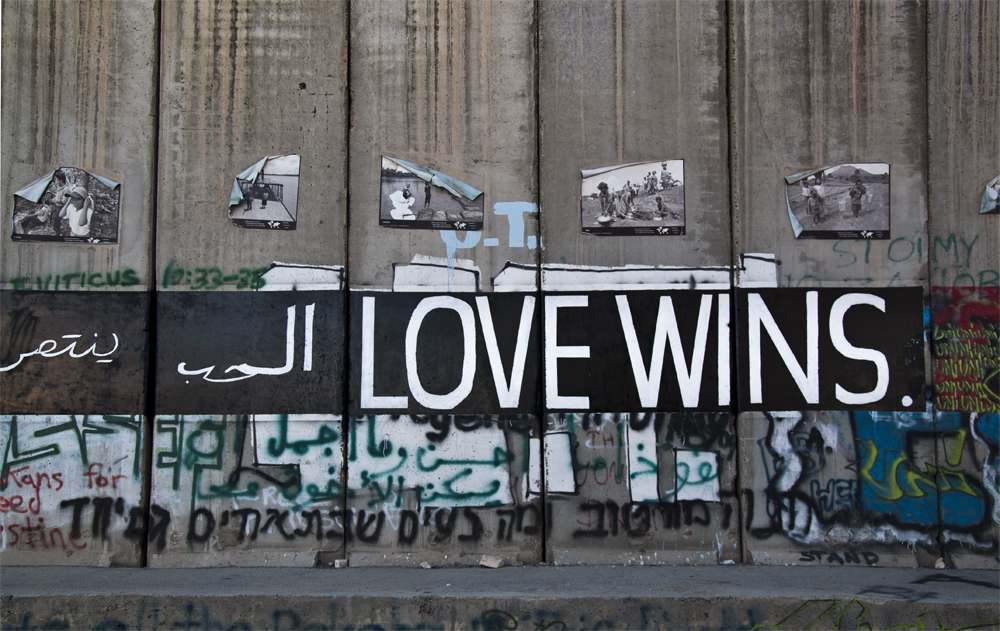
Occupied Territories (Garth Hewitt): Garth Hewitt is the founder of the Amos Trust (“a small, creative Christian human rights agency that works with vibrant grassroots partners around the world”). I briefly acted as one of its volunteers at Greenbelt perhaps 10 years ago and again met Garth and his wife Gill on Iona in 2012 when they attended a conference to discuss the division of the West Bank, the encroachment of Israeli settlements and the impact on the lives of Palestinians. I bought this book when I attended an evening organised by Kairos Palestine in Bristol in mid-May 2016. Specifically, the book talks about the occupied city of Bethlehem (and now surrounded by a wall that reaches 25 feet high). It’s an incredibly impressive book which bluntly describes life in the occupied West Bank, Gaza and East Jerusalem. It talks about a non-violent response to the current, depressing situation – one that is both pro-Palestinian AND pro-Israeli; and one that reflects the views and advice from Jewish and Muslim individuals who have committed themselves to stand for justice. Again and again, I found myself underlining passages from the book (frequently quotes from prominent academics, politicians or church leaders)(I’ve put some of them together in this blog post). Thought-provoking and challenging.
And Still I Rise (Maya Angelou): This is a book of some of Angelou’s poems… she definitely had a way with words! She wrote with such wisdom and courage, but also with wit and generosity. This is lovely book – which I’ll no doubt read again and again over the years – which is both accessible and challenging. Reading her words, you can almost hear her performing her poetry.
A Clockwork Orange (Anthony Burgess): Like most people, I suspect, I’ve seen the film… but I’d never read the book (published in 1962) until now. It’s a shocking, frightening book about a subculture of extreme youth violence. It’s set in the “near future” (could the future be now?!) and the book’s teenage protagonist, Alex, narrates his violent exploits and his experiences with state authorities intent on reforming him. Alex’s confessions are written in “nadsat” (a secret language), which makes the book quite difficult to read… and yet I found it was a bit like reading/hearing a Shakespeare play – once your brain had adapted to the strangeness of the language, it was relatively easy to follow. It’s brilliantly inventive, but the violent subject matter makes for uncomfortable reading. Very impressive nevertheless.
The Case Of The Late Pig (Margery Allingham): Some light summer reading… my first “classic crime” novel by Margery Allingham (first published in 1937)… and, therefore, my first of her books featuring detective Albert Campion in the leading role. Campion’s somewhat mysterious world is very much that of upper-class England – marginally watered-down by the fact that he is aided in his work by his manservant Lugg (somewhat uncouth and with a background in burglary!). This short novel was enjoyable, but certainly not particularly remarkable or notable. I have to say, I wasn’t particularly “taken” by Campion as a character, but perhaps I need to read more of his adventures before being able to make a valid judgement?

Friday, June 03, 2016

versus: the life and films of ken loach…

As you might know (or be able to guess!), Ken Loach is a bit of a hero of mine!
This afternoon, I went along to the Watershed to see Louise Osmond’s impressive documentary about the great man and his work (it was its opening screening at the Watershed… and, sadly, there were only another SIX fans in the audience to appreciate the film!). This year will see Loach celebrate his 80th birthday, release his 50th major work and commemorate the 50th anniversary of his landmark television drama Cathy Come Home(!).
Loach used to run up against the establishment figures and corporations on a regular basis and he frequently found that this ideas and views ran against those who were due to provide the financial backing for a project (eg. television companies who received the bulk of their income from the government of the day) – and, so, many projects had to be abandoned. Indeed, Loach didn’t direct a single film for 12 years in the 1980s/90s.
The documentary is a funny, provocative, revealing account of Loach’s life and career – in fact, his unexpected humour and often “riotous conflict” both came as somewhat surprising. Indeed, Loach’s long-term producer, Rebecca O’Brien, was wonderfully quoted in the programme notes as saying that “Ken can start a row in an empty room”!
He’s clearly one of the most determinedly political filmmakers in the history of cinema… he’s fearless and utterly determined in his work. In fact, he had decided to retire in 2013, but was so incensed by the Tory 2015 General Election victory that he felt he still had more to say… and the resulting film, “I, Daniel Blake”, duly won the Palme d’Or at Cannes last month (can’t wait to see it).
When Loach eventually dies (hopefully not for several years yet), Louise Osmond’s documentary will be shown throughout the world… but, in the meantime, I would definitely recommend that you see it NOW!
PS: The last Loach film I saw at the cinema was the excellent “The Spirit of ’45” (2013). Two of my all-time favourite Loach films are the brilliant “Kes” (1969) and “Looking For Eric” (2009)… but, as the bloke sitting a few seats away from me this afternoon observed: “I think they need to have a special Loach Season at the Watershed!”.
Absolutely!
PPS: IMPORTANT: Ken Loach will be at the 6pm (pay-what-you-can) screening this Sunday 5 June for a Q+A session… it’s tickets only (although I suspect it will already be a sell-out).

Monday, May 30, 2016

occupied territories...

This is the name of a book* written by Garth Hewitt (the founder of the Amos Trust: “a small, creative Christian human rights agency that works with vibrant grassroots partners around the world”). I briefly acted as one of its volunteers at Greenbelt perhaps 10 years ago and again met Garth and his wife Gill on Iona in 2012 when they attended a conference to discuss the division of the West Bank, the encroachment of Israeli settlements and the impact on the lives of Palestinians.
It's a powerful, profound, thought-provoking book and one that I think deserves to be read by anyone who cares about peace, dignity and justice in this brutal, greedy world we live in.
Again and again, I found myself underlining passages from the book (frequently quotes from prominent academics, politicians or church leaders), so I’ve collected just SOME of them together – as a reminder for me and, perhaps, to provide others with food for thought. In no particular order (I hope Garth doesn't mind me quoting from his book - believe me there are LOTS more extracts I could have included!):

“If you are neutral in situations of injustice, you have chosen the side of the oppressor”.
Archbishop Desmond Tutu.

“We need to create a new reality in the Holy land, a new structure where every person that lives here – that was born here, Israeli, Palestinian, Jew, Christian and Muslim, is honoured for who they are so their history and their past is respected”.
Sami Awad, executive director of Holy Land Trust, 2013.

“But this is the frontline. The wall and its offspring road are here and growing, the beautiful valley is being ripped in two. And then there is the ‘tunnel house’. A family has the ‘right’ papers to prove they belong to this land but they (the Israeli army) put them on the ‘wrong side of the line’. The ‘solution’ is to literally wall them in to their own private prison at a cost of $1million. It is obscene. It is obscene that these people in this village are being brutally shown by the wall, the settlements, the demolition orders, the soldiers and the bottomless budget that we want what is yours but we do not want you. We will dehumanise and humiliate you and make simple things so difficult. We will make your life so intolerable that you will leave… How can the world stand by and let this happen?”
Nive Hall, Amos Trust’s operations Manager at the Cremisan monastery.

“It involves difficult decisions and tough choices. However, the choice is not the support for Palestine against Isael or vice versa. Rather:
·         It is a choice for justice, against oppression; for human and political rights, against dispossession.
·         It is a choice for freedom, against an occupation that denies freedom.
·         It is a choice for equal human dignity, against racism and discrimination.
·         It is a choice for non-violent resistance, against the violence that perpetuates a cycle of hatred and recrimination”
“Time for Action”, Kairos Britain – following “The Iona Call” conference, 2012.

“I wonder… if having financial services and arms manufacturing at the core of your country… corrupts you morally?”
Alexei Sayle, The Metro, April 2013.

“As I write this, the richest people in the world are meeting in Davos, Switzerland. Of this meeting Aditya Chakrabortty says ‘More than 2,500 business executives and bankers will converge on the highest town in Europe for the annual World Economic Forum. For the next five days Davos will, it is safe to say, boast more millionaires per square foot than anywhere else on the planet’. He points out there is a basic membership and entrance price tag of £45,000 (approx. $74,000), but then adds: ‘The real business lies in private sessions with industry peers and amenable politicians and access to those start at around £98,500 ($161,600). And this is what makes Davos so fascinating: it is the most perfect case study of how practitioners of free market, globalised capitalism give the public one explanation for what they are doing and why, while privately pursuing the complete opposite. On the one hand there is an event attended by Sharon Stone, Bono and a slew of tame academics (14 Nobel laureates this week alone) the message being, “we are open to anyone”. On the other hand, there are those secret meetings off limits to anyone not in the £100K club… From its inception, the whole point of Davos has been to promulgate the gospel of free market fundamentalism. Earlier generations would have known what to call Davos set of wealth extractors and rip-off merchants’”.
Garth Hewitt, “Occupied Territories”. Aditya Chakrabortty: “An Action-Packed Thriller Is About To Unfold In Davos, Switzerland”, The Guardian, 21 January 2013.

“The greatest threat to world peace is not from nuclear weapons and their possible proliferation, it is from drones and their certain proliferation… Drones are now sweeping the global arms market. There are some 10,000 said to be in service, of which a thousand are armed and mostly American. Some reports say they have killed more non-combatant civilians than died in 9/11. I have not read one independent study of the current drone wars in Afghanistan, Pakistan and the Horn of Africa to suggest these weapons serve any strategic purpose. Their ‘success’ is expressed solely in body count, the number of so-called ‘al-Qaeda linked commanders’ killed… Neither the legality nor the ethics of drone attacks bear examination… It is hard to imagine a greater danger to world peace”.
Simon Jenkins, “Drones Are Fool’s Gold: They Prolong Wars we Can’t Win”, The Guardian, 10 January 2013. 

“The world must urgently set goals to tackle extreme inequality and extreme wealth. It is now widely accepted that rapidly growing extreme wealth and inequality are harmful to human progress, and that something needs to be done. Already we hear the World Economic Forum’s Global Risk Report rated inequality as one of the top global risks of 2013. The IMF and The Economist agree. Around the world, the Occupy protest demonstrated the increasing public anger and feeling that inequality has gone too far.
In the last decade, the focus has been exclusively on one half of the inequality equation – ending extreme poverty. Inequality and the extreme wealth that contributes to it were seen as either not relevant, or a prerequisite for the growth that would help the poorest, as the wealth created trickled down to benefit everyone. There has been great progress in the fight against extreme poverty… (But) we cannot end poverty unless we end inequality rapidly.
That is why we are calling for a new global goal, to end extreme wealth by 2025 and reverse the rapid increase in inequality seen in the majority of countries in the last twenty years”.
Oxfam: “The Cost Of Inequality: How Wealth And Income Extremes Hurt Us All”, 18 January 2013

“Every gun that is made, every warship launched, every rocket fired signifies, in the final sense, a theft from those who hunger and are not fed, those who are cold and are not clothed. The world in arms is not spending money alone. It is spending the sweat of its labourers, the genius of its scientists, the hopes of its children… This is not a way of life at all, in any true sense. Under the cloud of threatening war, it is humanity hanging from a cross of iron”.
US President Dwight D Eisenhower: “The Chance For Peace” speech, 16 April 1953.
Note*: “Occupied Territories” (Garth Hewitt), published by IVP Books, 2013.
Photo: part of the wall surrounding Bethlehem.

Friday, May 27, 2016

mustang

Moira and I went along to the Watershed yesterday afternoon to see Deniz Gamze Erguven’s film “Mustang”… set in a remote Turkish coastal village. When five orphaned sisters are spotted harmlessly playing with boys on the beach, such "scandalous" behaviour is reported to their grandmother and uncle… who begin a tyrannical regime of imprisonment (to “safeguard their marriage prospects”)… the house ends up becoming a “wife factory”… you get the general idea!
It’s a film which underlines the male dominance of Turkish society… where men seem to feel that have a “right” to pursue women for sex but, at the same time, insist on only marrying a virgin.
A very sad state of affairs.
The Watershed programme contained an extract of an interview with director Erguven in which she was critical of the “constant and hideous sexualisation of women” in Turkey. In it, she also expresses her concern about the increasing censorship in Turkey.
It’s a stark, powerful film – which thankfully includes a fair amount of humour as well as the harsh treatment of the five girls. I’ve seen a number of critics comparing the film to “The Virgin Suicides” and that’s probably appropriate… but I think that, for me, it’s the robust depiction of sisterhood that comes across most strongly.
Definitely worth seeing…

Thursday, May 26, 2016

may 2016 books…

More book stuff:
Daddy’s Gone A-Hunting (Penelope Mortimer): First of all, this was one of Moira’s (very) small collection of beautiful Persephone books. Not only are they are wonderful to look at, but they’re also an absolute pleasure to use (they “feel” very good to hold while you read… look, just get one yourself and try it out!). First published in 1958, this is a novel about a time when expectations of most women were to be home-makers and mothers, who stayed out of the workplace to raise their children. It’s about a middle-class woman who lives in a large house (probably in the Home Counties), whose husband works in London and who, for convenience, has a flat to enable him to work longer hours (and for the convenience of his various mistresses), whose daughter is away studying at Oxford, and whose two younger sons spend all but 16 weeks a year at Boarding School. The woman is lonely, depressed and living a life without purpose. Thanks to an excellent preface (by Valerie Grove), I’m now aware that Mortimer’s writing is invariably indivisible from her personal life (she married divorce lawyer/writer/playwright John Mortimer in 1949 and you can discern exactly what stage the Mortimers’ marriage had reached in this book). It’s a poignant, compelling story and a beautifully written, impressive book.
Quiet (Susan Cain): This is a brilliant book, written by an introvert. The front cover sums up its gist: “The Power of Introverts in a World that Can’t Stop Talking”. Moira had read it and had enthusiastically endorsed it. But why would I want to read a book about introverts? On a personal level, I suspect that most of my family and friends would categorise me as being more extravert than introvert but, interestingly (for me anyway!), I scored 13 out 20 on the book’s self-assessment survey – which rates me more introvert than extravert(?!). Cain argues persuasively about a world that, she maintains, “excessively and misguidedly respects extroverts”. Again and again, I found myself being reminded about situations in our own family and in my own career. Cain talks about the need, for example, for artists and designers (amongst others) to have “extra quiet and privacy in order to do their best work”; she talks about schools (and corporations) where being a “team player” is seen as the only path to “success”; she even refers to research that points to “forceful extroverts” being responsible for the global financial crash! She talks about Harvard Business School where socialising is "an extreme sport". Cain had to persuade a publisher she could conquer her stage fright and promote herself at book festivals before they agreed to take her on. In America, extroverted parents have been known to send their introverted children to psychiatrists to have their introversion "treated" out of them. We admire extroverts because they're charismatic, chatty and self-assured, but Cain maintains we're committing a grave error structuring our society around based on such a premise. She also helpfully (for me) and frequently made her points by relating stories of “real people” and their situations. If I do have a criticism, it’s the huge of number of psychologists she cites in conveying her arguments, but hey! It’s a fascinating and thought-provoking book and a surprising and rewarding one too.
If you haven’t got time to read the book for yourself(!), then please check out this 20 minute TED talk to get a flavour.
My Brilliant Friend (Elena Ferrante): This is our Book Group’s next book. It’s the first of four novels that make up “The Neapolitan Novels”. The book’s narrator, Elena Graco, recalls her childhood and early adolescence in Naples in the late 1950s, where she meets her “brilliant friend”, Lila Cerullo, at school. They both come from relatively impoverished households, they are both clever, but very different (James Wood in The New Yorker describes Lila as “feral, quick, unafraid, vicious in word and deed” while Elena remains on the academic straight and narrow). It’s a powerful, impressive book about Sicilian poverty and deprivation, hopes and ambition, violence and honour - where men dominate society and family feuds are commonplace. The two main characters are wonderfully portrayed. An enthralling, intense book.
The Squire (Enid Bagnold): Another beautiful Persephone book (this relates to the book as an object, rather than the quality of the novel!)... again, I borrowed Moira’s copy. It was first published 1938 and, according to the book’s jacket, Bagnold herself “led a sociable, comfortable, servanted life” and this novel very much encapsulates a similar middle class existence. “The Squire” is in fact a reference to the wife (her husband spends 3 months of the year in India on business) who heads the family of five children – including one by the name of Boniface(!) - and runs a household of seven staff. The wife is in her mid-forties and, in many ways, is a reflection of Bagnold’s own life and attitudes towards middle age with respect to sex and the family (the author herself had four children). Men are essentially eliminated from the book altogether – the butler being the one occasional exception. I found the references to non-family members (staff and Caroline, the squire’s more attractive, aristocratic friend and neighbour… who is “pursued by men”!) slightly more interesting than the squire or her children but, overall, I found myself constantly reacting against the privileged, upper middle-class way of life the book portrayed.
A Song Flung Up To Heaven (Maya Angelou): I’ve been a big fan of Maya Angelou over the years… and have especially loved listening to her voice. I read “I Know Why The Caged Bird Sings” (the first volume of her autobiography) several years ago, but hadn’t read (until now) any of the others – this is the sixth out seven. It recalls the time she returned to America, after a few years living in Ghana, at the height of the civil rights movement. She was returning to work with Malcolm X – who had created a foundation called the Organisation of African-American Unity… and intended to approach the UN world council to intercede on the part of beleaguered blacks. Within days of her return, Malcolm X had been shot dead. The book describes her life at a time of an extraordinarily exciting and tragic political period – including her acquaintance with Martin Luther King and ‘Jimmy’ Baldwin. Despite the cruelty, discrimination and poverty she experienced in her life, the book is full of her compassion, wisdom and wit. I’ll no doubt be reading the other volumes in due course.

Monday, May 23, 2016

chilcott…

The long-awaited Chilcott Report (it’s taken nearly SEVEN years to produce!) is due to be published on 6 July 2016 - a fortnight after the EU Referendum. According to today’s Independent newspaper, Tony Blair (and other government officials, including Jack Straw) is set to be savaged in an “absolutely brutal” verdict on the failings of the occupation.
Like so many UK citizens, I opposed the war and, like hundreds of thousands, joined the London anti-war protest march on 15 February 2003.

I’ve just re-read my letter dated 25 January 2003 sent to Prime Minister Blair (he must have received thousands along similar lines), his Cabinet, the Leader of the Opposition (Iain Duncan Smith), the Leader of the Liberal Democrats (Charles Kennedy) and my MP at the time, Boris Johnson. It’s a sickening reminder of politics of power (I was tempted to write “egotistical political legacies”!) and the devastating implications of war. This is what I wrote:
Dear Mr Blair
I am writing to express my very deep concern at your Government's apparent commitment to go to war with Iraq.  A sceptical view would suggest that a decision had already been taken to invade Iraq - irrespective of public opinion in this country or support from the UN Security Council - and that the Government was merely "going through the motions" of securing evidence and justification to do so while the UK/USA forces take up their positions. 
As a committed Christian (and as someone who has voted for the Labour Party over the past twenty years or so, and who wholehearted celebrated the arrival of the Labour Government in 1997!), I feel a real sense of unease at recent developments and your Governments' handling of the situation.  I would seriously question the morality and legality of war against Iraq at the present time and would urge that force should be considered only as a last resort - and, crucially, ONLY with UN support.
Whilst there seems little doubt about the evil nature of Saddam's regime, I feel it is essential that any action against it should only be taken if it can be proved that Iraq is in breach of the UN resolution and, at this stage, we still await evidence from the UN weapon inspectors.  When the decision was taken to send the inspectors back into Iraq, there was a sense of "now we'll be able to show the world that Iraq holds weapons of mass destruction"; only weeks later, the UK/USA Administrations are saying that weapons inspections "could not continue for unlimited time".  Condemning Iraq for failing to prove a negative would hardly appear to count as justification for war.
Whilst I can obviously see the justification of ridding the world of any weapons of mass destruction, I am far from convinced that the consequences of any invasion have been properly thought through.  To my mind, a war will almost certainly result in unpredictable and unintended consequences - high numbers of civilian casualties; the death of many servicemen and women; more instability and violent chain reactions in the already volatile Middle East; more anti-American and British sentiment around the world; and, almost certainly, even more terrorism.
Regardless of your exhortations, public opinion in this country has remained stubbornly sceptical about the need for war with Iraq - people are not convinced that the threat from Saddam is great enough to justify war; people are suspicious of US President George Bush.  There is wide-spread opposition to war from church leaders - throughout the world.
You have predicted that the public would eventually back a war against Saddam Hussein's regime in Iraq if other means of disarming him failed.  You said this week that we had not reached the circumstances where you told the British people we were in conflict with Iraq but that "when and if that time came, people would find the reasons acceptable and satisfactory because there is no other route available to us".  The time needed to persuade us (or not) could be very limited; there is speculation that, irrespective of any support from the UN, war could start by the end of February.  Unless convincing evidence is produced within this time, it would appear that this country could be at war with Iraq without the support of the British people - an alarming prospect in a democratic society, with potentially devastating consequences for the future of this country and the world.
Yours sincerely
Steven Broadway
cc            all members of The Cabinet
cc            Mr Iain Duncan Smith MP, Leader of the Opposition
cc            Mr Charles Kennedy MP, Liberal Democrat Leader
cc            Mr Boris Johnson MP (Henley Constituency)

Blair opened a debate in parliament on 18 March 2003 (click here to read his full speech). On 20 March, starting with an air strike on the presidential palace in Baghdad, a combined force of troops from The United States, the United Kingdom, Australia, Spain and Poland invaded Iraq…
The invasion consisted of 21 days of “major combat operations”.
At no time did the United Nations Security Council support a resolution backing the war.
At a cost of $1billion, 1,625 UN and US inspectors had spent two years searching for weapons of mass destruction.
None were ever found.
It’s absolutely scandalous that the Chilcott Report has taken so long to be published. All the key players have long since disappeared from the main political stage… but their shameful legacy remains.
Photo: from The Huffington Post