Saturday, February 22, 2014

joelle tuerlinckx exhibition at the arnolfini…


I have a problem with most of the exhibitions at the Arnolfini, here in Bristol.
Frequently, I find them obscure and impenetrable.
I feel very sad about this… because it’s a wonderful gallery space and somewhere I pass several times each week.
Now, I appreciate that this view is not shared universally – BUT it IS the opinion of a large number of talented, open-minded, perceptive arty friends whose opinions I respect.  
Even the name of her exhibition: “WOR(L)D(K) IN PROGRESS?” is a bit puzzling. To me anyway (I know what it means, but it’s contrived to say the least).

Joelle Tuerlinckx was born in Brussels in 1958 and her work has been shown widely on an international level.
If you haven’t already seen the exhibition, this blurb from the Arnolfini’s website will hopefully provide you with a flavour:
Her work is distinguished by a unique sensual and transient approach and a precise use of materials, colours, and abstract shapes, culminating in expansive, complex installations. Film projections, video, drawings, collages, photographs and found objects are often combined with subtle alterations to the spaces and gestures that highlight the time and space of the viewing experience”.

Before today, I’d seen the exhibition twice. Well, I tried… really I did, but I’m afraid most of it just went over my head. To me, it really did feel like the “Emperor’s New Clothes”. So today, I went along to one of their exhibition tours (every Saturday at 2pm)… in the hope that someone REALLY would be able to make the “scales fall from my eyes”.
Eight of us joined the tour, given by an art lecturer at UWE.
She spoke for ten minutes or so about what was meant by the term “conceptual art” (actually, she read out most of it from her notes… which, for me, seemed only to suggest that perhaps she didn’t really understand Tuerlinckx’s work either!).
Actually, that’s unfair, but that IS how it made me feel.
We were then given 20-25 minutes to look round the exhibition and then to meet in the Reading Room for a general discussion.
In the event, only two other people turned up - in addition to the tour guide and me.
During the course of our discussion, I acknowledged that I found the work very difficult to appreciate. This was received sympathetically by my tour colleagues (although in a rather “we-feel-sorry-for-you” kind of way - they were both young artists and I THINK one of them was going to be a guide at another exhibition in Bristol)… effectively, I was told that “this IS what art is about these days”.
That may be so… but, if it is, then I think art is in great danger of becoming far too arrogant for its own good. I try to visit every exhibition at the Arnolfini but, sadly, most of them leave me feeling frustrated and irritated by this absolute concentration on art’s conceptual form (and, remember, this exhibition is on for more than THREE months – it finishes 16 March)
Is the Arnolfini trying to educate us into appreciating this type of art?
If so, I think it’s failing.
I suggested that they survey everyone who visited the exhibition (I would feel reasonably confident that less than 5% would say they appreciated or understood the work), but I know they won’t.

Guardian’s art critic Adrian Searle’s review of the exhibition (December 2012) included this: “I am considering writing this in the style of Joelle Tuerlinckx whose work has been baffling me for more than a decade. Attempting to describe the Belgian artist's work, I'll have to keep all the words I've crossed out and put them in a pile to use later, along with all the commas, colons, semicolons and full stops I've dropped. Currently they're all under my desk, sprinkled among the pencil shavings and bottles that litter the floor. What's that length of rope doing there? I must have accidentally carted it home from Tuerlinckx's show at the Arnolfini…
At some point I'll have to paint my desk with white emulsion, then invert my laptop and shake out all the dead skin, hair, biscuit crumbs and dried tears I've somehow shed over the keyboard. All this stuff must mean something, possibly more than the things I commit to the page… Keep going like this and I might become an artist, but probably not, nor will I ever be Tuerlinckx.
I had to have a lie-down on the floor for a bit. Why has she stained a wall upstairs with tea, and prematurely aged some of her own catalogues and posters and gallery hand-outs? Is it to show what things look like when they age? Or that when they age in a museum, they do so differently? Tuerlinckx does such odd things, though there is a logic to them all, even if it is her logic rather than ours. Art that is only a puzzle is boring: solve it and it's over. Tuerlinckx continues to tease because her works resist solution. Mystery remains”.
For me, mystery certainly remains.

Photo: Gallery 1 at the Arnolfini.
PS: the video on the Arnolfini website is quite useful (enthusiastic… and informative to a degree).
PPS: I blogged about the Matti Braun exhibition at the Arnolfini (October 2012) and made similar comments about “inaccessible art”… their response was interesting (see the comment at the end of my October post).
Footnote: As a retired architect and someone who has had a life-long interest in art and design , I’d like to think that I’m NOT a philistine when it comes to art appreciation but I accept that my art preferences might be a little on the conservative side – they would certainly include work by the likes of David Hockney, Peter Blake, JMW Turner, Charles Rennie Mackintosh, Andre Derain, Antony Gormley, Stanley Spencer, Henri Cartier Bresson, Paul Cezanne, Grayson Perry, Dorothea Lange, Alberto Giacometti, Henri Matisse, John Everett Millais, Amedeo Modigliani, Marc Chagall, Katsushika Hokusai, Balthus, Grant Wood, Richard Long, Michelangelo and Rafael to mention just a few.

Friday, February 21, 2014

st kilda… and some more scottish coincidences


Last summer, I posted a blog about a book I’d been reading (“Sea Room” by Adam Nicholson) while on holiday at Drimnin, Scotland. There had been a number of slightly spooky connections/coincidences, including the fact that its author, Adam Nicholson, is married to Sarah Raven (gardener, writer, television presenter). Her brother Andrew Raven had studied with my architectural partner Matthew and later became “factor” of the Ardtornish Estate, Lochaline – just down the road from Drimnin and where (ie. Garden Flat at Ardtornish House) Moira+I plus daughters Ruth, Hannah+Alice had stayed back in the Easter of 1990(!).
What, you might well ask, has all this got to do with St Kilda?
Well, I’ve just read “The Life and Death of St Kilda” by Tom Steel. St Kilda is the remotest of Britain’s offshore islands – lying some 40 miles or so west of Scotland’s Outer Hebrides in the North Atlantic Ocean. People have lived there for over 2,000 years (but the population has never exceeded 200), cut off from the rest of the world. The book tells the moving story of the last St Kildans. In August 1930, the remaining 36 inhabitants were finally persuaded to evacuate the island by the British Government – a decision the community reluctantly accepted due to sickness and the lack of enough able-bodied men to continue working on the land.
When these last islanders, and their few belongings, were transported to the mainland, twenty-seven of them disembarked at Lochaline – having accepted offers of employment on the estate at Ardtornish, Argyll.
Photo: typical men’s morning business “meeting”, St Kilda, 1886.
PS: Up until the mid-1800s, St Kilda’s inhabitants couldn’t read or write; they spoke only Gaelic; they had no knowledge of what was happening beyond their tiny islands; they didn’t know what a tree was (the islands were essentially a small group of towering rocks); the weather was unforgiving; communication with the outside world was virtually non-existent; they had some sheep, dogs and a few cows; although they were surrounded by the ocean, their main staple food is not fish (the waters are often too violent for fishing when they only had fairly primitive boats); they relied on the thriving birdlife for the bulk of their food… they were perhaps the only bird-eating community the world has ever had.
PPS: The irony is that the island’s lack of sustainability only came about after sporadic communications with the mainland had been established in the late nineteenth century/early years of the twentieth century… with occasional visits from tourists and the tentative beginnings of the postal service opened some people’s eyes to what they saw as “opportunities” to leave. Soon, it seemed they had only two choices: leave and survive or remain and perish from hunger, sickness and for lack of enough able-bodied men to continue working on the land, harvest the birds, mend the boats and do other chores “only men can do”. Many of them left willingly, some wanted to remain…

Tuesday, February 11, 2014

the man who saved bristol harbourside…


You almost certainly won’t have heard of Jerry Hicks.
He died, aged 86, earlier this month but, if you live in Bristol (or are just enthusiastic about the city’s many charms), I thought you might like to know that this man, along with his wife Anne, effectively saved the city’s floating harbour in 1969.
The docks were no longer economically viable and the City Docks Parliamentary Act proposed taking up of large areas by roads crossing the harbour (including an extension of the M32 into the city and, ultimately, linking with the M5), the construction of three bridges to carry motorways and the decking or filling in of parts of the docks themselves so that these could be given over to other uses.
When this became public knowledge, there was an outcry and the Bristol City Docks Group, of which Jerry Hicks was a leading member (he was also an executive member of Bristol Civic Society), was formed to fight the ratification of the Parliamentary act in order to maintain the use of the docks both by smaller vessels – yachts, dinghies and launches – and by tall ships coming up the river and tying-up in the centre of the city.
Strangely, I became aware of the motorway proposals during my last year as an architectural student in 1972/73 – when I was using Bristol as the geographical focus for my final-year thesis. I came across initial plans showing the proposed new motorway routes through the city centre and remember feeling absolutely horrified by what I saw. It was only a week or so later that I realised that these plans had in fact been rejected – thanks to a passionate and vociferous fight by a local campaign group (which obviously included Jerry Hicks).
To many people at the time, the road scheme no doubt made sense – an opportunity to purchase substantial tracks of land at relatively low prices. It was, after all, largely run-down industrial properties and land associated with the docks plus the large sections covered by water (which, of course no one would ever want again!).
I’m afraid it was another case of a city being re-planned by highway engineers (my own home city of Birmingham was another case in point in the 1960s).
These days, I occasionally take sixth form groups of budding urban designers/planners/architects/geographers around the city and highlight how the city has evolved during the course of its history and, particularly, since the final demise of the docks in the early 1970s. Needless to say, as we wander along the vibrant harbourside and try to imagine what MIGHT have been, it seems almost unreal that people could have been so short-sighted.
Thank goodness for visionaries like Jerry Hicks.
Photo: Jerry Hicks on Bristol Harbourside (acknowledgement: The Bristol Post).

Friday, February 07, 2014

dallas buyers club


I went to the Watershed this afternoon to see Jean-Marc Vallee’s film “Dallas Buyers Club” – based on the true story of accidental AIDS activist and homophobe, Ron Woodroof (no doubt with the occasional embellishments from the writers!). Set in 1986, in the early, very scary, days of the AIDS epidemic, the main character (quite brilliantly played by Matthew McConaughey) ends up in hospital following a work accident and discovers he’s HIV positive and that he has 30 days to live. He ends up “researching” alternative treatments (completely against the law and much to the annoyance of the authorities!) with his unlikely, transgender woman business partner Rayon (again, impressively portrayed by Jared Leto) and sets up a club where $400 membership comes with a month’s supply of medication. Needless to say, Woodroof didn’t cram all this activity into his final 30 days - he did manage to extend his life for a little longer…
It’s a brilliant, powerful, brutally-funny, sad, yet beautiful film and I think you should definitely see it if you can… one of the best films I’ve seen over the past six months or so.

Wednesday, January 29, 2014

inside llewyn davis


I went to the Watershed this afternoon to see the Coen brothers’ latest film “Inside Llewyn Davis”.
Oscar Isaac excellently plays a failing folk singer in 1961 (perhaps a year before Bob Dylan effectively launched a folk revival?) who merely EXISTS by playing at Greenwich Village clubs and sleeping on friends’ sofas. It’s a massively sad (but, at times, also rather funny), beautiful film about Llewyn Davis’s efforts to maintain self-belief and a determination to “succeed” – despite a constant lack of funds, loneliness, any semblance of home or encouragement from people who “count”.
Perhaps “success” was about to come to Llewyn Davis? Who knows…
The film’s theme feels a little like a flagship for all those countless artists, writers, musicians and actors who struggle to make a living… despite their talent.
Hang in there guys… we love you!

Friday, January 24, 2014

three cane whale


I only “discovered” Three Cane Whale a couple of months ago. Last night I attended their concert at the wonderful St George’s in Bristol.
Well, they were stunningly good… their music is quirky, brilliant and simply beautiful.
They’re a multi-instrumental acoustic trio, based in Bristol, with (according to last night’s programme notes) “influences from folk, minimalism and chamber music”.
They’re funny+serious and their music provides a sense of wonder, exuberance and, for me at least(!), a real spiritual quality at times.
I’m their latest, passionate, evangelical fan!
Photo: three cane whale in preparation for their concert last night at St George’s.
PS: please go to their website and listen to a couple of tracks to get a feel for the kind of stuff they play.
PPS: I’ve got their first album (“Three Cane Whale”!) – chosen by Cerys Matthews as one of her “top five modern folk albums” and recorded live in Redland church, Bristol… and I now NEED their second one (“Holts+Hovers”) recorded in a variety of locations in Dorset, Wales, London, Somerset and Bristol – including “churches and chapels, kitchen and hilltops, a greenwood barn and an allotment shed, the top of a Welsh waterfall and the underside of the Cumberland Basin flyover, Bristol”.

Wednesday, January 22, 2014

january 2014 books


More book stuff (yes, I know... I've obviously got too much time on my hands!):
Fifth Business (Robertson Davies): Our Book Group’s latest book (Moira’s choice): the first book of “The Deptford Trilogy”. It’s the story of the life of the narrator, Dunstan Ramsay and the entire story is told in the form of a letter written by Ramsay on his retirement from teaching and addressed to the school Headmaster (Davies explains that the book's title as a theatrical term, a character essential to the action but not a principal actor). It’s a haunting, magical, closely-woven book… brilliantly conceived and wonderfully written. This was my first Robertson Davies novel and, frankly, it’s taken the book group to make me read this one… and THAT is the beauty of belonging to a book group! Excellent! 
St Ives Artists Companion (Virginia Button): As you probably know, I’m passionate about all things related to St Ives. This excellent short book provides the story of the “St Ives School” – an account of its development through the individual stories of eighteen artists. One of those books that I’ve long wanted to own… thank goodness for Christmas!
Stargazing (Peter Hill): Hill recounts his time when, in 1973, as a nineteen year-old art student-cum-writer/poet, he embarked on a brief career as a lighthouse keeper in the western highlands. It’s a rather beautiful, nostalgic look back to the days of his idealistic youth and a time before all the lighthouses had become automated. This gentle, very funny book gives a powerful insight into the mysterious world of lighthouse keepers – the arduous shifts, endless cups of tea, cooking prowess, dangers, stories and, crucially, the friendships with his fellow keepers.  
After You’d Gone (Maggie O’Farrell): This is only my second Maggie O’Farrell book (it was on our bookshelves… Moira had read it some time ago). I read my first last October as our book group book (Instructions For A Heatwave). This one’s about a love affair and about families; the main character steps into the traffic on a busy London road and is taken to hospital in a coma (that’s not giving anything away – it’s on the book’s cover blurb!). Generally, I’m not a great lover of novels and, frankly, this one can probably be categorised as a “woman’s book”, BUT O’Farrell is a great story-teller and I very much like her writing style. I read it very quickly (the last 150 pages in bed until the early early hours!). The Independent’s reviewer described it as “unputdownable, beautiful written”… and I wouldn’t argue with that.    
The Man From Beijing (Henning Mankell): With “The Killing” and “The Bridge” (not to mention Wallander!) television series, I seem to have become a little obsessed/captivated by Nordic Noir crime stuff recently! I have to say, this book has a chilling, horrific opening – with no less than 19 people brutally murdered in a sleepy Swedish hamlet. It’s about murder and revenge… and seems to be a vehicle for Mankell to voice his concerns about countries (in this case China, but you might apply it elsewhere!) “divided between powerful elites and an underclass locked into its poverty”. Although (proper) critics seem to have been a little harsh, I thought it was a riveting read and I just couldn’t put it down (550 pages or so in 3 days - which, for me, is ridiculous!).


Tuesday, January 14, 2014

12 years a slave


I went along to the Watershed this afternoon to see Steve McQueen’s acclaimed film “12 Years A Slave”. It’s based on a first-hand account of a black, free man (Solomon Northup – brilliantly played by Chiwetel Ejiofor) living in New York in 1841, who was conned, drugged, abducted and sold into slavery in Louisiana. As you might imagine, it’s a powerful, horrendous story of abject cruelty. Even though one is well aware of the evils of slavery of that time, it is nevertheless both embarrassing and shameful to be reminded of the stark, brutal inhumanity that society at large readily accepted. It’s deplorable to think that this was happening only a century before I was born… and that such outrageous instances of man’s appalling treatment of his fellow man has continued… the holocaust, apartheid, the civil rights movement, the battle of the rich against the poor etc etc.
It wasn’t really a film I particularly longed to see but, although this was essentially a US story, for me it was important for its connection with Bristol’s own “slave heritage”.
Yes, it was a VERY good film – brilliantly acted and powerfully told, BUT I actually found it somewhat predictable (sorry!) and frequently felt that I was seeing another version of the “Roots” television series of the late 1970s.

Thursday, January 09, 2014

ongoing spiritual journey…


I was confirmed in the Anglican Church over 40 years ago. I’ve been a Christian ever since but throughout this time, like so many people, my own spiritual journey has been a long and winding road - often fruitful and compelling, but frequently bumpy or feeling as if I’m in a cul-de-sac.
At present, I feel as if I’ve come to yet another crossroad on the journey.
At various times over the last few years, I’ve blogged about my meanderings.
I think the time that I felt most “connected” spiritually was during our time as part of the mayBe community of friends when we lived in Oxfordshire - not only did it provide a weekly get-together around a midweek meal (and wine!), but it also gave us with a particular kind of food for our spiritual lives. We very much missed mayBe when we moved to Bristol but, initially at least, the friendly, local parish church provided a suitable, albeit relatively brief, alternative. I’m afraid I gradually found that this church a) failed to provide me with sufficient spiritual “food” or intellectual challenge and b) had changed the style of its services – so much so that I regularly used to come away from a service feeling angry and frustrated. Oh dear!
For a couple of years (whilst still attending our local parish church), I also went along to the Sunday evening meetings of an emerging church/alternative worshipgroup. These were useful (and they were a great set of people) but didn’t really satisfy my needs – or was it just that I was lazy and couldn’t be bothered to get myself out on Sunday evenings!?
Since then, I attended another parish church for a couple of years – beautiful church building, high-quality music and (generally) good sermons – but there was something about its rather cliquey nature and its high church culture that I found disquieting.  
However, when the Church of England voted against allowing women bishops in November 2012, I decided that this essentially marked the end of my time worshipping in the Anglican Church and that I was embarking on a “separate, personal, lonely journey”.
For a time after that, my “religious life” comprised pouring over various books. However, for the past year, I did find a temporary spiritual home (or “harbour” as I came to see it) with the local Quakers meeting. It proved to be a fascinating experience – I certainly enjoyed adapting to the prolonged silences of its “meetings for worship” and also found its attitude towards peace and the environment, in particular, hugely refreshing. However, there were a number of other aspects that I found difficult to accept. One particular issue that I struggled to come to terms with was the following: the “Quaker Way” has roots in Christianity and the teachings of Jesus, but also finds meaning and value in other faiths (eg. Buddhists, Muslims and Jews). Essentially, I’m a Christian but I was fully prepared to accept this in principle… until I learnt that the community now also included “...Non-theist Quakers, Pagan Quakers and Humanist Quakers”. Somehow, my own personal faith couldn’t reconcile itself with a faith that seemed to accept any faith’s (or non-faith’s) colours nailed to its mast (note: re-reading that, I’ve perhaps given a very unfair impression of Quakerism by highlighting this one matter – it has MUCH to commend it in very many ways).
So, I’ve decided to move on once more…
The Iona Community, with its simplicity of worship and its connectedness with the earth, peace, sexuality and the environment is perhaps where I’ve felt most at home spiritually (in addition to my time with the mayBe community in Oxford).
I’m not sure where my journey will take me.
Initially, it will involve further private study and simply waiting/listening/discerning what might be right for my next move.
I’m grateful to very many friends and colleagues who have helped at various stages in my somewhat haphazard journey to date… I suspect I’m going to be relying on their support for many years to come!

Sunday, January 05, 2014

whitewash


I posted this on my 7 January 2011 blog – immediately after England’s victory in the final Ashes Test match in Sydney: I know that things will change and, in due course, England will be rubbish at cricket again but, in the meantime, I'm going to enjoy the moment”.
And so it has proved…
Australia completely outclassed a desperately poor England side to win the series 5-0. I listened to quite a lot of overnight radio coverage of all five test matches and at the end of the third match (the Ashes having been lost), Geoff Boycott described the performance in that particular match along the following lines: “well, I thought the team’s performance in the first two matches was awful and didn’t think it could get any worse… but I was wrong”.
After the fourth Test, Michael Vaughan described the performance as “the worst yet”.
Sadly, after today’s debacle (England were bowled out in their second innings for just 166 in under 32 overs to lose the match by 281 runs), Jonathan Agnew reckoned that the fifth test had been the worst performance… “It's so disappointing to have witnessed that. The fight has gone”!  
I love sport.
I completely accept that there are winners and losers but, even listening to the games on the radio, it felt humiliating… it felt as though the England team (with the exception of perhaps a couple of players) had simply thrown in the towel. There was no fight, no spirit… and THAT was what made it all so depressing.
Photo: from England’s victory in Sydney three years ago!

Tuesday, December 31, 2013

new year reflections


For the past two years, I’ve posted something along these lines as we approach a new year: about how experience tells me that, even if/when there are periods of gloom, there WILL be things that fill me with joy that, at present, I know NOTHING about.
I just LOVE that this happens every year.
So, true to form, I’ve used more or less the same headings to reflect on my personal memories of 2013 (and thoughts about 2014):
WONDERFUL BOOKS:
My top five (note: I’ve really been spoilt for choice this year – my SHORTlist was 16 books long!!):
Leaving Alexandria (Richard Holloway); The Immortal Life of Henrietta Lacks (Rebecca Skloot); HHhH (Laurent Binet); The Unlikely Pilgrimage of Harold Fry (Rachel Joyce); The Hundred-Year-Old Man Who Climbed Out of the Window and Disappeared (Jonas Jonasson).
GREAT FILMS:
My top five (again, in vague order – although we didn’t get to the cinema all that often): Le Week-end; A Late Quartet; Amour; Blue Jasmine; Frances Ha.
LOVELY LIVE PERFORMANCES (broken down into various categories):

THEATRE:
My top five: The Count of Monte Cristo (Brewery Theatre); Great Expectations (Bristol Old Vic); The Boy Who Cried Wolf (Old Vic, Bristol); Midsummer Night’s Dream (streamed)(RSC, Stratford); The Last Five Years (Brewery Theatre, Bristol).
CONCERTS:
Karine Polwart (St George’s, Bristol); Martha Tilston (Colston Hall, Bristol); King Creosote (Colston Hall); Exultate Singers (St James Priory) and the Gasworks Choir (St George’s); Gavin Osborn (Colston Hall); Daisy Chapman (Arnos Vale Cemetery); O’Hooley+Tidow (Bristol Folk House); Martin Simpson (Colston Hall).

EXHIBITIONS:
Grommit(!!)(Bristol etc); Drawn Exhibition 2013 (RWA, Bristol); Pre-Raphaelites (Tate Britain)… sorry, not very many, is it?

SPORTING MOMENTS:

I’ve been pathetically lazy when it comes to sport over the past year… I think the only “live” sport I saw was the final day of the cricket season (Gloucestershire v Lancashire). As usual, I’ve enjoyed watching the Six Nations and the Autumn Rugby Internationals on TV… but it’s not really the same. MUST do better!
FRIENDS:
Once again, we’ve been blessed to be able to meet up with many of our lovely “special” friends (they know who they are!) on a pretty frequent basis during the course of the year. Also wonderful to re-visit Drimnin in the western highlands
again with Bob+Christine; very special to go back to Iona again (albeit very briefly) and meet up with some of my much-loved friends from the Iona Community; also great to meet up with Karen and Tereza (from the Iona Community) in Bristol; and Dick+Dientje (from Holland); and Nick+Christine after so many years! 
HOBBIES/PASTIMES:
I’ve very much enjoyed continuing to post a drawing or photograph every day as part of my “One Day Like This” blog (something like 240 drawings and 240 photographs thus far!); producing some large elevation drawings for Alan+Lesley was also really enjoyable (once I’d got my head around it!)… two down, one to go! I was delighted to have a large drawing accepted for the “Drawn” exhibition at the RWA in the Spring (and even more surprised and excited that it actually sold – and very quickly too!). It was good to have some of my drawings for sale in the “Made in Britain” and “Christmas Design Temporium” shops during the course of November/December… and I enjoyed being a shop assistant again (all that Iona bookshop experience!) in the CDT shop.
SIMPLE PLEASURES:
Cafes, reading, drawing, photography, walking, living near the sea (well, sort of… and with relatively easy access to Devon and Cornwall – especially Kingsbridge and St Ives) and, of course, looking after grandchildren!

SOMETHING YET TO BE CREATED/NEWLY CREATED:
I produced a photobook: “One Year Like This” in October. Challenges for this coming year? Well, who knows, trying to come up with something to submit (and, almost certainly, rejected!) for the RWA’s Autumn Exhibition? Also, the wonderful Si Smith has invited me to contribute something for an Advent 2014 project, which sounds quite exciting.

EXPERIENCING NEW PLACES:
We’re talking about perhaps visiting Holland during the course of 2014 (and to meet up with our lovely friends
Dick+Dientje…
SPIRITUAL LIFE:
I’ve been attending Quakers meetings pretty regularly through the year and, although this has proved helpful, illuminating and fulfilling in many ways, I’ve now decided to try to follow a different path (I’m not quite sure what this is or where it will take me)… another year of spiritual plodding perhaps?

OTHER STUFF:
1. I think I’d like to do something to commemorate the 100th anniversary of the start of WW1. My grandfather, Frank Walker (he died 30 years ago, in 1984), was a member of the 8th Brigade Royal Field Artillery during the Great War. Like many others, he joined up under age (he was 17 – the minimum qualifying age was 19). He entered the Theatre of War in France/Belgium on 19 August 1914, just a fortnight after Britain had declared war on Germany. A few years ago, I compiled a
blog which traced his movements throughout the war years… and would quite like to visit one or two of the key battle sites at some stage.

2. I continue to take huge pleasure in seeing others grow and develop: loving seeing our daughters creating beautiful work (Ruth’s jewellery and prints; Hannah’s posters and other projects; Alice’s writing and forthcoming book); and watching all our grandchildren learn new things.
3. As you probably know, I’m not a keen TV-watcher, but I have enjoyed “Borgen” enormously.

4. The beautiful summer weather was a brilliant bonus.
REGRETS:
1. My right hip/knee/leg continues to cause me problems… physiotherapy did very little (if anything) to ease the situation. I’m due to make an appointment with our local surgery in the new year (a standard “free health check” for people of my age!) and so this will be one of the issues for discussion. I’m conscious that, these days, I hobble about like an “old man”.

2. It’s very sad that I haven’t played golf for nearly 18 months (because of my hip/knee/leg). 
But it’s actually been another very good year… and we continue to count our blessings.
Photo: sign at the Fish Café, Tobermory

Monday, December 30, 2013

november-december books


More book stuff:
Somewhat amazingly (well, it’s amazing for me at least!), this is the third year running that I’ve read a book a week throughout the year (yes, I realise I’m the only one counting but: 55 this year, 55 in 2012 and 56 in 2011)!
The Vagrant Mood (W Somerset Maughan): A varied and colourful collection of essays first published in 1952 – on such wide-ranging subjects as Kant, Burke, Augustus Hare, Raymond Chandler and the art of the detective story! I don’t think I’d previously read anything by Maughan and was pleasantly surprised… he’s easy to read and portrays himself as intimate and straightforward (which was probably not the case!).
Thirty Nine New Articles (Martyn Percy): I was sent this book by the author himself (he’s the Principal of Rippon College, Cuddesdon – where students are trained for ordained ministry in the Anglican Church) as a thank-you for a sketch I’d made of the college, which was passed on to him by a friend. Inspired by the original Thirty Nine Articles of Religion, the Church of England's historic statement of belief, it explores thirty-nine beliefs and practices that characterise Anglicanism today and the issues it grapples with (the new book actually contains 42 articles!). Despite the fact that I “left” the Anglican Church (following its continuing failure to recognise women bishops), I found it to be a very wise, hopeful and encouraging book.
There’s No Home (Alexander Baron): This is a war novel, set in WW2, but isn’t a story of war. It’s set in 1943, in a lull in the fighting, after the allied invasion of Sicily. A British battalion marches into a bombed out city to be met by the women, children and old men. Now seems exploitative, sexist and, in many ways, unreal… but an unusual and powerful story nonetheless. First published in 1950 and apparently “semi-autobiographical” (Baron was a “sapper” and witnessed some of the horrific fighting in Sicily and D-Day landings).
Unapologetic (Francis Spufford): Refreshing… and certainly not like any other book I’ve ever read about faith - even though, at times, he irritated me hugely and I longed for him to stop ranting or for his editor to have had a firmer hand (he apparently did no research for the book and wrote at least some of it rapidly in a Cambridge café - which probably explains why it has such a raw, unedited, in-your-face quality). In the book, he attempts to describe what it feels like to go on believing when you know and have experienced all that can be said against faith. He freely admits that he doesn't know if there is a god…"and neither do you, and neither does Richard bloody Dawkins, and neither does anyone. It not being… a knowable item. What I do know is that, when I am lucky, when I have managed to pay attention, when for once I have hushed my noise for a little while, it can feel as if there is one. And so it makes emotional sense to proceed as if he's there, to dare the conditionality."  I found Spufford’s book both challenging and stimulating (and, frankly at times, also pretty tedious!), but I didn’t really warm to him as an individual and suspect that, if I met him for a chat in his Cambridge café, I wouldn’t be able to get a word in edgeways!
Down and Out in Paris and London (George Orwell): Fictional, but apparently part autobiographical, account of a penniless writer among the down-and-outs in a) Paris: working in appalling conditions as a dishwasher/plongeur in posh French restaurants, and b) London: experiencing the world of tramps, street people and free lodging houses while awaiting a job. Written in the early 1930s, it’s a sobering tale of the effects of abject poverty, hopelessness and survival. One for Iain Duncan Smith’s new year reading list perhaps?

Friday, December 27, 2013

three cane whale and bristol kitchen radio…


It’s coming up to the end of the year and, as usual, I’ve been in reflection mode.
One of the things I did, as a result of this, was to post (on facebook) a list of ten new pieces of music that I’ve come across during the course of 2013 and “Sluice” (by Three Cane Whale) was one of my featured songs. I’d never actually come across Three Cane Whale until very recently, but they had featured on a playlist I regularly listened to while working in a pop-up shop at The Architecture Centre in November/December… and I simply loved their music. Within a matter of minutes of posting my list, a good friend of mine Mark Loudon (who used to live in Bristol… and now lives in Liverpool) had posted the following message: So glad you like Three Cane Whale. My dear old friend Paul Bradley is one of the three. You should listen to the amazing Bristol Kitchen Radio podcast which he and his fabulous wife Ellen Hughes do from their house in Redlands. Always featured an improvised song or two from Paul”… and he gave me this link.
Well, I’ve now followed Mark’s advice: a) Bristol Kitchen Radio is just brilliant (I’ve listened to lots of their excellent, entertaining podcasts – which makes Radio 4 look pretty ordinary!) and b) Three Cane Whale are appearing at St George’s on 23 January… and I’ve just bought a ticket!
It’s a very small world… and the internet is wonderful!
Photo: from Bristol Kitchen Radio’s blog (I hope they don’t mind!)

Monday, December 16, 2013

exultate singers and gasworks choir


Moira+I have enjoyed a wonderful weekend of stunning music.
On Saturday night, we went with Alan+Gareth to hear the exquisite Exultate Singers at St James Priory. Like last year, it was another sell-out performance and, like last year, it was just brilliant. Yesterday afternoon, Moira+I went to St George’s to see/hear the brilliant Gasworks Choir (the vibrant red/orange costumes are definitely an integral part of the performance experience!)(Gareth is a member)… and again, like last year, they were superb.
For us, these concerts are now very much part of our traditional build-up to the Christmas.
Joyful!
Photo: Exultate Singers (top, courtesy of their website) and Gasworks Choir (bottom: featuring conductors/arrangers Dee+Ali in their farewell tribute duet to Dee, after some 16 years).

Saturday, December 14, 2013

nebraska


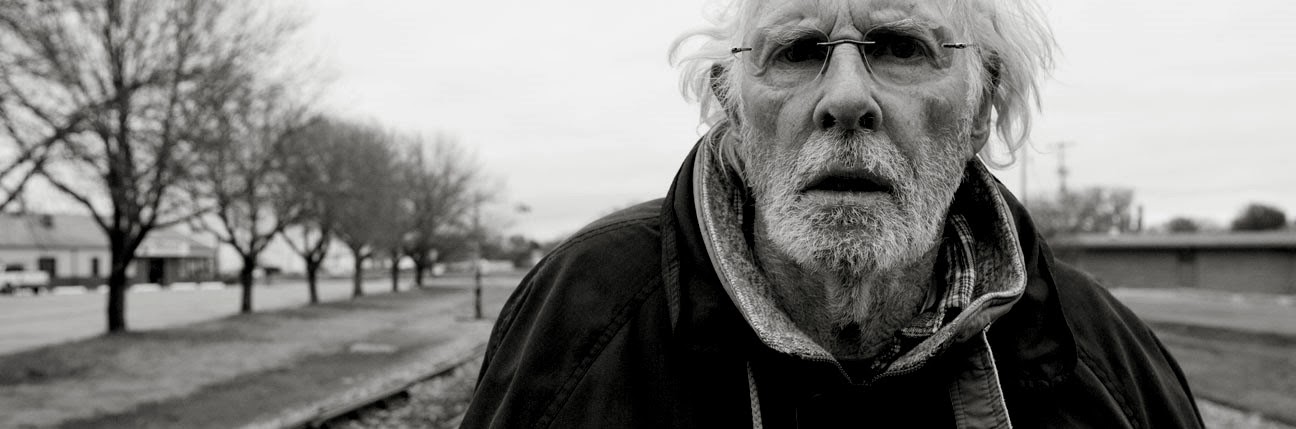
I went to see Alexander Payne's “Nebraska” yesterday. It's essentially a road movie - with the excellent Bruce Dern as Woody, a fragile old man suffering from dementia insistent on collecting millions from a marketing scam letter (we’ve all received them!). He’s determined to make his way to collect his winnings in person and his youngest son David (Will Forte) finally agrees to take him on the 800km road trip to Lincoln, Nebraska.
It’s a brilliantly-observed dark comedy about America's classic mid-West culture. It’s a gentle, poignant, sometimes grim film about a man who’s lost his self-respect and a story of unlikely re-connection as David sees his father’s doomed quest as a chance for them to spend time together while they still can.
I loved it.
PS: some very good films on at the Watershed, Bristol over the Christmas/New Year period: Philomena 20-23 Dec; Gravity 20 Dec-2 Jan; It’s a Wonderful Life 20 Dec-2 Jan.

Sunday, December 01, 2013

gavin osborn


Went to see and hear the brilliant Gavin Osborn play a free concert in the Colston Hall foyer last night. It’s ridiculous that he’s not playing to much larger audiences as he’s SO talented. Daughter Hannah gave me his CD, “Come On Folks, Settle Down”, about a year ago (she designed the CD cover!) and I absolutely love it… and play it constantly. His music is both poignant and amusing and deals with some of the little (and important) things in life.
Among my favourite songs are: “Finding Time”, “An Orchestrated Break Up” or “The World Is At Your Feet, Little Man”… but, as an aging hippie myself(?), I particularly like “Albert Went Out To See Rock Bands” (Albert is the 77 year-old hero of the song!). It always makes me smile…
His CD would make a wonderful Christmas present!
Photo: Gavin at the Colston Hall foyer last night

Wednesday, November 27, 2013

christmas design temporium


This is the rather grand name given for the pop-up shop at The Architecture Centre over the next few weeks. I’ve got some of my drawings on sale there… alongside beautiful stuff from Ruth+Hannah and some other amazing, talented artists. I’ll also be manning the shop from time to time and just hope I can work out the technology and the various shop systems (friends who remember my lovely Iona bookshop experiences will no doubt recall that I’m pretty good on the customer service/smiling/friendly word bit and not so hot on the technology!). Fingers crossed!
It’s a lovely place to work – looking out across the harbourside (like my previous harbourside market experiences – pretty cold with the door open all day BUT at least we're protected from the rain and wind!).
I know that, from comments I’ve already received from customers, that there seem to be an awful lot of Bristolians who are delighted to see a shop  return to The Architecture Centre (I think the regular shop there closed some two or three years ago).
By comparison with all the other work in the shop, I feel a bit of a fraud - my drawings are just a hobby, everybody else’s work represents something far more significant. The other artists RELY on being able to sell their art in order to make a living and we all know how difficult that is in the present financial climate!
The quality of the other work on sale and the industry, enthusiasm, inventiveness, humour, determination of the artists is, frankly, rather humbling.
Photo: shop entrance… showing some of Ruth’s and Hannah’s work

Sunday, November 17, 2013

New Birmingham Library


I had the opportunity to visit Birmingham’s new £189million library last Friday.
From the onset, having had brief glimpses of the building emerging during the construction period, I’ve had very real reservations about its external appearance… perhaps this has something to do with a certain amount of resentment that the new building has sadly replaced the Central Library, opened in 1974 (and the fact that I had worked for The John Madin Design Group in the very early 1970s at the time the Practice was designing that building)?
The external appearance is a series of interlocking metal rings set around gold cladding and vast walls of glass… for me, the following three competing images come to mind:
a)    “well, we had a whole load of Olympic rings left over after last year and it seemed such a shame to throw them away…”
b)    as above, but substitute “Christmas street decorations” for “Olympic rings”…
c)     melted/spun sugar decorations applied to buildings.
I’ve subsequently seen its external appearance described as a “decorative box”, “three mattresses with a roll of duct tape stuck on the top” and The Observer’s Rowan Moore reckons its appearance “the goldy-glittery exterior is a bit Vegas, but it stays this side of trashiness. The interior of atrium and escalators could be like a shopping mall, but it isn't” - so I’m clearly not the only one who remains a little sceptical… although I’m afraid I DO find the exterior rather “tacky”.
Architect Francine Houben, of Dutch studio Mecanoo, cites “gasometers” as the inspiration for its hoops and claims that “the 5,357 circles on the outside frieze of the building reflect the city's industrial heritage - the craftsmanship, the factories, the canals, the jewellery quarter…”.
Frankly, I’m not convinced and feel that such descriptions are contrived and arbitrary, at best.
Having said all this, I WAS impressed by the building’s interior. Atriums, escalators and landscaped terraces are key features. The spaces are exciting and colourful… and it certainly encourages visitors to explore (and the external hooped decorations work much better when viewed from the inside!).
Photo:  Building frontage viewed from the basement lightwell.
PS: With the anticipated huge number of visitors, the passenger lifts (providing access to the roof terraces and the Shakespeare Memorial Library) seem inadequate in terms of both number and size.

Monday, November 11, 2013

TED talks in bristol


Moira+I spent today at Colston Hall listening to some 16 speakers (and six previously-recorded TED talks from around the world) on the subject of “Failure”. I must stress here that we didn’t attend because we thought we were failures… (of course not!).
Although it proved to be a fascinating and interesting day, we both came away feeling rather disappointed. I had watched several TED talks on-line and had invariably been highly impressed. Yes, I realise that the majority of those high-calibre speakers will probably have been well paid for their efforts and that this Bristol version inevitably showcased a range of rather more local, not-so-well-known contributors, but it was all something of a disappointment.
There were certainly SOME original and entertaining speakers (eg. Paul Archer’s around-the-world-in-a-black-cab talk and Sophie Mather’s passionate presentation on sustainable textiles) but, overall, we came away feeling a little tired of the much-repeated message of “failure breeds success” from entrepreneurs, life gurus and people who simply seemed to be there to promote their own businesses in one form or another…  as Moira observed “failure can be more subtle than that”! It also seemed geared towards a scientific and/or technological audience (actually, that’s probably a little unfair!). In our view, none of the speakers had impressed us as much as any of the “Bristol Festival of Ideas” talks we’d attended (eg. Richard Holloway or Julia Unwin).
There were, however, a number of plus points: a) we only paid a concessionary rate of £10 for an entire day’s talks, and b) the event attracted a wide age range, particularly from 20-30 age group.  
A good day… but one that didn’t quite live up to our expectations.
Photo: the Bristol TED talk stage.

Saturday, November 09, 2013

october-november 2013 books


More book stuff:
Cloud Atlas (David Mitchell): This is a truly remarkable book. It’s a work of exceptional imagination and insight which (in critic Justine Jordan’s words) “knits together science fiction, political thriller and historical pastiche with musical virtuosity and linguistic exuberance”. It encompasses six interlocking lives in a story that takes readers on a rollercoaster ride from the C19th to a post-apocalyptic future. The trip is exhausting (the book is 529 pages long!), exhilarating… but well worth it!
Suspicious Packages and Extendable Arms (Tim Dowling): Published in 2007 and consists of articles that have previously appeared in the Guardian. He’s certainly got a wonderful “way with words” and I do find him very funny (mostly) but, have to say, I prefer his more recent stuff (he has a weekly column the Guardian Weekend) – where he’s fast becoming a grumpy old man… just like me (except that he’s only 50)! 
The Village against the World (Dan Hancox): I’ve previously blogged about Hancox’s experiences of the village (Marinaleda) and village life, now I’ve read the book! It’s the story of this small, remote, Andalusian village’s fight against poverty, over the past 30 years or so, to create a communist/communitarian (is that a word?) utopia. Fascinating, inspiring, passionate, sad and thought-provoking.
The Story of Forgetting (Stefan Merrill Block): This is a fascinating novel about the very early onset of Alzheimer’s disease (the author’s grandmother had the condition). Somewhat amazingly, Block was only 26 when he wrote it. Despite the poignancy of the subject, Block’s story is also one of hope and optimism. It’s a wonderful informative, inventive and intelligent book which I enjoyed very much.
Jane and Prudence (Barbara Pym): This is our Book Group’s latest book and one the joys/challenges of belonging to such a group is that you get to read books you perhaps wouldn’t normally choose to read. Fortunately (for me), this year has provided some excellent book choices… unfortunately, this was definitely NOT one of them! Pym paints a picture of middle-class life in England in the early 1950s (far removed from my own working-class childhood experiences of that period!). It felt as if I was reading a Jane Austin novel that had been re-set to take place in a Miss Marple television film set. The focus seems to be all about women being able to find a suitable husband and concerns (in this time of food rationing) that men should be provided with enough meat! Having said that, it was interesting (and depressing) to be reminded of a time when women (even Oxford graduates) were largely discounted when it came to work and politics. It was a very easy book to read but, frankly, I found it pretty pointless and light-weight (and, dare I say it, not a “man’s book”!!). I think (out of respect for the person who chose the book) I’m just going to have to bite my tongue when it comes to our next book group meeting… or make my apologies!
PS: I’ve just looked up some “goodread” reviews and it seems that I’m clearly in a minority… everyone else seemed to LOVE it (and Jilly Cooper apparently reckons it was Pym’s finest work!)… give me strength!

Friday, November 08, 2013

karine polwart… again


Moira+I went along to St George’s Bristol on Wednesday to hear Karine Polwart perform (alongside her talented guitarist brother Steven and accordionist/percussionist Inge). I think this was the sixth time I’ve been to one of her concerts and, as you might imagine, I’m a huge fan!
It proved to be another stunning evening – powerful, intelligent, thought-provoking, political, beautiful, poignant music at its very best (the programme blurb also included the following: “tenderness, triumph and sorrow, raised flags of rebellion and independence, flashes of anger at power abused and misused” and “perhaps, most frequently, she deals in spare, unsentimental empathy, often with those who have been dealt with the least playable hands in the game of life”).
I’ve been feeling very disenchanted by politics (and politicians in general) recently and made a comment on facebook about wanting Stephen Fry to be leading the country instead. Well, I came away from the concert thinking that I’d like Karine Polwart to be a leading member of his Cabinet!