Monday, February 15, 2016

valentine’s day massacre…

Yesterday, for the first time for over 20 years (yes, I know, shameful!), I attended a Villa home game.The opponents were Liverpool and I sat alongside my great mates Steve and Dan Eyre (great mates – even if they’re also Liverpool supporters!)
Well, as anyone who has the remotest interest in football will know, things didn’t go too well for the Villa… This is a slight understatement.
They lost 0-6.
It was their worst ever home defeat in the Premier League.
Liverpool didn’t actually play brilliantly either... they really didn’t need to (they scored six goals from nine shots on target!).
Villa’s performance was extremely painful to watch… embarrassing for all concerned. Lack of skill; lack of passion; lack of leadership; lack of ideas; lack of organisation; lack of talent… and, perhaps not surprisingly, complete and utter lack of confidence.
Villa were pretty much clueless in defence (frequently statuesque). In their current plight, the manager must surely look to the senior players to use their experience and to help and encourage the younger players. In the event, Lescott and, in particular, Richards (both England internationals) had terrible games. Lescott’s positioning was dire throughout the afternoon and Richards just didn’t seem interested in playing at all (and he’s the team captain!)
Villa’s midfield was poor (they failed to support the attack in any numbers and left the defence wide open): Westwood was one of the few players who seemed prepared to battle (but I really question if he’s a premier league player – not for much longer anyway!); Bacuna had an awful game (riddled with errors); ironically, defensive midfielder Gana looked reasonable going forward, but lacked any the cutting edge to counter the opposition’s midfield; Veretout was largely anonymous and never really got involved.
All too often, when Villa DID attack, it involved just one isolated forward. Agbonlahor was ineffective and apparently went off with vertigo (yes!); although Gil was probably Villa’s most skilful player, he again lacked support; the “talented” Sinclair (he came on after 58 minutes) consistently fails to “produce the goods” (but he did hit the post and was Villa’s most effective player - not particularly high praise in the circumstances!).
Villa’s performance yesterday was abject.
They’re clearly going to be relegated this season – on paper, they COULD escape but, in reality, based on this performance, it’s just not going to happen… and, frankly, they don’t deserve to avoid relegation.
People talk of Villa being “too big a club for the Championship” and that they’ll have no problem bouncing straight back up to the Premier League the following season. Frankly, without a wholesale cull of the existing playing staff and new investment, this is just a fairytale.
I’m old enough to remember Villa dropping down from the old First Division to the old Third Division in four seasons (1967-1971)… and, believe me, it was a very tough job clawing their way back to Division One (which they did in 1975).
One might have imagined that the fans would have booed the team off the field at the end (yes, there were SOME boos, but not that many in the circumstances) or to have simply staged a mass walk-out 20 minutes before the end… but no. Instead, the wonderful Holte End supporters ended the game in full voice (constant chanting+clapping)… and bragging to the Liverpool supporters that THEY were making more noise at the end of the game!
Dan+Steve were very magnanimous at the end of the game – almost embarrassed by how easy it had been. In the meantime, I’m expecting a letter from Villa’s Board of Directors asking me not to attend another home game for at least another twenty years!
Photograph: the huge Villa banner being paraded at the Holte End before the game (the “exit” sign, top right, seems somewhat apt in the circumstances!).

Monday, February 08, 2016

trumbo

I went along to the Watershed this afternoon to see Jay Roach’s film “Trumbo” – about the Hollywood screenwriter, Dalton Trumbo (played by the excellent Bryan Cranston), who was blacklisted in 1947 after refusing to testify in the House Committee on Un-American Activities.
The ‘Hollywood Ten’ (all screenwriters, directors or producers) were cited for contempt of Congress and blacklisted after refusing to answer questions about their alleged involvement with the Communist Party. Yes, Trumbo was ridiculously naïve (in my view), but one forgets how frightening the McCarthy era of the 1940s/50s was – heightened political repression against communists and a campaign spreading fear of their influence on American institutions. Trumbo was subsequently sent to prison… and, when released, found it virtually impossible to get work.
The era brings to mind the Nazi persecution of the Jews… and the power of the State to hoodwink an entire population (virtually). It’s sickening to think about the number of lives (individuals and families) that were blighted, or even lost, by such policies. Ironically, this morning, my friend Jennie posted this photograph of political prisoners being rounded up political prisoners being rounded up in the 1930s to be taken into Dachau concentration camp: “the gentlemen shown are socialists, communists and Trade Unionists”.
Anyway, back to the film…
Trumbo ends up “ghost writing” screenplays in order to avoid recognition (and to earn some money) and Kirk Douglas persuades him to do this on his “Spartacus” film – for which he ultimately DOES receive recognition (and an Oscar)… I was just a little disappointed that they didn’t get to use the line: “I’m a communist”… “no, I’m a communist” in the Trumbo film!!
A powerful, very impressive film… and a reminder of just how difficult it is to stand up against a government or an institution.
PS: Somewhat frighteningly, the House Committee on Un-American Activities wasn’t disbanded until 1975.
PPS: There are an awful lot of cigarettes smoked in the film!

Wednesday, February 03, 2016

spotlight

Moira and I took the usual step of going to the Watershed this MORNING to see this Tom McCarthy film about the Boston Globe reporters who, in 2001/2, uncovered a widespread scandal of child abuse and cover-ups within the local Catholic Church.
It’s based on actual events and, as you can imagine, it’s not a film that contains many laughs…
BUT, I found it absolutely compelling.
It reminded me of “All The President’s Men” (about the Watergate scandal - made in 1976 and starring Dustin Hoffman and Robert Redford). The Boston Globe newspaper’s small, tenacious “Spotlight” team of reporters slowly unravel a series of systematic cover-ups of child molestations within the Massachusetts priesthood. It all takes time… and huge determination – against a Catholic Church who, despite repeated allegations of misconduct against minors in its care, simply moved accused priests from parish to parish rather than allowing them to face justice.
The team starts off believing they have evidence against a couple of priests within the Massachusetts area… then the list of names grows to five, then nine, then 13… then, through an ex-priest who worked trying to rehabilitate pedophile priests, they conclude that there should be approximately ninety abusive priests in Boston. Through their research, they develop a list of eighty-seven names, and begin to find their victims to back up their suspicions. At every stage, the Church (assisted by top-flight lawyers) blocked their investigations.
In the end, the journalists are the victors (and some of the surviving victims obtain justice).

You’re left feeling a sense of utter outrage against the Catholic Church as an institution. At times, it felt rather like a story of shameful Popes of the 15th+16th centuries – all powerful and untouchable. It reminded me of some quotes about the holocaust (eg. …“Then they came for the Jews, and I did not speak out - because I was not a Jew. Then they came for me - and there was no one left to speak for me”).You can also imagine that if the Boston Globe had only uncovered evidence of misconduct by perhaps a couple of priests, then we might still know nothing of the widespread nature of these atrocities… with the Church making reassuring noises.You’re also left feeling a sense of admiration for those journalists (and their superiors) who were prepared to invest huge amounts of time, effort and money to try to investigate these matters (and taking massive risks in the process).
Thank goodness they did.   
The film ends with a massive list of locations throughout the world where similar cases of misconduct have subsequently been exposed. It’s simply shocking. It left me feeling sorry for the victims, and innocent members and priests of the Catholic Church… and for other Christians throughout the world who’d also been betrayed by what had happened.
The Spotlight team proved that Cardinal Bernard Law (Archbishop of Boston) had not only known about the extent of the problem, but had chosen to ignore it.
The film finishes on a powerful, albeit ironic, note when, in the final credits, it simply states that, following the events in the film, the Catholic Church had reassigned Cardinal Bernard Law to a senior position of honour in Rome.
You really couldn’t make it up!
A very powerful, quite brilliant film – and one which I definitely think you should see.

Wednesday, January 27, 2016

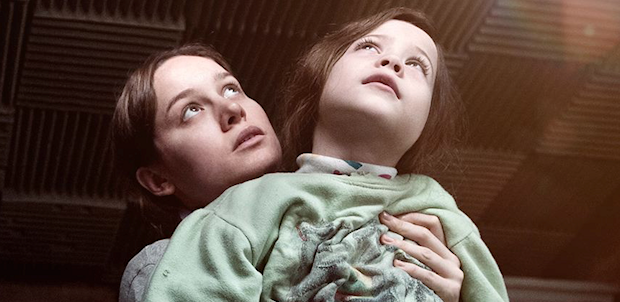
room

Moira+I (and Catherine who also happened to be there too) went along to the Watershed this afternoon to see “Room” - Lenny Abrahamson’s film adaptation of Emma Donoghue’s novel of the same name. Frankly, over the past fortnight or so, Moira had been expressing a keen interest in seeing the film… but I’d decided to opt out (it just didn’t seem “my kind of film”). In the end, I relented…
In a nutshell, it’s a film about the survival and endurance of a young mother (played by Brie Larson) and her 5 year-old son (played by Jacob Tremblay - who is quite remarkable) who had been kept captive by horrible “Old Nick” (Sean Bridgers) in a small garden storage building for a prolonged period (the mother had been held there for 7 years and her son was born during her captivity) – with no access to the outside world except a television. Their only “visitor” was Old Nick. The mother does everything she can to bring up her son educated, healthy and happy… but, clearly, this is desperately difficult in such circumstances.  Ultimately (*spoiler alert!!*), they do escape (although, I have to say, it did all seem a little implausible to me... and I do have a number of questions along the lines of "why on earth didn't you try to do A or B?"!) and it’s then all about adapting to the world that the mother had left behind… and that the son had never known.
It’s excruciatingly uncomfortable to watch. It’s disturbing.
On the one hand, it’s an uplifting endorsement of the human spirit’s ability to survive such ordeals; on the other, it’s utterly depressing that there are some very sick individuals who are prepared to inflict such suffering, mental torture and physical abuse.
It’s an impressive, harrowing film and one that has rightly been acclaimed by many critics (and a number of our friends).
I’m pleased that Moira encouraged me to see it but, I have to say, my overwhelming response during the film (yes, during!) went something like this: “will the actor playing the 5 year-old boy ever recover from his traumatic experience on the film set?”.
I suspect he’ll become rich and famous and won't care, but I wouldn’t be surprised if the scars remained. I certainly wouldn’t have let my son or grandson play the role.
But, hey, as I’ve said before… “what do I know?”.

Friday, January 22, 2016

three cane whale at st george’s (again)…

My name is Steve Broadway, I’m very nearly 67 years old… and I’m a groupie.
Well, this isn’t QUITE true, but I do admit to having a great love for Three Cane Whale’s music.I have all three of their albums (together with Paul Bradley’s wonderful, solo album) – I’d even received their latest album for Christmas, even though last night's concert at St George’s, Bristol was its official launch!
I went along to their concert with Ruth+Stu and it proved to be another wonderful musical feast. I won’t repeat stuff that I’ve previously blogged about their music (you could click here and here to do that!)… and, if you’ve not heard of them then I suggest you check out their website to listen to some of their music.
This is what Folk Radio (no, I’d never heard of them either) said of them: ‘The kind of album that, once the secret is revealed, the listener will want to share, to compel their friends to listen, to explore. This album can be full of mirth or solemn, it can be as fresh and open as a deep blanket of snow, or as full of texture, colour and chaos as a pile of autumn leaves the moment the wind hits. Five stars’.
Well, that just about sums up my sentiments!
I love listening to their music; I always find that it lifts my spirits (rather corny words like “joyful” and “uplifting” come to mind, but I think they’re accurate)… I love its intricate, quirky and captivating beauty. I love that each of their songs has references to ancient places… or to places of their past… or to poems… or to friends (and that they frequently record their music in quirky places such as allotments, ancient chapels, motorway flyovers, open countryside and the like!).
Another truly magical evening.
Photo: Three Cane Whale from last night’s concert (joined here by James Gow, cello, and Maarja Nuut, violin)… yes, we were sitting in the front row!
Footnote: There was one other massive bonus to last night’s concert: Maarja Nuut.
Normally, I find that “supporting artists” at these concerts are all usually pretty good… but, frankly, I’m just waiting for the “proper act” to start. Well, last night was different. Maarja Nuut is a fiddler and singer from Northern Estonia… and for an hour she completely entranced the audience with her voice, her instrument (+modern electronics) and her stories. Absolutely delightful. If you get a chance to see/hear her, grab it!

Wednesday, January 20, 2016

the revenant

I went along to the Watershed this afternoon to see Alejandro Inarritu’s “The Revenant” film, starring Leonardo DiCaprio (as Hugh Glass) and Tom Hardy (as John Fitzgerald), “based” on a true story of American frontiersman/fur trapper/explorer in the 1820s who was badly mauled by a bear and ultimately abandoned by two men (who’d been charged with looking after him until he died and then to bury him – the senior man being Fitzgerald). Remarkably, Glass ended up patching himself up (as best he could) and crawled/walked more than 200 miles in 7 weeks to the nearest American settlement.
Actually, you don’t “watch” the film, you “experience” it!
Visually and cinematically, it’s a pretty amazing film - with stunning scenery, severe weather and breath-taking action.
It’s VERY long (156 minutes – I felt very sorry for elderly couple who had to leave just 5 minutes before the end!!) and I definitely felt that it could have been shortened without reducing the impact of the story. In addition, it certainly hasn’t been short of controversy: it appears to have gone significantly over budget (reports reckon costs have risen from some $95million to $135million); large numbers of crew quit or had been fired; and, apparently, they also had to contend with the “wrong kind of snow”!
As you’d expect from an actor who’s just won a Golden Globe for his Revenant performance, DiCaprio is very good. But, actually, his performance (due to his injuries) means he can hardly speak for much of the film and, frankly, I can groan, moan and crawl with the best of them!
Despite the awe-inspiring scenery and the excessively bloody action shots, I wasn’t as impressed as I’d anticipated.
Very good, but maybe just a little less than 4 stars for me (but, hey, what do I know!?)?
PS: I was going to say that I “went on my own” but (I suspect due to the film’s popularity with the punters) I watched it in the Watershed’s tiny Cinema 2 – every seat was taken – so, believe me, I was definitely aware of having “company”!

january 2016 books

New Year book stuff:
Chrysalis (Alan Jamieson): For someone like me, who has struggled on my “journey of faith” (haven’t we all?), this book is pretty special. Our good friend Lee Barnes recommended it. Jonny Baker’s book review sums it up: “there are many who come to a stage in their Christian faith where what once worked and sustained them has grown dry and lifeless. No amount of trying harder seems to improve things… ‘Chrysalis’ is a gift to the person in this place offering some signposts or a roadmap and encouragement for the difficult journey”. ‘Chrysalis’ uses the transformation from caterpillar into butterfly as a metaphor for changes on our spiritual journeys. The analogy doesn’t always work (and there were one or two chapters that I found somewhat predictable… and repetitive), but I did find the book extremely helpful. It accurately described the difficulties and frustrations of my own haphazard spiritual journey and provided me with reassurance for this ‘transition’ stage in my own faith… and, having my own situation described so perfectly, gave me reassurance and ‘permission’ to take my time and to move on slowly. A very good book.
The Penguin Lessons (Tom Michell): This is a really charming, delightful book (when was the last time I used the word “charming”?!). It’s ridiculous, uplifting, funny, true story about a 22 year-old Englishman who took up a teaching position at an Argentinian boarding school in the early 1970s and, by chance, rescued a penguin (who he named “Juan Salvador”) from an oil slick in Uruguay just before the start of a new school term… and ended up smuggling it across the border, through customs and back to school. The penguin ends up “transforming the lives of all he meets”. Sounds soppy doesn’t it! Well, in some ways, yes it is… but that doesn’t stop making it a great story (and one that Michell has clearly told his children+grandchildren over the subsequent years… and eventually put into book-form in 2015).
Fidel Castro (Nick Caistor): I’ve always been rather fascinated by Fidel Castro and this book (Caistor is a former BBC Latin American analyst) provides a rational, readable and well-balanced account of Castro’s life and politics. In the late 1950s, Castro’s idealism, overpowering personality and remarkable qualities of leadership were instrumental in transforming a US-dominated dictatorship into a progressive Marxist-Leninist state which he led for almost five decades. After the collapse of the Soviet Union, many predicted the imminent demise of the Castro regime but, in fact, there was a something of a resurgence of support and interest in the Cuban model – with its anti-imperialist/anti-capitalist stance in the face of globalisation, dominance of the market and apparent unbridled consumerism. The 1959 Revolution certainly can’t be described as having had a “successful” outcome (what some would regard as Castro’s flawed ideology – with continuing massive economic and social failings… including choking the press and suppressing dissidents) but, for many, Castro remains a champion of humanitarianism, socialism and environmentalism. A fascinating book.
The Naked Civil Servant (Quentin Crisp): Everyone’s heard of Quentin Crisp (the self-proclaimed ‘stately homo of Britain’)(1908-1999) and, indeed, you might have watched the acclaimed TV dramatisation of this book, his autobiography, featuring John Hurt as Crisp? This book, first published in 1968 (only a year after the repeal of the Buggery Act of 1533) is an absorbing, sad, funny account of his difficult, colourful life. It’s about his own tolerance of others and the intolerance of many, many more towards him and a reminder of how much society has changed, especially over the past 20 years or so. Crisp described his autobiography as ‘an obituary in serial form with the last instalment missing’. Well, in the event, following the book’s TV dramatisation, Crisp became a personality, famous for simply being himself… he moved to New York in 1981 where, for the next two decades he enjoyed the sort of career that, in his twenties, he had considered completely out of reach. A fascinating insight to a vibrant life.
Coastlines (Patrick Barkham): This book is an absolute delight. Barkham mixes his descriptions, reflections and walks along particular sections of the most beautiful 732 miles of coastline in England, Wales and Northern Ireland in the care of Enterprise Neptune (the National Trust’s maritime arm) alongside subjects including childhood, war, art, faith, work and the shores of the future (the hard battle to preserve our rich coastal heritage) in an almost poetic, thoughtful and joyful way. I REALLY enjoyed it.

Saturday, January 16, 2016

more local history…

Elizabeth I's "fort", 1574
Just two more notes following my earlier blog post about where we live.
On the historical map of 1828, my eyes were drawn to a rather mysterious note on a patch of land less than 200metres north of our house (where Osborne Street now is): “site of the fort erected for the amusement of Queen Elizabeth when on a visit to Bristol, 1574” (see above extract from 1828 map - "X" is the site of our house!)(double click on image to enlarge).
This is an extract from the “Early Theatre” website by Francis Wardell:
"When Elizabeth I visited Bristol in 1574 she was entertained by an impressive three day mock battle. Such a performance differed from the traditional protocol of using a combination of pageants and petitions… Throughout, the entertainment maintains an allegory of War, represented by the offensive forces, in conflict with Peace, symbolized by the defending fort. The artificial conflict concludes with the queen herself being given the role of adjudicator and administering over negotiations for a peaceful treaty”.
Bizarre! Perhaps, not surprisingly, I’d no knowledge of any such event!


The Bristol Records Office/”knowyourplacebristol” website included the above photograph of the Dean Lane Pit (taken in about 1875, I think) which was open from the 1850s until the first decade of the 1900s. I also came across a note that ten people were killed in an explosion at the Dean Lane Pit on 11 September 1886.
It was a hard, hard life!  

mount pleasant terrace, southville: local history


2015 street map
The above map (dated 2015) shows the location of our house (“X”) in Bristol.
Ever since we first moved to Bristol in 2003, I’ve been meaning to drop into the Bristol Records Office to try to discover a little more about the history of our house. Well, at long last, this week, I finally called in and chatted to the really helpful bloke on reception. I just KNEW that I’d be able to access stuff via the internet… the trouble was that when I tried, I got nowhere!
My new friend at the Bristol Records Office pointed out a few glitches in the system and things to AVOID – as well as things to DO. The key thing was to google the magic words “know your place Bristol” (without trying to access the information via the city council’s website - which is precisely what I’d been trying to do!).

Magically, my new friend was able to demonstrate how I could access historical maps of our area AND to be able to compare maps/street layouts between different dates (via “main maps” and “comparison maps”)(you need to click on “base plans” for the map keys to appear)… absolutely fascinating.

1910s street map


1900s street map
There’s a plaque on a building just down the road from us with a 1848 date on it… so I’ve also assumed that our house was built in roughly 1850 or thereabouts. The historical maps have duly confirmed this: our house certainly appears on the 1855 map of the area (even though the whole of Mount Pleasant Terrace hadn’t been completed by that date). 
1880s street map


1874 street map
I always knew that our house was located fairly close to a colliery (Dean Lane Colliery) and, certainly, the maps confirm this (it’s just 275metres away, as the crow flies!). But it’s only fairly recently that I’d become aware of Northside Colliery (at the corner of South Street/North Street) – which is just 250metres from our house! I love the discovery that, according to the map of 1828, the site of our house was once an orchard – the area of land to the north of North Street being virtually devoid of any buildings (except Merrywood Hall). I’m also intrigued to see how, over the course of the next 50 years, our house was not only built, but also surrounded by terraces of other houses (if only things could be like this today!)… and, by the 1900s, the street layout resembles precisely what we have today.
The “Know Your Place Bristol” website is pretty amazing and the main maps/comparison maps are very impressive… I can’t hope to replicate this, but will endeavour to paste eight maps dating from1828 up to 2015, so you can get a “feel” of where we live (fingers crossed!).
1855 street map
1840s street map
1828 map
Moira’s quite keen to discover a little more about the people who have lived in our house over the past 150 years or so… I’ll post a link if she ends up following this through!
I love history and LOVE the fact that we can gain access to it for FREE!
Absolutely fascinating.
PS: I downloaded the various maps shown above in small sections and then re-configured them to highlight (and record for my own benefit) how our neighbourhood has developed over the past 150 years or so. I know it's not particularly neat and I’m sure there were simpler ways of doing this, but technology was never my strong point!

Wednesday, January 13, 2016

the danish girl

Moira+I went along to the Watershed this afternoon to see Tom Hooper’s rather extraordinary film “The Danish Girl”. Set in Copenhagen of the 1920s, it tells the true story of a successful Danish landscape artist Einar Wegener (played by Eddie Redmayne) married to a rather less successful portrait painter Gerda Wegener (played by Alicia Vikander). When a life model/dancer fails to turn up for a sitting, Gerda gets Einar to don tights and ballet slippers to pose for the completion of a painting. The experience doesn’t awaken new feelings in Einar, exactly, so much as stir some that were already there. The couple’s relationship duly enters unchartered territory… and Einar ends up becoming “Lili Elbe” (I hope you’re keeping up with this!?)… and, ultimately, becomes one of the first recipients of sexual reassignment surgery.
Redmayne gives an amazing performance as a transgender artist (he really does make a pretty amazing Lili!) – which will surely be recognised with another Oscar nomination (at least) – but Vikander is also wonderfully impressive (my only slight reservation is that I felt that her character was from a little later than the 1920s?).
It’s beautifully photographed (and great importance given to costume and production design), but its subject matter is raw and unsettling – as well as moving and humane.
Probably not the best film I’ll see in 2016, but a very impressive one nevertheless.

Saturday, January 09, 2016

london exhibitions… and other stuff

In addition to seeing “Jane Eyre” at the National Theatre, Moira and I took the opportunity to get to a couple of exhibitions and a few galleries/museums while we were in London.
Victoria+Albert Museum: “The Fabric of India” £14 (£12 for oldies like us).
Handmade textiles have been made in India for over 6,000 years. This extensive exhibition provides a wealth of sumptuous, colourful fabrics – historic dress, heirloom fabrics and cutting-edge fashion. It all makes for an excellent exhibition, but my one criticism is that, because there is so much to see and due to the fine (literally) nature of the work on display, the queues of people looking at the various objects tend to move very, VERY slowly! You either have to wait for the person in front to read every word on the accompanying display notes (with very slow precision, as well as examining the various fabrics, obviously) or simply skip things and move on. I found it all very beautiful, but also somewhat frustrating, I’m afraid.
As you’re no doubt aware, the V+A is a simply stunning place to visit and there are plenty of “free” exhibitions and displays. We particularly enjoyed photographs by Julia Margaret Cameron (photographer, 1815-1879) from the V+A’s own collection… plus the theatrical/costume section, plus a series of prints by artist Ellen Heck, representing women and girls dressed as Mexican painter Frida Kahlo. But, frankly, there’s SO much to see at the V+A - and our visit hardly scratched the surface!
Tate Modern: Alexander Calder “Performing Sculpture” £18 (£16 oldies)(expensive!).
Calder (1898-1976) is widely celebrated as the originator of the ‘mobile’. Although I found Calder’s ‘geometric’ kinetic structures absolutely fascinating (and some really very beautiful), the highlight for me was his bent-wire figurative pieces – which were just wonderfully uplifting, funny, clever and incredibly articulate (I noticed just how MANY people had smiles on their faces). I found it an absolute delight.
But for me, one of the delights of visiting Tate Modern is the building itself – which one can do for ‘free’. Although we didn’t specifically visit the exhibition, the Turbine Hall (I LOVE the Turbine Hall space!) housed Abraham Cruzvillegas’s ‘Empty Lot’ – a large geometric sculpture created using scaffolding and wooden planters (and soil from London parks) – which dominated views from the various galleries and upper floors. I also enjoyed the posters/prints gallery (but, hey, there’s LOADS of other stuff that we didn’t get time to check out!).
The British Museum: “The Parthenon Sculptures” (free).
I’ve recently finished reading a book about the Elgin Marbles and thought it was about time I re-visited them (the last time might be over 40 years ago?). The sculptures are quite remarkable and date from around 435BC. In 1801-05, Lord Elgin obtained permission from the Ottoman authorities to remove the remaining (about half) sculptures from the Parthenon’s fallen ruins and from the building itself. Elgin felt that he was saving the treasures from being destroyed (and he was probably correct). I, like many, now think it’s time for the sculptures to be returned to Greece!
I also took the opportunity to look at the extensive Assyrian and Egyptian sculptures (from 860-620BC and around 2040BC respectively!) which, in many ways, I found even more impressive… and very beautiful. Quite, quite remarkable. I LOVE the British Museum and could spend hours there (and I love that, apart from key exhibitions, it’s free!).

This hardly does our visit justice.  We stayed overnight at the Holiday Inn Express, Old Street (pretty good value, we felt, at £72 for the two us, including breakfast!). Obviously, our trip also included a lot of walking (and eating!): for instance, visiting Denys Lasdun’s National Theatre building (which I still admire – and I was reminded of our building visit shortly after it opened in 1976); walking along Southbank at night admiring the river and the city lights; walking over the Millennium Bridge in very high winds (it didn’t sway!) and also over the Golden Jubilee Bridge (between Embankment and Southbank); seeing St Paul’s from across the Thames (set against a dark+stormy sky); enjoying London’s incidental experiences acquired just walking around (including re-vamped Tube stations such as London Bridge, Tottenham Court Road etc etc); visiting the rather lovely Southwark Cathedral again; enjoying a meal beside Paddington Basin; and being grateful for the ease and convenience of using our Oyster Cards!
We really did have a lovely, relaxing time. Thank you Londinium!
Photos: (top row) Alexander Calder; (second row) The Fabric of India (images for both rows via google); (third+fourth rows) Elgin Marbles/Assyrian/Egyptian sculptures from British Museum; (bottom row) V+A, British Museum and two images from Tate Modern.
PS: double-click on overall image to enlarge.

Friday, January 08, 2016

jane eyre at the national theatre…

Moira and I went to London on Wednesday to see Sally Cookson’s brilliant “Jane Eyre” at the Lyttelton Theatre… and it WAS simply brilliant!
A night of tingling, powerful, mesmerising, inventive theatre at its very, very best.
We saw the wonderful two-part version of JE at Bristol Old Vic in March 2014. I’m not going to repeat myself (about the set, devising process, actors,musicians and the like!), so you might want to click here for a quick re-cap.
Would it really be feasible to cut a fantastically successful production so ruthlessly? Well, without doubt, it was. Thanks to Cookson’s vision and the ability of this very special group of actors and musicians, the Company has managed to devise (and revise) a stunning adaptation of Bronte’s book “Jane Eyre an Autobiography”. It was a hugely exciting evening of drama and discovery as the audience joined the Company on a journey of dramatic improvisation and magic – with the entire team of gifted, multi-tasking actors and musicians playing their parts in a quite extraordinary way.
I thought this production was even better than the two-part version and, surprisingly (given the shorter time – albeit at more than 3 hours in length), thought that it also managed to add something to all the key characters (in terms of depth and sensitivity).
The production has played to enthusiastic, capacity audiences throughout its time at The National Theatre (and received glowing five-star reviews). It finishes there this weekend, before travelling back to Bristol (briefly) and then on to Nottingham (briefly)… and then on to Hong Kong (briefly). If you CAN get to see it (yes, ok, maybe Hong Kong is a little bit of a trek!), then I would really recommend that you do.
A very special evening… that will stay with us for a very, very long time.
Photo: Felix (Rochester) and Madeleine Worrall (Jane Eyre), courtesy of the National Theatre website.
PS: Moira+I were both exhausted at the end of the performance (in a very good way!)… which only served to underline the amazing stamina of the actors+musicians – who had taken part in a MATINEE performance that same afternoon!


Friday, January 01, 2016

new year reflections 2015-6

Another year’s reflections (as a reminder to ME!):
WONDERFUL BOOKS:
My top five, in order (VERY difficult to limit it to just five): The Poisonwood Bible (Barbara Kingsolver);
From The Holy Mountain (William Dalrymple); The Establishment (Owen Jones); A Rose For Winter (Laurie Lee); and Sentenced To Life (Clive James).
GREAT FILMS:
My top six (again, in vague order… can’t get it down to 5 – although we didn’t get to the cinema all that often):

Salt of the Earth; Macbeth; The Lady in the Van; Henry V (live broadcast); Brooklyn; and He Named Me Malala;
LOVELY LIVE PERFORMANCES (broken down into various categories):
THEATRE:
My top five (note to self: need to go to much more theatre in 2016!): Love’s Labour’s Lost; Love’s Labour’s Won (otherwise “Much Ado About Nothing”); Ian Adams (poetry); Swallows+Amazons; and Around The World in 80 Days;

CONCERTS:
My top four (sadly, I didn’t get to five! Ridiculous!):

Paul Bradley; Cara Dillon; Isolde/Lauren Bradford/Julia Turner; and Gaswork Singers Christmas concert.
EXHIBITIONS:
Not as many as I’d have liked (but I might have forgotten one or two?) … and, frankly, nothing REALLY stands out for me. Top five in order: “Death” at the Bristol Museum; Do Ho Suh (“New York City Apartment”) at Bristol Museum+Art Gallery; “Into the Fields” (Newlyn School and other Artists) at the RWA; Richard Long (“Time+Space”) at the Arnolfini; and Carsten Holler “Decision” at the Hayward Gallery, London.

SPORTING MOMENTS:
Shamefully, the ONLY “live” sport I saw in 2015 was Bath Races in June (with some of my old Norton Hill School buddies)… and not a single cricket match - despite the best of endeavours to get Edgbaston.
I really enjoyed watching the Six Nations again and, obviously, hugely enjoyed the Rugby World Cup on TV… but it’s not really the same. Need to get down to Ashton Gate to watch Bristol RFC. Again, I MUST do better!
FRIENDS:

Once again, we’ve been blessed to be able to meet up with many of our lovely “special” friends (they know who they are!) on a pretty frequent basis during the course of the year… always special occasions.

ART STUFF:
Another enjoyable year (although perhaps not as enterprising as it might have been – am I becoming lazy?), including:

1. I’ve still very much enjoyed continuing to post a drawing or photograph every day as part of my “One Day Like This” blog (with well over 600 drawings and 600 photographs since I started in September 2012).
2. I REALLY enjoyed carrying out a week’s drawing project for our lovely friends Tanya+Glenn based at their beautiful house in Brixham, Devon.
3. We had another successful Arts Trail at number 40 (I think this was our 12th consecutive year)… and attracted some 600 people into our basement over the Arts Trail weekend!
4. I actually did some coloured photoshopped digital drawings (I used a 30 day free trial to experiment!)… and might well return to this format again at some stage in the future.
5. I ended the year compiling 24 Advent photographs for use as my facebook page cover photograph… good fun and no real effort required!
6. I’ve put together some Bristol drawings as a 2017 Calendar (yes, 2017!)… hopefully, I’ll get round to getting it printed.
SIMPLE PLEASURES:
Cafes, reading, drawing, photography, walking, cycling, living near the sea (well, sort of…) and, of course, looking after our Bristol grandchildren remain very important aspects of my life (although, now that they’re all at school etc, our time with them is sadly a little reduced these days… but school-runs and child-sitting partly make up for it!).

Feel SO lucky to have the family we have… and great that we all “get on” so well and are able to see each other regularly (even if we don’t see the Lancashire contingent quite as often as we’d like).
SOMETHING YET TO BE CREATED:
I think I need to do some brainstorming… apart from my 2017 calendar(!), I haven’t really come up with any “special projects” thus far. Perhaps drawings and/or photographs from around Temple Meads? Old boats at Sharpness? Cardiff? Clevedon? Bath? Ashmolian/Natural History Museum, Oxford? Forest of Dean? Other stuff could involve doing some local history “research” regarding the old pre-WW2 city and/or Southville, where we live? Perhaps also more train excursions exploring places within easy reach of Bristol? Coastal walks? Canal-side walk to Bath? We’ll see…

HOLIDAYS/LEISURE:  

We’ve tightened our belts a little this year and have been happy to enjoy a few days in Devon; a couple of days in Cambridge/Cambridgeshire; a few days in London (with Hannah, Felix+Ursa when Felix was rehearsing at the National Theatre); and a lovely week in Brixham.
I also had five brilliant days golfing in Northern France with great mates last May/June… VERY generous buddy, wonderful group of people, great courses and (largely) beautiful weather… very lucky man.
SPIRITUAL LIFE:
Well, I DO now belong to a church! Since the summer, we’ve been attending the Community of Saint Stephens (St Stephens Street in the heart of the city). My own faith remains somewhat chaotic, but we’ve both found a very real welcome from Lee Barnes (great bloke!), his team and the group of 20 or 30 or so regular members who attend each Sunday. Helpful, hopeful stuff…

OTHER STUFF:
1. Being a Trustee at the wonderful Windmill Hill City Farm continues to be good fun (it’s an amazing place with some brilliant people working/volunteering there).

2. After several years, I’ve decided to have a break from the local Arts Trail steering group (and am enjoying my time-out).
3. The successful hip replacement (April 2014) continues to REALLY make a huge difference… walking and cycling are no problem at all. Brilliant. The only nagging health issue I have is bursitis in my right arm (which I’ve had for the last few months… the doctor’s told me it could take some time to heal!).
It’s been another good year… and we continue to count our blessings.
Photo: one of my drawings from our time in Brixham.


Thursday, December 31, 2015

the lady in the van

Moira+I went along to the Watershed this afternoon to see Nicholas Hytner’s film “The Lady in the Van” – based on Alan Bennett’s diaries. Maggie Smith plays the role of Miss Shepherd (as the Watershed blurb describes her: “a woman of uncertain origins who ‘temporarily’ parked her van in Bennett’s London driveway and proceeded to live there for 15 years”). In fact, Moira+I had seen Maggie Smith AND Alan Bennett (playing himself!) in the stage version at the Queens Theatre, London in 1999 (actually it opened in November 1999, so we probably saw it in early 2000?)… and we’ve still got the programme to prove it! I’d seen the trailer for the film and, frankly, I didn’t think much of Alex Jennings (who played Bennett in the film) – but I’ll put up my hands and admit that I was wrong… he was very good.
Anyway, the film is absolutely great!
I’d forgotten that (in real life) this snarly, needy, old woman had, in fact, once been a concert pianist… and it reminded me of how, many years ago, I’d been somewhat dismissive (only in my own head, not out loud!) of a man named Ron, who’d played the organ at our church for over 50 years. VERY unfairly, I’d regarded him as being well past his sell-by date in terms of his playing ability (isn’t that awful!) and then heard someone describe him as having once been a wonderful athlete in his day… and a county sprint champion indeed! I think we’re all rather inclined to be somewhat dismissive of the elderly (hang on, I’m elderly now!) and are apt to forget that they might once have achieved significant things in their lives.
I digress!
Anyway, when we saw her on stage, 16 years ago, Maggie Smith was simply brilliant… but, I have to say, she was EVEN better(!!) in this film version (and clearly really enjoyed playing the role again).
SURELY, this was an Oscar-winning performance? She was stunningly good.
You need to see this film.

Tuesday, December 29, 2015

december 2015 books

End of year book stuff:
The Creative Year (Jane Lee): This book records Jane Lee’s year as an Artist in Residence at St Michael’s+All Angels church, Windmill Hill here in Bristol. It’s clearly a bold venture by the church - which saw it as a new way of connecting with its parish. The book provides an account of the year in terms of the liturgical year (beginning in Advent). By its very nature, the resulting art (which encompasses paintings, drawings, glass, textiles, photography, music and words… from both adults and children) is somewhat mixed… but, as the book emphasises, creative work involves “taking risks”. I found it interesting/encouraging how much the local arts trail (Art on the Hill) featured in the book. Jane Lee herself is a very gifted artist who frequently produces brilliant and often inspirational work. However, I found myself somewhat frustrated at times – often wanting to learn more about the background to a particular project (with additional insights from Lee and some of the other artists), but also wanting to limit other sections which didn’t particularly appeal to me personally(!).     
The Eye In The Door (Pat Barker): This is our Book Group’s next book (published in 1993) and is the second volume of Barker’s “The Regeneration Trilogy” (I clearly need to read volumes one and three!). It’s set in 1918 and centres on the trauma suffered by First World war veterans. It weaves fact and fiction and provides a chilling reflection on the repercussions of that war. Whilst it could be described as an anti-war novel, it also highlights the war's persecuted sexual and political dissenters. In reviewing the novel, Jonathan Coe emphasised Barker’s commitment to the process of reclaiming silenced voices. It certainly does that. An impressive, absorbing and disturbing book.
Marty Feldman: The Biography of a Comic Legend (Robert Ross): I’ve always loved Feldman’s extraordinary humour – Buster Keaton was his absolute hero. Always an anti-establishment figure; excluded from numerous schools; sleeping rough on occasions; went to Paris (aged 15) in 1949 to be a writer, artist and jazz musician (as you do); eventually established himself as a writer, initially for radio (alongside his long-time business associate and friend Barry Took)… by 1974, he’d become THE television comedy performer and a Hollywood film star. Alongside his “rock, soul mate” wife Lauretta, he lived a life of frequent wild parties, booze and drugs. Hollywood ultimately took its toll (a five film deal with Universal Studies was cancelled after just two) and he died of “a massive heart attack” in 1982, at the age of just 48. The book provides a fascinating and amusing background to his life as the influential architect of British comedy and I particularly enjoyed reading of Feldman’s experiences with the BBC’s hierarchy (eg. Took+Feldman were paid a COMBINED 125 guineas fee per radio script in 1966 – for work that is today regarded as masterpieces). The book reminded me of my favourite Feldman sketch: The Loneliness of the Long Distance Golfer. John Cleese described Feldman as a “true cultural icon”… and he undoubtedly was.
On The Elgin Marbles (William Hazlitt): Writer/arts critic/biographer/political commentator/philosopher William Hazlitt (1778-1830) was regarded as the “master essayist” of his time and this book provides a series of extended essays – including three on the Elgin Marbles (purchased by the UK government from Lord Elgin and passed to the British Museum in 1816)(and, yes, I think it’s time for them to be returned!). The prose is, obviously, of its time and Hazlitt’s frequent theme is a conviction that it’s impossible to separate art from nature. At times, he comes across as an educator (rather like Kenneth Clark’s “Civilisation” TV series of the 1960s) but, he also has a hectoring style that one might more associate with the likes of John Ruskin (1819-1900). Interesting stuff… even if I did frequently feel rather intellectually-challenged and inadequate!
That’s all for 2015!
Footnote: Perhaps not surprisingly, retirement has provided me with a lot more time (and desire) to read! What I DO find a little surprising is that I’ve gone from reading say 5 books a year to reading more than a book a week!
Somewhat pathetically (thanks to this blog – which acts as a memory-jogger as much as anything!), I’ve just worked out that a) I read 69 books during the course of 2015, and b) I’ve read more than 300 books (305, to be precise!) over the past 5 years (61 a year on average)… no wonder our bookshelves are getting somewhat overloaded!