Thursday, March 02, 2017

how to disappear completely…

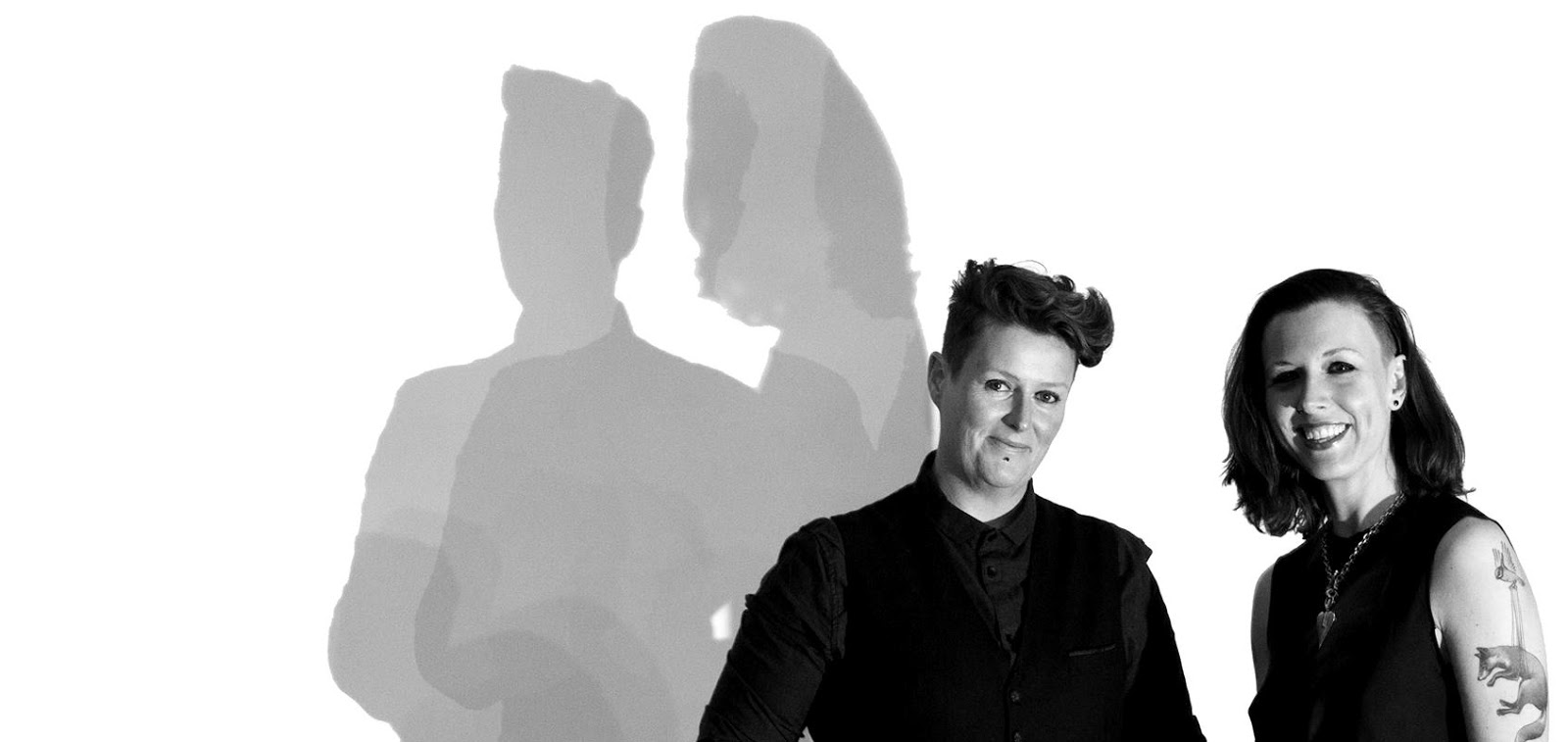
One of my Lent books this year is Si Smith’s comic entitled “How To Disappear Completely”.
Yes, one of my Lent books is a comic.
Its author/artist, Si Smith, is a great mate of mine. As well as being a Christian and a brilliant artist, he’s funny, thought-provoking and hugely inventive. Over the years of our friendship, he’s regularly come up with stuff that makes me think or he suggests music that he reckons I’d like (invariably, he’s absolutely right) or he recommends Bristol theatre/gigs (he lives in Leeds!) or he gets me involved in various art projects. I’m constantly amazed by his creativity and the breadth of his abilities.  
Well, I’ve read his 64-page comic several times already (and I just know that I’ll be reading it SEVERAL more times this Lent… and well beyond). It’s profound, harrowing, challenging, sad, uplifting, funny and hauntingly beautiful. It reflects on the realities of life and faith in modern-day Leeds: “there is beauty here, if you look for it…but it’s a thin line – love and hate and this city is an ugly place too, with its gaudy excesses… and this compulsion to consume and be consumed”.
But you don’t need to have a faith to appreciate this gem… it contains messages for us all in today’s materialistic, greedy world… (and I just KNOW I’ll gain new discoveries every time I read it – seeing small details that I’d previously missed).
I know I’ll continue to reflect on it for days and months to come.
Typically (and brilliantly), Si has also included a suggested playlist to accompany his comic… and, of course, it really does provide a perfect soundtrack (he’s a very clever man).
So, whether you’re a person of faith, or an artist, or into pop culture, or simply someone who cares about our world… I can’t recommend this publication strongly enough (and, ridiculously, it only costs £6.50, including postage).

Wednesday, March 01, 2017

february 2017 books…

The Sussex Downs Murder (John Bude): First published in the 1930s, this is the second John Bude crime fiction book I’ve read. This one features Superintendent Meredith as the investigator. Enjoyable, easy, escapist, light reading – even if I’d basically worked out what had happened after the first 100 pages!
Dame Laura Knight (Caroline Fox): I’ve been a fairly recent convert to the art of Laura Knight, 1877-1970 (principally after seeing one of paintings at The National Portrait Gallery). This excellent book, published in 1988, provides a very well-illustrated account of her life and her work. She was the first woman artist to be made a Dame (and one of the first women to be Royal Academicians). Born in Derbyshire, she was brought up by her mother (her father had left shortly before her birth) and her grandmother. Encouraged by her mother (who taught art for a while), Laura enrolled at the Nottingham School of Art at the age of 13 (one of their youngest ever pupils) and there met her future husband, artist Harold Knight. During the course of her long lifetime, she produced a remarkably varied range of work – from early images in a Yorkshire fishing village, vibrant pictures of Cornwall, to her WW2 work and her subsequent visual record of the Nuremberg trials. She was most famous for her portrayals of the world of London’s theatre and ballet, and of the circus and I was particularly impressed by her colourful, vigorous paintings of gypsies and fairgrounds. At some stage, I think I need to read her two autobiographies.
Politics (Nick Clegg): I’ve read a fair number of political autobiographies over the years and the one thing they all have in common is that the authors have the gift of the gab! You just KNOW that they’ll be able to justify lots of their poor decisions… and almost convince you they were right. Actually, I’ve always thought Clegg was ‘one of the good guys’ and this is an excellent, frank account of his experiences in coalition government with the Tories and the LibDem’s subsequent disastrous showing in the 2015 general election… and then, of course, the awful outcome of the EU referendum. I’ve also posted a separate blog about Clegg’s book and about the future of politics in this country (not a bundle of laughs!).
The Boys In The Boat (Daniel James Brown): This is a powerful, true story about the 1936 American eights crew at the Berlin Olympics - how nine “working-class boys exchange the sweat and dust of life in 1930s America for the promise of glory at the heart of Hitler’s Berlin”. The Times critic cleverly described the book as “Chariots of Fire with oars” – which just about sums it up. It’s a hugely gripping, inspiring story and I really enjoyed the book. My one criticism is the book’s syrupy, somewhat gushing “narrative non-fiction” writing style (this is just a random example: “She glanced across the seat at Joe, and saw at once, through a blur of tears, that his eyes were full of hurt too. But his jaw was set, and he stared ahead over the steering wheel rather than turning to look at her”!!). Nevertheless, it’s a brilliantly researched book and an absolutely brilliant story. Well worth reading.  
Cheerful Weather For The Wedding (Julia Strachey): This is another one of Moira’s beautiful Persephone books and (it’s strange how things work out) the painting on the cover, “Girl Reading” 1932, just happens to be by Harold Knight – Laura Knight’s husband (see previous book, above!). First published in 1932, this ‘novella’ describes the events that took place on Dolly Thatcher’s wedding day – she’s decided to marry someone she hardly knows (or loves?)(it appears that Strachey wrote it at a time when her own marriage was failing). It captures the minutiae and chaos of the day within a well-to-do family of somewhat absurd (yet fascinating) characters – especially the ridiculous, frequently distracted and vague mother of the bride. I really quite enjoyed it!

Monday, February 20, 2017

politics: between the extremes…

"Politics: Between the Extremes” is the title of Nick Clegg’s book about his experiences as Liberal Democrats’ leader from 2007 and Deputy Prime Minister from 2010 to 2015. I’ve just finished reading it and found it absolutely fascinating (albeit somewhat depressing – given what happened in the 2015 general election and the subsequent EU referendum). I’ve read a fair number of political autobiographies over the years so know that, whatever I might think of an individual’s particular political views, these people all have the ‘gift of the gab’!

Actually, I’ve always thought that Clegg consistently comes across as a sensible, straightforward politician with views that echoed many of my own. Indeed, I voted for the Liberal Democrats at the 2010 General Election. I well remember his impressive performance at the first televised Leaders’ Debate when he made the case for a “new politics” (and pointedly commented “the more they attack each other, the more they sound exactly the same” about Cameron and Brown).
As you might imagine, I wasn’t particularly enamoured by the fact that the LibDems went into coalition with the Tories (rather than Labour), but I was at least thankful that the Tories weren’t in government on their own!
How things have changed…

We now have a Tory government. The LibDems were annihilated in the 2015 election. The Labour Party are in turmoil… and of course, we’re now having struggle with the appalling consequences EU referendum result (or, as Clegg puts it: “one of the greatest acts of national self-immolation in modern times”)!
The book contains LOTS of intriguing insights. There are far too many to list them all, but here is a flavour:
1.       “My own views became steadily more anti-establishment, the longer I was in government”.
2.       “In the end, people follow stories, not policies, in politics... Anyone who wants politics to remain sane and rational must learn to speak to the heart, and not just the head. But above all, if they want to compete with the populists and fear-mongers, liberals have to offer people the most emotionally compelling weapon at their disposal: a story of optimism about the future and faith in the  of politics to bring about positive change”.  
3.       “Political success relies on persuasive storytelling, and public trust in politicians relies on accurate representation of power. But the perception of politics, critical as it is, is quite different from its underlying purpose: changing things for the better”.
4.       “Social media… has transformed the way in which politicians, commentators, advisers, spinners, journalists, activists and other members of the political and media elite speak to each other… It’s as if a whole Petri dish of communication has been created for the few thousand people who follow the daily ins and outs of politics”.
5.       “I have witnessed a distinct shift in press coverage from reporting to opinion, from acting as the public’s witness to acting as participants in politics. Partisan coverage of politics is now the norm”.
6.       “We are governed by a political class that exists not only in a bizarre Westminster world, but also under permanent physical and emotional strain. Politicians in government endure a decision-making process that is antiquated and laborious”.
7.       “We have an arcane and deeply unrepresentative Parliament; it is not only demographically unrepresentative of the public at large, it also bears little resemblance to the democratic will expressed at the ballot box”.
8.       “Our parliamentary system, outdated as it is, reinforces a two-party system, giving the two larger parties a shared, vested interest in maintaining the status quo”.
9.       “The general election of 2015 produced the most unrepresentative result of all:  the Conservatives… only secured 37% of the votes cast – and just 24% of all eligible voters… The LibDems received 299,000 votes per seat won, whereas for the SNP it took just 26,000 votes, the Conservatives 34,000 and Labour 40,000”.
10.   “ In May 2015… they (the Conservative government) took advantage of the disarray of the Labour and Liberal Democrat parties to announce the dismantling of tax-credit support for millions of low-income working families, an assault on Housing Associations, a menacing review of the BBC, a plan to give English MPs different voting rights from other MPs, an intention to limit Freedom of Information rules, a reversal of most support to green-energy companies, and a tax giveaway to dead property millionaires – not to mention an attempt to hold a vote on fox-hunting once again”.
11.   “There is an(other) inescapable conclusion to be drawn from the result of the EU referendum, which should also drive different parties towards a broader progressive alliance: the divisions in the UK are no longer reflected in the divisions between political parties. The referendum revealed a country divided between those – the young, the educated, the metropolitan, black and minority ethnic communities – who feel comfortable with the gyrations of a modern, globalised economy and a diverse society and those – older, with fewer skills and qualifications, especially white working-class voters in the North and the Midlands – who do not. This division bears almost no relation to the traditional left-right axis by which Westminster parties are traditionally organised”.
12.   “Campaign groups like 38 Degrees and change.org have harnessed online technology to become hugely effective lobbying operations, sharing petitions and calls to action on social media, and mobilising people to email their MPs in large numbers. It is an electronic form of direct democracy that kills stone-dead the notion that people are no longer engaged in politics. They are. It’s just that they increasingly view political parties as part of the problem, not the solution”.
13.   “Excessive centralisation disempowers the communities that make up Britain’s modern, plural identity”
14.   “British politics is crying out for wholesale renewal… Reformists in all parties should resolve to work together to renew our politics”.
15.   “In addition to the long-standing moral concern about excessive levels of inequality, there is increasing acceptance of the idea that inequality itself is a significant cause of the very boom and bust that makes the rich richer, the poor poorer, and creates the kind of insecurity upon which populism thrives”.
16.   “It doesn’t help that only 43% of 18-24 year-olds voted in the general election of 2015, compared to 78% of over 65s; nor that the proportion of the UK population aged 65+ is forecast to jump from 17.6% in 2014 to 27.1 in 2064… A new grand bargain between the generations is needed if we are to avoid an increasingly acrimonious tug of war between the young and old, for limited public subsidies at a time of low or stagnant growth”.

Nick Clegg’s book provides a passionate plea for the centre ground of British politics. He writes candidly about the political challenges he faced over the past decade (and his mistakes); he lifts the lid on the arcane worlds of Westminster and Brussels and on the vested interests that suffocate reform. In my view, he’s much better at providing a critical analysis of the political climate in Britain today than in giving us solutions (are there any?). I think the book reflects his frustration and sadness about the current state of British politics… and his own inability to change things.
He concludes by saying:
“But – at some point – political parties that believe in reason over populism, in moderation over the politics of grievance, in compromise over factionalism, will be called upon once again to put the national interest first.
Reason, in the end, will win against unreason”.
Amen to that.  

Monday, February 13, 2017

january-february 2017 books…

Love, Nina (Nina Stibbe): This book was first published in 2013 (and it’s subsequently been turned into a television series). I knew nothing about any of this, but Moira thought I’d enjoy it. It’s 1982. Nina Stibbe has come to London (from Leicester) to work as a nanny to the two boys of a grand literary editor in their big Camden home (Alan Bennett is one of their distinguished neighbours and features in the book on a regular basis). Nina becomes part of the family (despite having no idea how to cook or look after children) and writes letters home to her sister about them and their friends. Almost 30 years later, her letters are published as a book and becomes an unlikely bestseller. Well, in these tough times of Trump, Brexit et al, this is the PERFECT book. I found it laugh-out-loud funny. Situations are described and are frequently followed by bits of hilarious dialogue from the household - the mother Mary-Kay (MK), the boys Will+Sam, Alan Bennett (AB) and Nina herself. Quite, quite brilliant… funny, warm, life-affirming and wonderfully observed. I really enjoyed it.
Cold Comfort Farm (Stella Gibbons): I’d never read Gibbons’s 1932 novel, but Moira reminded me that we’d listened to Kenneth Williams reading it on Radio4 in 1974. So, as you might imagine, I read this book ‘hearing’ KW’s wonderful voice throughout! The book tells the tale of orphaned Flora Poste (“expensively, athletically and lengthily educated”) descending on her truly bizarre relatives at Cold Comfort Farm… and how she “felt it incumbent upon her to bring order into chaos”. It’s a lovely parody of the somewhat melodramatic novels of the period and I very much enjoyed reading it.
The Invention of Nature (Andrea Wulf): This book is about Alexander von Humboldt. Who? No, I hadn’t heard about him before I read the book. Humboldt (1769-1859) was an amazing, intrepid explorer and the most famous scientist of his age. His adventurous life included climbing the world’s highest volcanoes, racing through anthrax-infected Siberia and translating his extensive research into countless important publications that changed science and thinking. He inspired other naturalists and poets such as Darwin, Wordsworth, Goethe, Thoreau, Simon Bolivar, Thomas Jefferson and John Muir. This is a brilliantly researched and compelling book (there are some 120 pages of notes, sources and bibliography alone!) about someone who should probably be regarded as the greatest scientist of the 19th century.
Ink (Alice Broadway): I’ve blogged about this elsewhere, so I won’t bother to repeat myself… but, essentially (in the words of the publisher’s blurb): “Every action, every deed, every significant moment is tattooed on your skin for ever. When Leora's father dies, she is determined to see her father remembered forever. She knows he deserves to have all his tattoos removed and made into a Skin Book to stand as a record of his good life. But when she discovers that his ink has been edited and his book is incomplete, she wonders whether she ever knew him at all”. I loved it (but might be a little biased!).
Seven Brief Lessons on Physics (Carlo Rovelli): This is an extraordinary book. It comprises (as the title suggests!) 7 brief lessons written for people who know little or nothing about science. Rovelli is a wonderful communicator and gives explanations of the most complicated theories in simple, everyday language… and he’s amusing with it! I’ve always had an interest in science, but the things that struck me in reading this book were: a) just how much we owe to the physicists of the past 100 years for the things we take for granted in our lives today, b) just how amazingly imaginative, creative and inventive physicists have been and continue to be, and c) just how vast is the extent of what is still unknown. I can’t pretend to have understood all of Rovelli’s explanations (loop quantum gravity? gluons?), but I did find his short book rather wonderful… did you know, for example, that there are in the universe “thousands of billions of billions of billions of planets such as Earth”? Me neither.


Friday, February 10, 2017

more ink...

It’s a very proud moment when your daughter has her first novel published – especially when it’s been received by those who ‘know’ about these things with some acclaim.
But, of course, there comes the time when you actually read it for yourself...
I’m not particularly a ‘fiction’ person and I can’t actually think that I’ve read a YA (Young Adult) book before. Wouldn’t it be awful if I loathed it!?
Well, huge relief, I finished it this morning… and I loved it.

I’m not going to spoil things for you and so I’ll just repeat some of the words on the book’s cover: “Imagine a world where your every action, your every deed, is marked on your skin for all to see…”.
Yes, it’s a YA novel almost written in the form of a fable (I’m sure Alice would disagree!), but I also think it could be interpreted as a profound reflection or metaphor (for young adults and adults alike) of what’s happening in the world today. It’s about truth, wisdom, loyalty, justice, love… it’s about fears and taboos; it’s about society and who we are; it’s about greed and power; it’s about belief; it’s about conformity; it’s about passion and beauty; it’s about integrity and honesty; it’s about the future.
Yes, it might ‘just’ be a YA novel for goodness sake(!), but it also spoke to me about such matters as society’s attitudes post-Brexit, what’s happened in Syria and even Mr Trump!
For me, the novel’s transparent world (where your every action is marked on your skin) reminded me of the virtual facebook world - where we can choose to post stuff that allows us to come across as being an enviable ‘good guy’ or ‘the perfect couple’ (complete with happy family photos, news about our latest wonderful world cruise and the like). The difference is that, with facebook, we can also choose to hide our true beliefs and characteristics (and the details are forgotten within a couple of days).

I always knew that Alice could write (and isn’t it wonderful when someone’s childhood dreams really do come true!), but I didn’t realise that she had such a gift for storytelling. I even cried at the end (I’m always crying these days… and feel a bit like Keith Brymer Jones, the judge on TV’s “Great Pottery Throw Down”, crying as he marvels at the achievements of a particular contestant!) - partly because of the simple beauty and power of the story, but also because of a realisation that “oh my goodness, she really has done it… and she’s bloomin’ good too!”.
As a friend on facebook said: “you must be very proud”.
You bet.

Thursday, February 02, 2017

small voices in the political darkness…

So ‘Brexit Secretary’ David Davis will apparently present a White Paper later today setting out how the UK proposes to leave the EU.
I have to say that I found this week’s debate on Article 50 hugely disappointing. Yes, there were some impassioned contributions from the likes of Ken Clarke, Caroline Lucas, Heidi Alexander and a host of SNP MPs… but, with the Labour Party imposing a three-line whip in support of the government’s bill, it was all going to grind to an inevitable conclusion (our own South Bristol MP, Karin Smyth, voted in favour).
I continue to feel massively depressed and powerless to change things (despite the successes of the recent ‘people power’ demonstrations against Trump).

PollyToynbee had written a wonderfully passionate article about the Labour Opposition’s duty to the country in Tuesday’s Guardian (I don’t always agree with her views, but thought she was spot on here). Her pleas were largely ignored and the vote was passed by a huge majority.
For me, Green Party Co-Leader, Caroline Lucas, summed up the depressing situation precisely: Watching so many Labour MPs troop through the yes lobby with the Tories was truly disheartening. The Conservatives are set to benefit hugely from rushing through this vote with as little dissent as possible and it’s given them far more opportunity to morph a narrow referendum result in favour of leaving the EU into an overwhelming mandate to depart from the world’s biggest trading zone, wrecking our social and environmental protections along the way. It’s now down to MPs to work across party lines to amend this Bill and attempt to avoid the very real dangers of Britain falling off the Brexit cliff edge. As the co-leader of a party that stands for environmental, social and economic justice, I could not support a government offering no assurances to EU nationals living in Britain, threatening the funding of our public services, and planning to end of membership of the single market and customs union. In the coming weeks I’ll be standing up to this Government’s extreme Brexit plans at every stage – and doing all I can to protect our hard won environment and social protections”.part from the world’s biggest trading zone, wrecking our social and environmental protections along the way.part from the world’s biggest trading zone, wrecking our social and environmental protections along the way.

I’m sick and tired of reading about needing to “respect the will of the people”. The referendum result was NOT about giving the Tories the opportunity to impose a series of profoundly right wing measures.
AnnePerkins’s article in today’s Guardian pleads for Labour MPs to “be bold and challenge these Brexit lies”. Absolutely!
Labour’s Shadow Chancellor, John McDonnell, apparently indicated (on this morning’s “Today” programme on Radio4) that “Labour would come together as a party to shape Brexit”.
Well, about blooming time!!

Sadly, with the Labour Party’s pathetic, chaotic and depressing performance in Opposition over the past 12 months or so, the Labour Party (to my mind) is a spent force. As things stand, the Tories will be in power for the rest of my lifetime. Indeed, one of my friends posted similar thoughts on facebook this morning: “In my lifetime will there ever be a credible political opposition to the Tories?”. I think he may be right.
How utterly, utterly depressing.

ink...

Yesterday, Moira, Ruth, Hannah and I travelled up to London for the launch of Alice’s first novel, “Ink” (available at all good bookshops!).
I’d never been to a ‘book launch’ before, but I was conscious of a very real, tangible sense of excitement (and cake… and wine!). It was a very lovely evening.
I’ve yet to read Alice’s book (it’s the first of a trilogy). I’ve consciously avoided reading the proof copy so I can read the ‘real thing’.
It’s a Young Adult novel. Its synopsis is this: “Every action, every deed, every significant moment is tattooed on your skin for ever. When Leora's father dies, she is determined to see her father remembered forever. She knows he deserves to have all his tattoos removed and made into a Skin Book to stand as a record of his good life. But when she discovers that his ink has been edited and his book is incomplete, she wonders whether she ever knew him at all”.
The book has already received some wonderful feedback and, apparently, translation rights have been signed in TEN countries!
At last night’s launch, Alice’s editor at Scolastic read a note she’d received from an Italian editor about “Ink” (I’d previously read it… and it had made me cry). I’d like to share his post and just hope that I’m not treading on anyone’s toes by doing so:
I have three little scars, right between my eyebrows. It’s what varicella left me back when I was a kid, and I didn’t have the patience to wait for the scabs to do their own course. Though, those little signs became me as much as they are the shape of my nose, or my bad temper, or the people I know.
When a couple of years ago my cat scratched my first son closest to his right eye, after the initial dread I just found myself thinking that he was now different from how he was born. Life happened to him, somehow: in a parallel universe, there is a different version of him who has not that scar, who is another him than the one I know. And it’s mutual: the one that he knows is the version of me with the three little scars between the eyebrows.
And I do hope that he won’t forget me.
How I loved to become a book. How I loved to be able to have my ancestors’ tales with me. And, of course, to be a reader.
That was what left me those enchanting first twenty pages of INK I had the chance to read before Bologna’s Fair. That is why I insisted so much with the people from Scholastic to keep me posted about the book with the purest, most honest, crystal clearest idea I had bumped into in a long, long time.
Yet, the final text thought me much more. Our bodies heal, our bodies repair. My body doesn’t tell tales on me for every single mistakes. I might have three little scars, but if they are important is because they are my dad coming home to spend some time with me, my mother taking care of me, my sister trying to cheer me up. They are somehow the legacy of a love. Just as the scar on my son is the sign of a cat, and the dread of a father.
I’m not the right kind of anything, like Leora; but I do think that book can save our souls. Can help us remember.
And yes, now, Alice Broadway, I remember you. I will always do.
It will be such a pride to be the one who will make other people in Italy remember you as well”.
Pretty special when someone writes such things about something one of your daughters has created?
Absolutely. It brought tears to my eyes again as I re-read it this morning (it must be an age thing!).
I will be reading Alice’s book over the coming weeks (of course!). As you might imagine, the prospect of doing so is both exciting and scary… will I enjoy it? Actually, it doesn’t really matter because I know that lots of other people already have. I promise to keep you posted(!)...
A very special time for Alice… and for Dave… and her children… and for all of us in the rest of her family.
Sometimes, childhood dreams really do come true.
Photo: Ruth’s family pic from last night’s book launch.

Monday, January 30, 2017

mirga grazinyte-tyla: beethoven’s fifth with the CBSO…

Oh. My. Goodness.
Moira, Lesley, Alan and I went along to the Symphony Hall in Birmingham yesterday afternoon to see/listen to the CBSO perform Haydn’s Symphony no.31, Mozart’s Piano Concerto no.27 (with the wonderful Francesco Piemontesi on piano) and Beethoven’s Symphony no.5.
But, I have to admit that the main reason we were there was to see the orchestra’s new conductor ‘in action’.
Her name is Mirga Grazinyte-Tyla.
You’ve probably never heard of her… but she’s been described as “conducting’s next super star”. She was appointed Director of the acclaimed CBSO last year at the ridiculously young age of 29. She’s from Lithuania and she’s already worked with some of the world’s leading orchestras after winning the Nestle Conducting Competition in 2012.

But, look, what do I know? I’m certainly no classical music expert(!) and I don’t know a huge amount about the art of conducting (understatement)… and, for goodness sake, watching the “Maestro” television series hardly makes me an expert (although I DID love it)! Having said that, we have been very fortunate to have been able to follow the rather brilliant conducting career of our very good friend Daniel Harding (who we’ve known from his childhood… and who is currently principal conductor of the Orchestre de Paris). Daniel was hired by Simon Rattle to be his assistant with the CBSO (small world!) at the tender age of 17! I’ve watched Daniel on a number of occasions and recall being hugely impressed on hearing his interpretation of Mahler’s Symphony no.5 (one of my very favourite pieces of music) some years ago and suddenly realising the importance of the conductor to any orchestra or piece of music.

The Symphony Hall had a virtual sell-out audience for this Sunday afternoon concert (yes, Sunday afternoon). You could sense a tangible level of anticipation and excitement as Grazinyte-Tyla took to the rostrum and, believe me, within the very first minute of the Haydn’s Symphony no.31, you just KNEW you were witnessing something VERY special.
This tiny, pale, pretty woman was utterly captivating to watch… she was absolutely mesmerising. She already appears to have created a wonderful rapport with the orchestra. It was simply bewitching to watch… complete control, spellbinding grace, hugely charismatic… and completely magical.

Look, I know you’ll think I’ve gone stupidly over-the-top about Grazinyte-Tyla (Mirga-mania?) but, believe me, she IS something very, very special. I strongly urge you to witness her performing alongside the CBSO (warning: go online, check out the CBSO programme and book EARLY!!)… I can guarantee that you won’t be disappointed.  
She has clearly already forged a formidable relationship with both the orchestra and the audiences.
Birmingham loves her.
The orchestra loves her.
I absolutely love her.
Photograph: Benjamin Ealovega.

Saturday, January 28, 2017

jackie…

Moira and I went along to the Watershed yesterday to see Pablo Larrain’s film “Jackie” – an intimate portrait of Jackie Kennedy in the events leading up to and immediately following the assassination of President Kennedy in November 1963.
Natalie Portman, in the title role, is simply stunning.
Initially, I thought her characterisation was a little too affected and exaggerated (her quiet, slightly ‘breathy’, slightly lispy way of speaking and her very particular way of walking), but I was quickly ‘won round’. In fact, her performance is quite extraordinary (surely an Oscar?). We see her life dissolving amid grief, politics and media management… at a time when she has to prepare to vacate the White House and to arrange a state funeral (as she sees it, “to rival that of Abraham Lincoln”).
There are a number of impressive performances by the supporting actors – including Peter Sarsgaard, Richard E Grant, Billy Crudup and Greta Gerwig – but Mica Levi’s wonderful musical score also deserves huge credit (although, perhaps to my shame, I only really became aware of it nearly half way through the film!).

Inevitably, I suppose, one is left reflecting on the parallels between the lives of Princess Diana and Jackie Kennedy – both treated as iconic beauties by people (and the media) throughout the world.
Most people from my generation (I was 14 at the time) are very familiar with the events surrounding JFK’s assassination and can recall images from that time… including watching Jackie Kennedy walking behind the gun-carriage carrying her husband’s coffin. It’s sobering to realise that it all happened 55 years ago… and that, perhaps, some of our ‘remembered’ images are simply television footage we’ve seen replayed over (and over) the intervening years. It now seems very strange to realise that JFK was only president for a little over two years.

The film brought it all back. Scenes from the White House almost felt like watching clips from “West Wing”! It was fascinating to realise that, within just a week of her husband’s death, Mrs Kennedy had summoned a journalist - wonderfully played in the film by Billy Crudup - to her home, aware (even then) of the historic importance of what had happened and of the opportunity to put her own ‘spin’ on events for all time. Some things don’t change! 
Without a doubt, it’ll be Natalie Portman’s mesmerising performance that you’ll remember from this film.
PS: Somewhat bizarrely, during the film, I also found myself reflecting on the twin images of Jackie Kennedy, ‘queen’ of the American ‘royal family’ living with all the associated luxury of the White House and of Cherie Blair, as she was caught opening the front door of their house in Islington in her nightdress on the morning after her husband’s election as prime minister!
PPS: Also a sense poignant irony to have watched John Hurt play the part of the elderly catholic priest who comforted Jackie in her grief, only to discover that (as I write this), he had died… at the age of 77.

Friday, January 27, 2017

o’hooley+tidow at st george’s…

Can’t really believe that it was four years ago that Moira and I last saw O’Hooley+Tidow at the Folk House. Well, last night, they were ‘roughing it’ at Bristol’s wonderful St George’s – complete with its Steinway grand piano… and they were simply brilliant (again).
Belinda O’Hooley and Heidi Tidow are very impressive singer-songwriters who tackle thought-provoking issues such as racism, animal cruelty, poverty, vulnerability and child abuse with remarkable, understated clarity. Their voices combine quite brilliantly (and St George’s is just a perfect venue for such gifted people!). Belinda O’Hooley clearly relished her evening on the Steinway and I was amused by the St George’s blurb indicating that “Heidi shares lead vocals with Belinda, and also provides foot percussion” (when I launch my own music career, foot percussion will be my instrument of choice... obviously!).
It was a really lovely evening (they’re very amusing too!) – they played for two hours and only stopped for 20 minutes to sell their CDs during the interval.
One of the highlights for me was when they sang Joni Mitchell’s ‘River’… that moment when two of your favourite singers begin singing a song that you instantly recognise as perhaps your favourite song in all the world (by your very favourite singer-songwriter)… that sense of “please don’t mess this up”… immediately followed by that nerve-tingling feeling when you realise that it’s going to be ok, they’re going to perform the song in a quite exquisite way.
Yes, feeling very blessed…
PS: I think they’ll be appearing in Frome on 12 March (with other performers, in the guise of “Coven”)… if you’re in the area, I suggest you book tickets!

Thursday, January 26, 2017

Thomas Friedman talking at the Bristol Festival of Ideas…

Last night, Moira and I went to hear Thomas L Friedman (why do people insist on using their middle name initial?) talk about his current book ‘Thank You For Being Late: An Optimist’s Guide to Thriving in the Age of Accelerations’ as part of the excellent Bristol Festival of Ideas. The pre-talk blurb described it thus: “In today’s changing world of Brexit and Donald Trump’s promises of walls and tariffs, Friedman argues that it is only openness to ideas and trade that will allow us all to thrive. He addresses the need for politically moral leadership…”.
Born in 1953, Friedman is an American journalist, internationally-renowned author and three time Pulitzer Prize winner. He currently writes a weekly column for The New York Times.
I went along with an open mind… ‘this could be inspiring or really, really depressing’!
Well, it proved to be an absolutely fascinating, stimulating evening. He spoke for 45 minutes, without notes. Evidently, he’d been giving this talk around the world since last May… but suitably updated in the light of Mr Trump (and Brexit)! He’s a confident, articulate and engaging speaker.
I can’t begin to summarise Friedman’s wide-ranging talk… so I’ll just highlight a few things that struck me.
He talked about the significance of the year 2007: Steve Job launching the iPhone; facebook; Kindle; The Cloud; YouTube; the beginnings of Airbnb… followed, somewhat ironically, by the worldwide economic recession of 2008. Although we didn’t perhaps notice at the time, digital globilisation and the exponential growth in microchips were transforming our lives.
The pace of change and the pace of new ideas is almost overwhelming… or, as Friedman put it: “Google lives in the future and sends us letters home”.
He talked about the way many of the large Corporations were moving – analysing the capabilities of their employees and being prepared to train them, free of charge, in areas where they needed specific help or improvement… BUT for them to undertake the training in their own time… and if they didn’t fancy that, then they’d be given a redundancy package and removed from the organisation. Corporations see life-long learning as CRUCIAL.

Friedman talked about politics (and specifically US and UK politics)… and how our current political parties are designed to think and work “with an old situation”… in his view, they needed to be “blown up (not literally, hopefully) and re-started… "the age of acceleration is going to be just too fast for them”.
He talked very briefly about taxation… feeling that the current systems should be abandoned in favour of universal carbon taxes and sugar taxes.
He talked about us living in a world where “one of us can kill all of us” (he didn’t specifically mention the Trident ‘deterrent’ but, clearly, implied that such policies were hugely outdated and ineffective).
He talked about ethics; about a cyber world where no one's ‘in charge’; and, perhaps somewhat strangely in the context of the evening(?), about the need for us all to live by the old ‘golden rule’ (“do unto others as you would have them do unto you”); about the need for ‘strong families’ and ‘strong communities’(?)… and about ‘applied hope’. There were lots of things I wanted him to explain more fully, but time didn’t allow… yes, I know, I should have bought his book!
It was all inspiring, fascinating stuff… but even now, writing this the morning after, I’m not sure if his words made me feel depressed or encouraged. They’ve certainly underlined my own naivety in some areas… or, as Friedman put it: “naivety is the new realism”!

Friday, January 20, 2017

manchester by the sea…

I went along to the Watershed this afternoon (somewhat cramped in the tiny Cinema 2 for a virtual sell-out audience – the annual Slapstick Festival takes precedence at this time of year) to see Kenneth Lonergan’s critically acclaimed film “Manchester By The Sea” (in the USA, not the one that’s home to Old Trafford!).
I don’t want to give away too much of the story but, essentially, troubled Boston-based handyman Lee (brilliantly played by Casey Affleck) has his rather sparse existence further disrupted by the death of his older brother. This forces him to return to his hometown on the Massachusetts north shore, but he is horrified to discover that that he has been appointed guardian to his16 year-old nephew, Patrick (again, excellently played by Lucas Hedges). This return to his old stomping ground provides Lee with memories of an earlier devastating family tragedy involving his ex-wife Randi (convincingly played by Michelle Williams – although I had envisaged her taking a more prominent role in the story).
Lee’s basic, depressing, lack-lustre life is a struggle. For him, life is drudgery and mere existence. He’s variously hiding his emotions or exploding in frustration. Gradually, dual timelines emerge in the film and we begin to understand the toils a little more clearly.
The film is about grief, hope and love… it’s stark, moving, comical (at times), intimate, tender and very impressive.

Sunday, January 15, 2017

peter pan…

Moira and I went up to London yesterday to see Sally Cookson’s much-acclaimed version of JM Barrie’s “Peter Pan” at the National Theatre.
It was simply brilliant.
You know the story, of course… Peter, the boy who never grew up; the Darling family’s nursery and daughter Wendy; the ability to fly; Tinker Bell; the lost boys in Never Land; Captain Hook and the pirates… and, of course, the crocodile!
It’s just a children’s story.
Well, yes. But this telling of the story was completely magical.
Colourful, funny, dramatic, brilliantly inventive, poignant… theatre at its very, very best.
The production was devised entirely by the cast (in typical Cookson manner) - which included Benji Bower’s wonderful, integral, music – and made the most of the individual characteristics of the Olivier Theatre (with its drum-revolve stage). The costumes, set design and ‘streetwise’ storytelling are all spot-on.
The entire cast is absolutely excellent - including Felix, of course (“just plain perfect” as one critic described him!), as Smee and Mr Darling – with Paul Hilton stunning as Peter; Anna Francolini suitably fierce and sinister as Hook (and charming as Mrs Darling!); Madaleine Worrall as an ideal Wendy; and Saikat Ahmed as a ridiculous, but perfect, Tink!
It’s very difficult to pick any highlights of this show, but it would be utterly wrong not to mention the FLYING! They don’t go for any invisible wires, they go for rope systems and flying harnesses (which they describe to the audience as “fairy string”!)… with fellow cast members acting as counterweights, bouncing up and down tall stage scaffolding as the central characters ‘fly’. The whole effect is extraordinary and wonderful… the first time Peter launches himself out over the front stalls is simply breath-taking.
This production was definitely for BOTH children and adults. The Olivier Theatre was packed for the matinee performance we saw. The audience included lots of children (included one group we noticed who’d dressed for the occasion… as pirates, a sea captain and a green-clad Peter, as you do!) and everyone (including the adults, let me stress) was captivated (in a very enthusiastic way!).
Yes, it’s just a children’s story (and I know I’m soft)… but it made me cry.
Magical, brilliant, uplifting – live performance at its very, very best.
PS: IF I was any good with heights and IF I was young and fit, then I think I’ve discovered my new dream career: “professional counterweighter” (yes, that’s how the programme describes three individuals who spend most of the production “bouncing up and down tall stage scaffolding” for some of the most dramatic scenes)!

Friday, January 13, 2017

la la land...

Moira and I went along to the Watershed (where else?) this afternoon to see Bristol’s first showing of this acclaimed film. Somewhat predictably, even for an afternoon showing, it wasn’t far off being a full house. The scenario (as you probably already know) is two people - a jazz pianist (Seb, played by Ryan Gosling) and an aspiring actress (Mia, played by Emma Stone) – who fall in love while pursuing their dreams of Hollywood stardom.
I purposely tried to avoid knowing too much about the film in advance… basically, I knew it was a musical of sorts and that it also featured dance (the poster's a bit of a give-away).
Ridiculously for most film buffs, I really hadn’t seen much of Emma Stone before this film (Birdman is the only one I can recall?) and, whilst I recognised Ryan Gosling, our paths clearly hadn’t crossed too many times in the past (I know!)(in fact, before the film, I felt sure I wasn’t going to like him!).
Well, surprise surprise, I found it absolutely delightful.
Predictably, Seb was first class and I’m in love with Mia (who was also first class)!
Yes, it’s something of ‘an all-singing, all-dancing romance’, but it’s not over-slushy and I particularly enjoyed the music. Neither Gosling nor Stone are natural singers, but I thought they were both perfect for their respective roles (and they both dance rather gracefully too!). To its credit (for me, at least), the film isn’t over-glitzy and, indeed, even has a degree of ‘ordinariness’ about it, which merely adds to its charm.
I’ve just read Peter Bradshaw’s (5 star) review in The Guardian… and he makes reference to the film’s “primary-coloured homage to classic movie musicals”. I can only endorse this (not that my knowledge of classic movie musicals is extensive!). In fact, there were some scenes that made me think of director Wes Anderson – beautifully orchestrated and stunningly graphic (frequently shot against a backdrop of a colourful building façade or a painted wall or a stunning skyline at dusk etc etc).
Moira wasn’t quite sure about the film (she reckoned it took her an hour to get into it – but, then she’s not a great lover of music or musicals), but I really enjoyed it.
After all the gloom and doom following Trump’s election and the repercussions of the Brexit vote, this film is a breath of fresh air… it’s about hopes and dreams.
Ok, in a way, it might be pure escapism, but it’s also uplifting and an absolute joy… and we certainly need more of that at present!